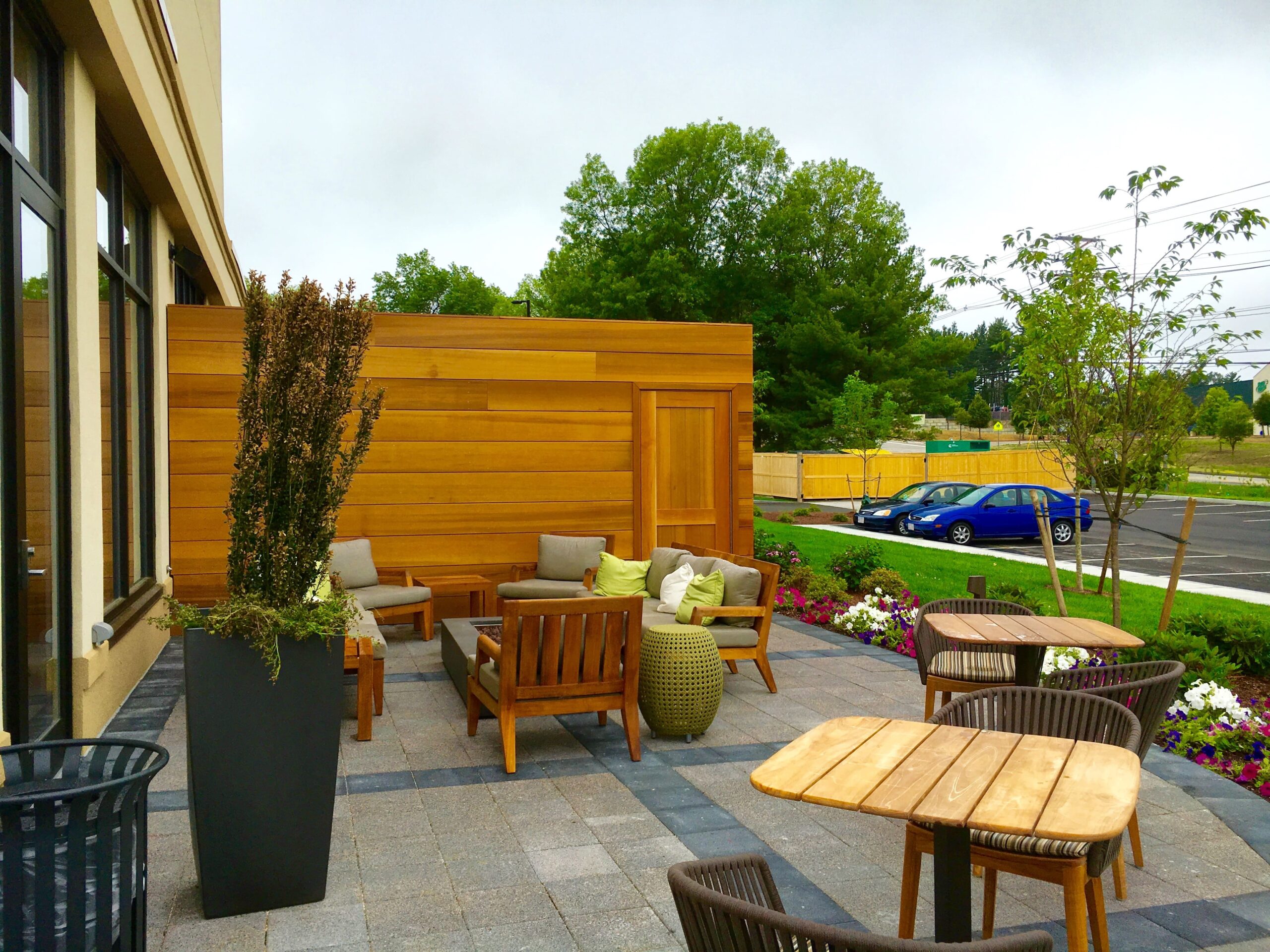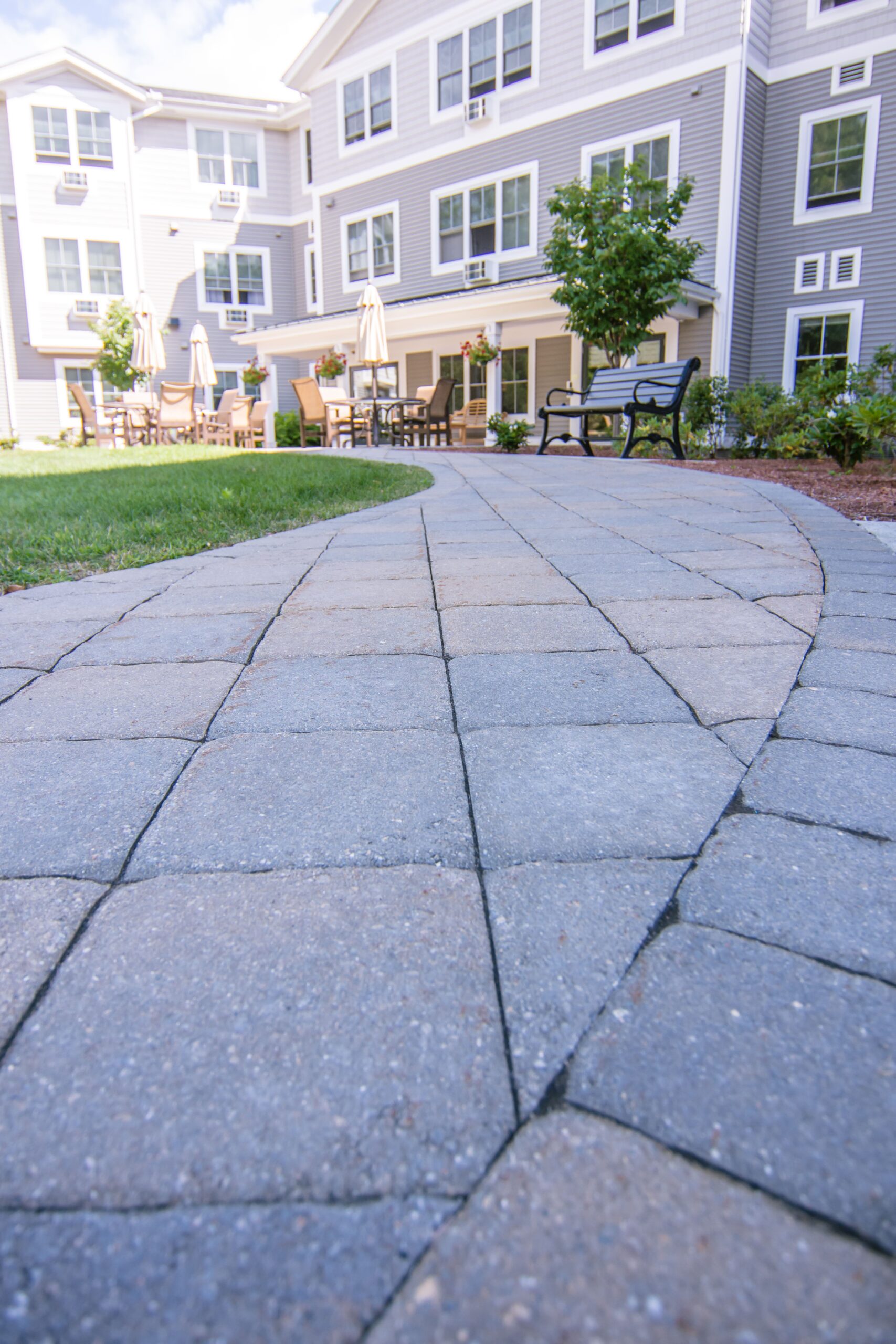

Your Trusted Project Partner


Our paver installation services cover the part you see, the pavers, and the part you never see again: excavation, compacted gravel base, bedding layer and edge restraint. Interlocking pavers are individual units that lock together through friction and joint sand, so the surface can flex slightly as the ground freezes and thaws instead of cracking like a slab. That flexibility only helps if the base underneath is deep, well compacted and graded to drain. When a paver job fails, the cause is almost always below the surface. Still deciding on the size and shape of a new outdoor space? Our page on planning a patio covers that side.
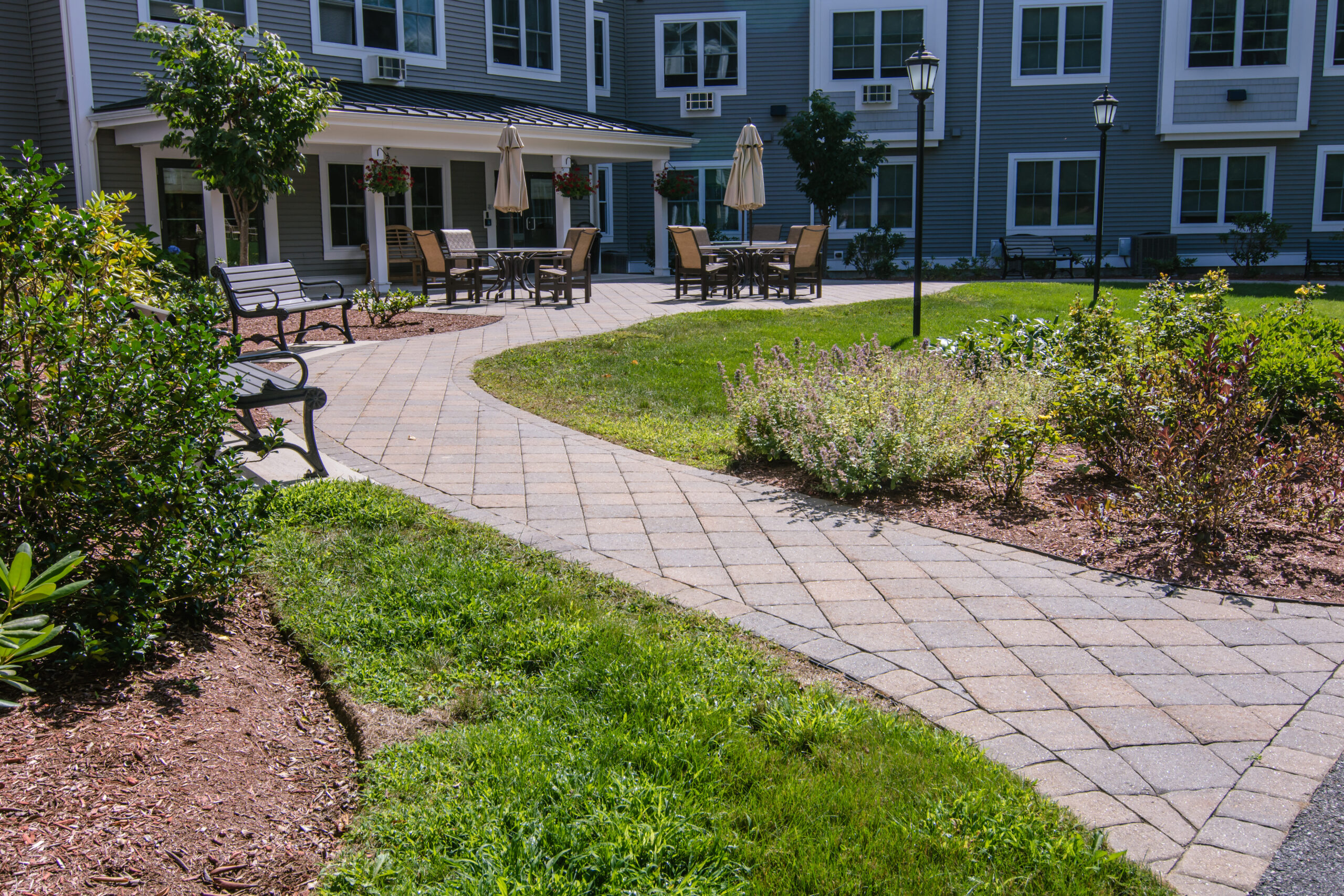
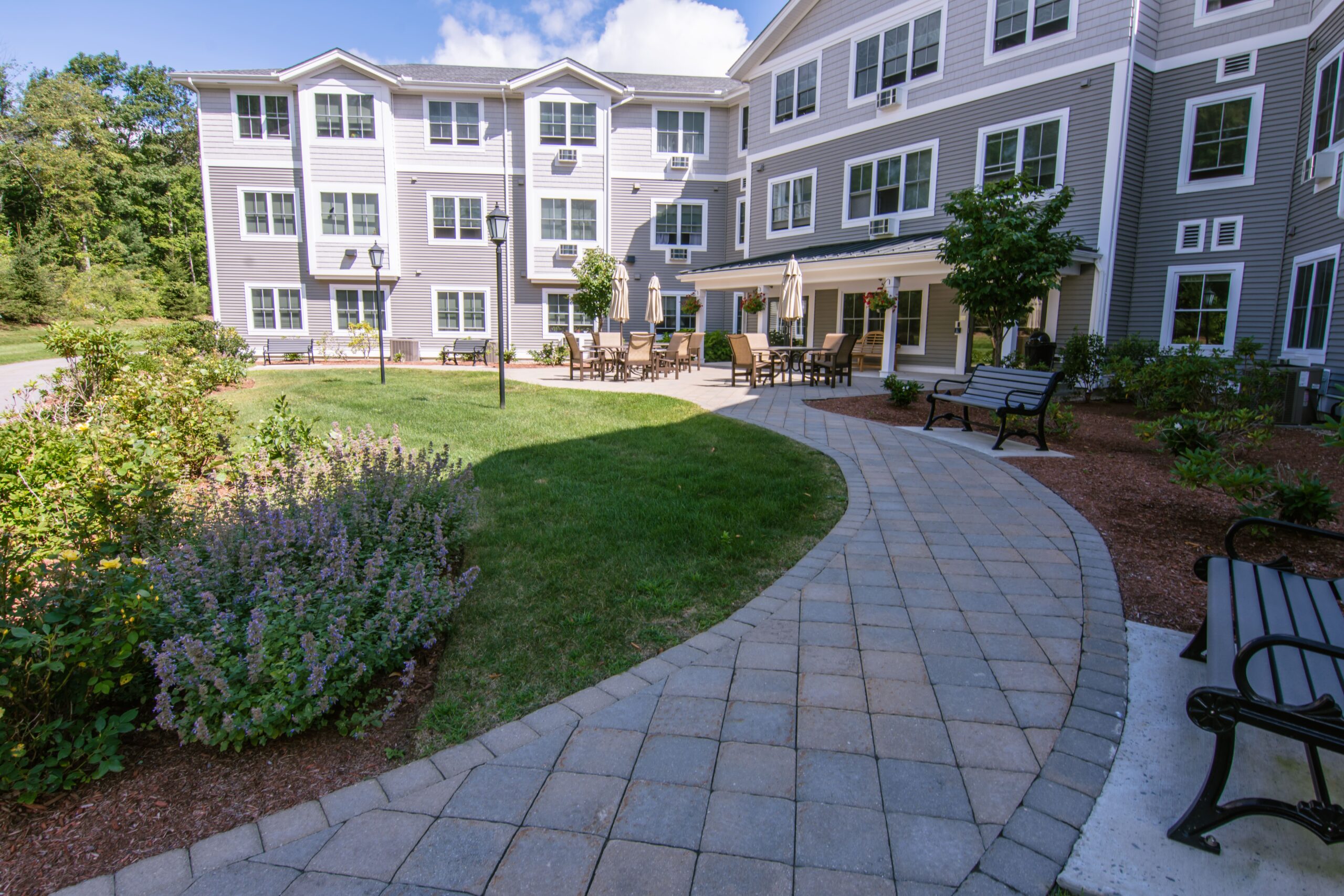
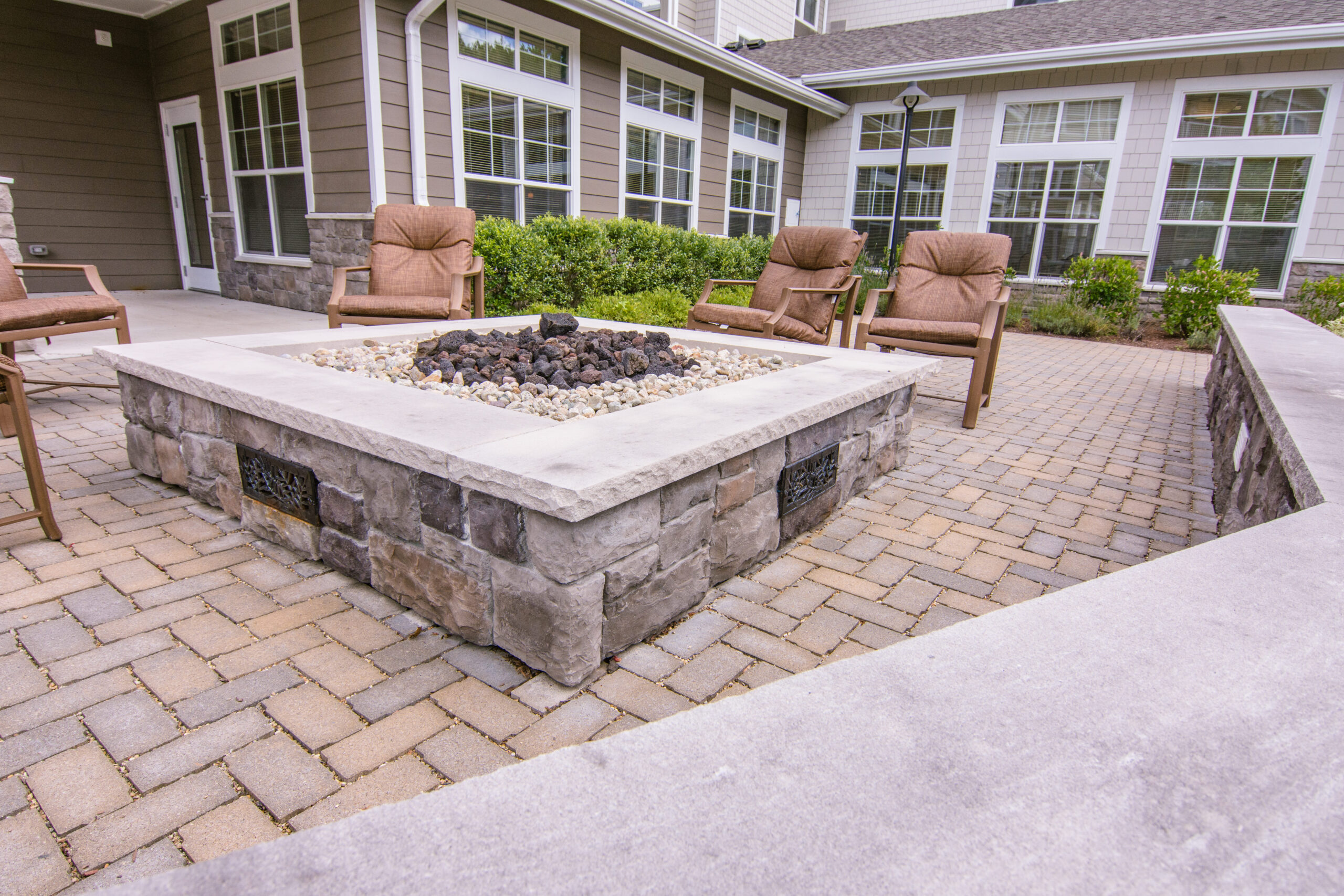
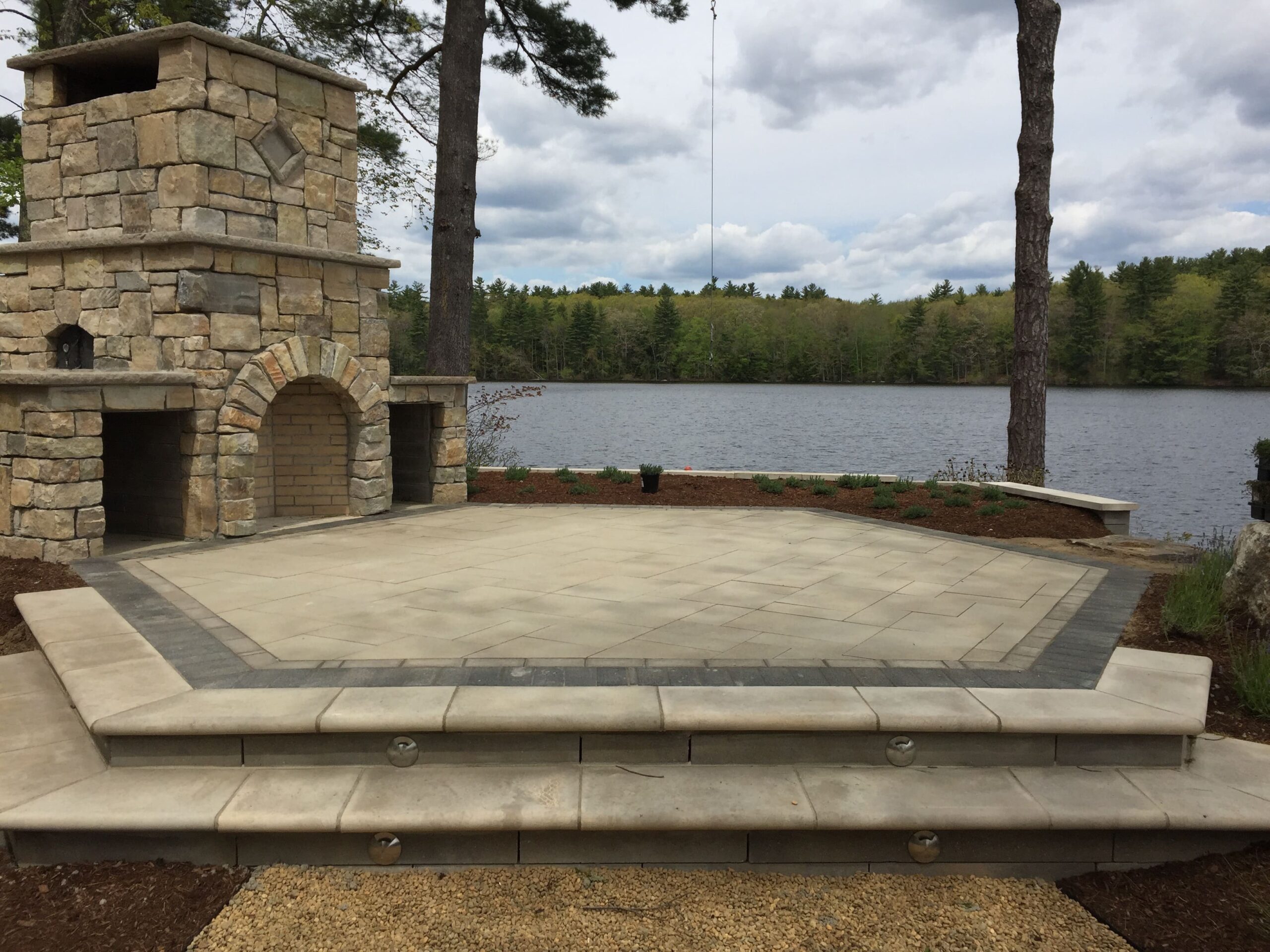
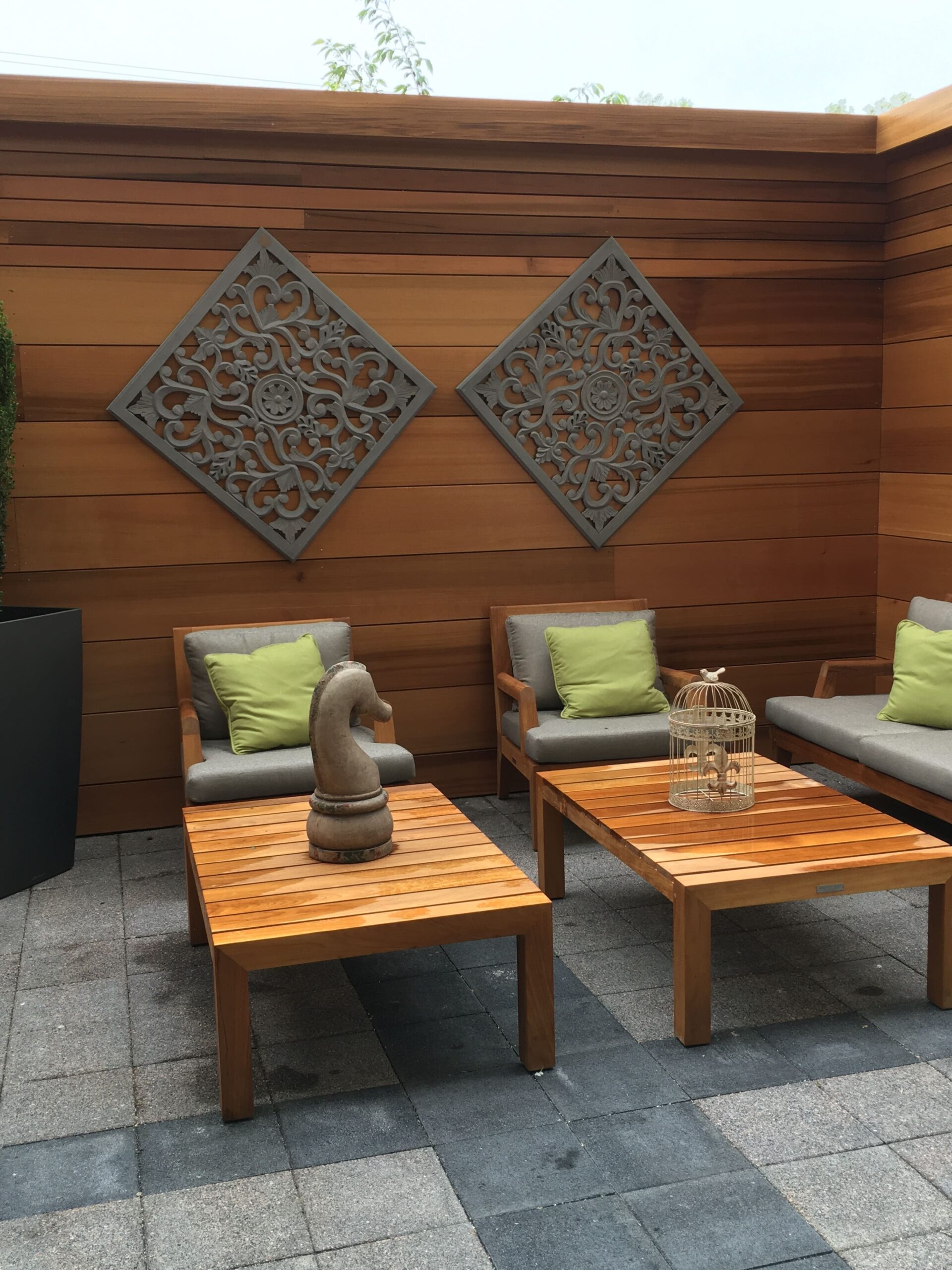
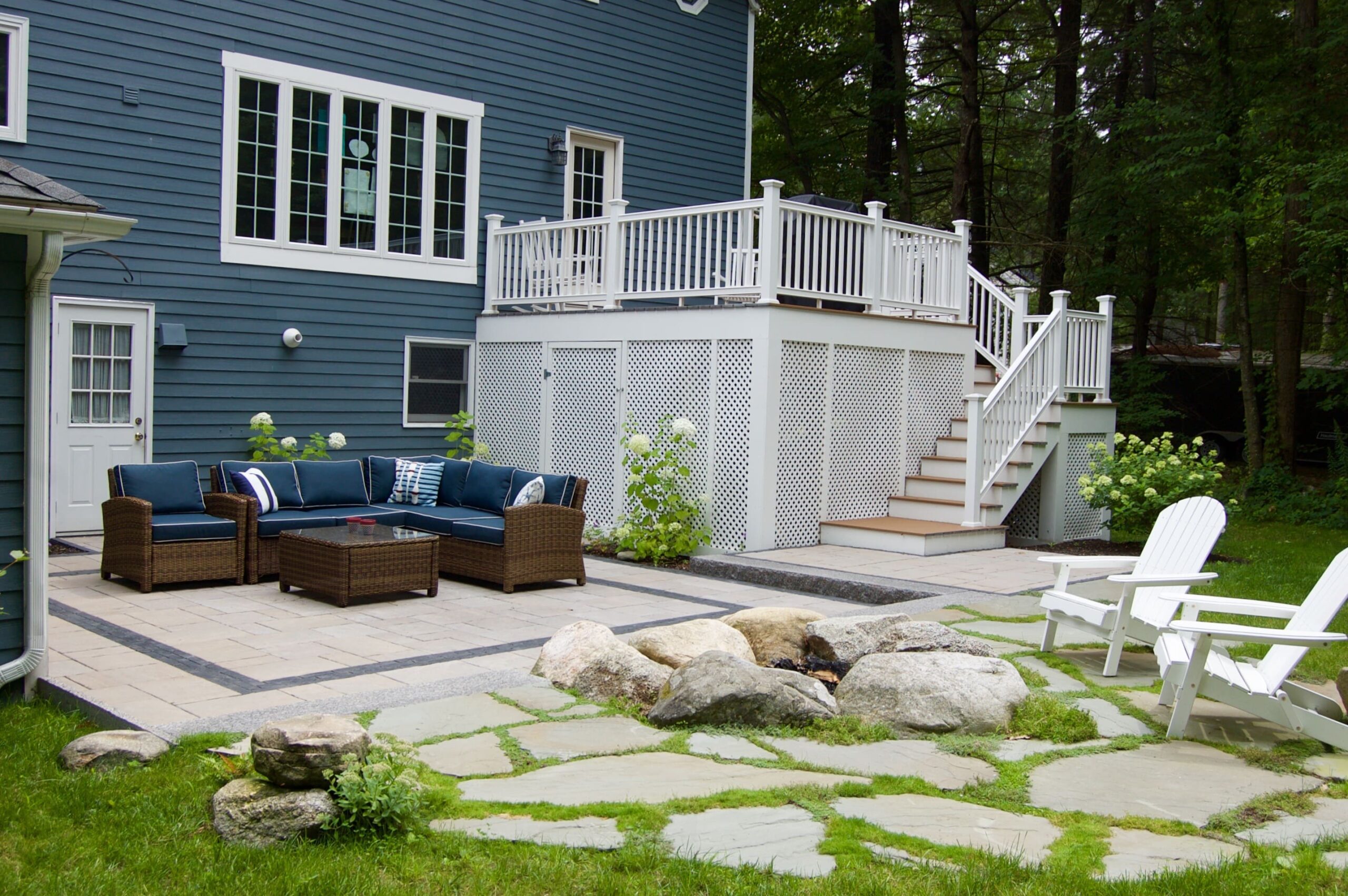
Below is a selection of patios, pool surrounds and walks from projects we have built. Look closely at the borders and joints, because that is where careful installation shows. Browse the project gallery for more.
Most paver headaches trace back to how the ground was prepared. Here is what goes wrong, and how we build to prevent it.
We install pavers for homeowners in North Andover, Chelmsford, Billerica, Tewksbury, Salem, Hudson, Pelham and Nashua, along with the towns around them. Driveway aprons, front walks, pool surrounds and backyard patios are all part of the work, and so is lifting and relaying an older paver area that has settled out of shape.
// Areas We Serve
We work with homeowners across northeastern Massachusetts and southern New Hampshire. Pick your town to see local details, or ask us if yours is not listed.
After Dig Safe marks underground utilities, we excavate below the finished height to make room for the base. Crushed stone goes in layers, each compacted with a plate compactor, and driveways get a deeper base than walkways because they carry cars. A thin, screeded bedding layer comes next. The pavers are laid in your chosen pattern and cut to fit at the edges. Edge restraint is spiked in place, joint sand is swept in, and the whole surface is compacted again to lock the units together.
Why Mountainscapes
We do our own excavation, grading and drainage, so the base under your pavers is built by the same crew that lays the surface. Nobody rushes a sub-base and hands it off to someone else.

Large or mixed-size units for outdoor dining and lounging areas, in tumbled, smooth or textured finishes.

Thicker units on a deeper base, built to carry vehicle weight and stand up to snow removal.

Narrower layouts and borders for front walks and garden paths, with gentle curves where they suit the house.

Textured pavers around a pool give better footing when wet and can be lifted out for repairs.

Wider joints filled with small stone let rainwater soak through into a specially built open-graded base.

Step units, caps and contrasting borders that frame a paved area and connect it to other levels.
What makes paver installation last in New England?
Three things: enough compacted gravel underneath, a solid edge that stops the pavers from spreading, and a pitch that moves water off the surface. Freeze and thaw cycles punish any base that holds water. Get those right and the pavers themselves rarely cause trouble.
Are pavers better than a poured concrete slab?
Pavers flex with the ground and can be lifted and reset if a section settles, while a slab can crack and is harder to patch neatly. Concrete is usually less expensive up front. Our guide to stone versus concrete patios compares the options in more depth.
Can pavers be used for a driveway?
Yes, with thicker pavers and a deeper base built for vehicle loads. Paver driveways handle plowing well if the blade is set slightly high or fitted with a rubber edge. If budget matters more than looks, a gravel driveway is a solid alternative.
What is polymeric sand, and do I need it?
Polymeric sand is joint sand mixed with a binder that firms up after it is wetted. It helps keep weeds, ants and washout out of the joints. It does not replace a good base, and joints may need a top-up after several seasons, but it is our usual choice for patios and walks.
Can you fix pavers that have sunk or heaved?
Yes. We lift the affected area, find the cause, such as a thin base, a downspout dumping water or poor drainage, rebuild the base and relay the pavers. Good pavers are reused. If water is the cause, our article on signs your yard needs drainage may help.
Do pavers need to be sealed?
Sealing is optional. A sealer can deepen color and make stains easier to clean, but it adds upkeep and some products change how slippery the surface feels when wet. Many paver areas go unsealed for years without issue. We can talk through whether it makes sense for your space.