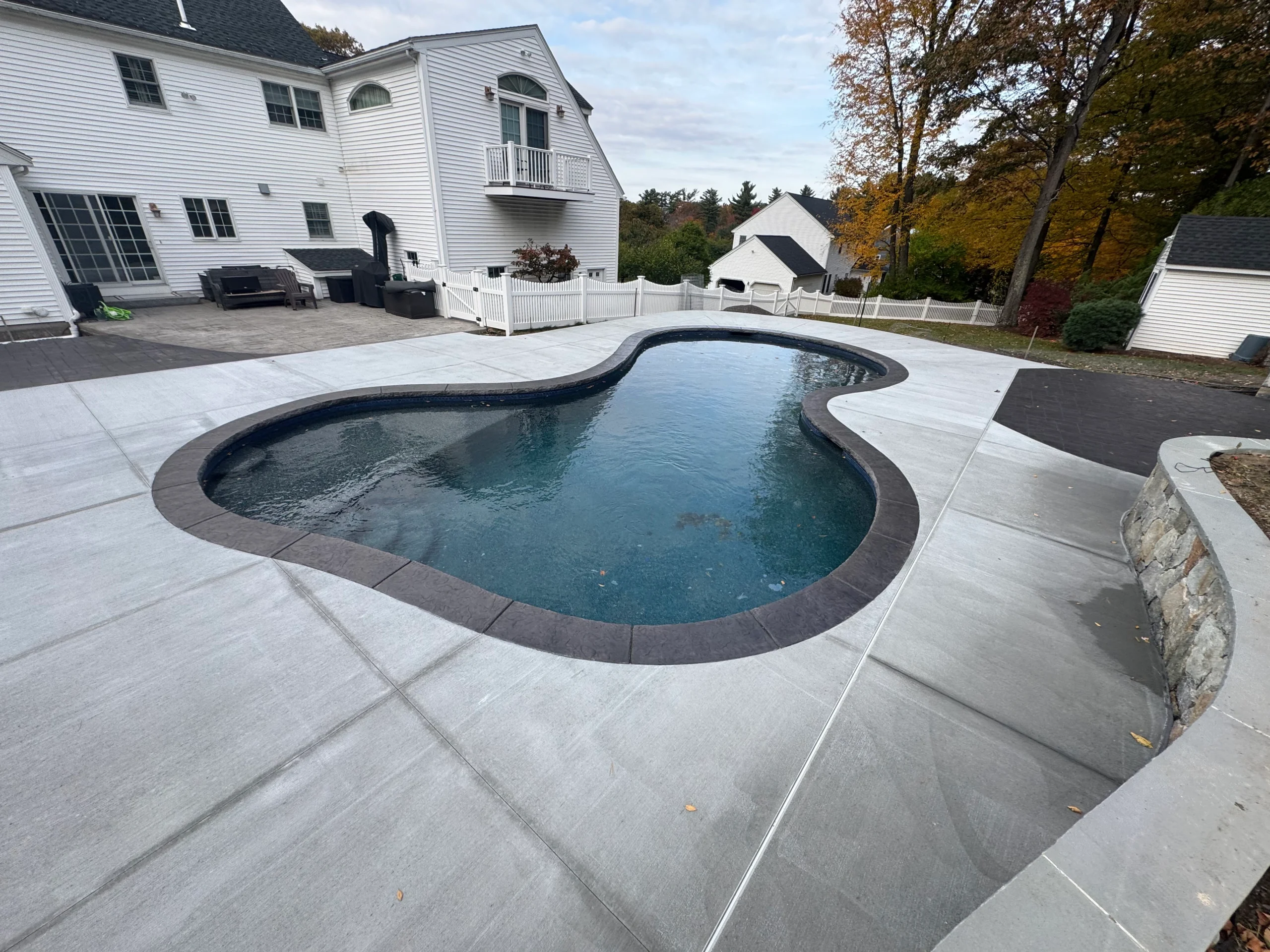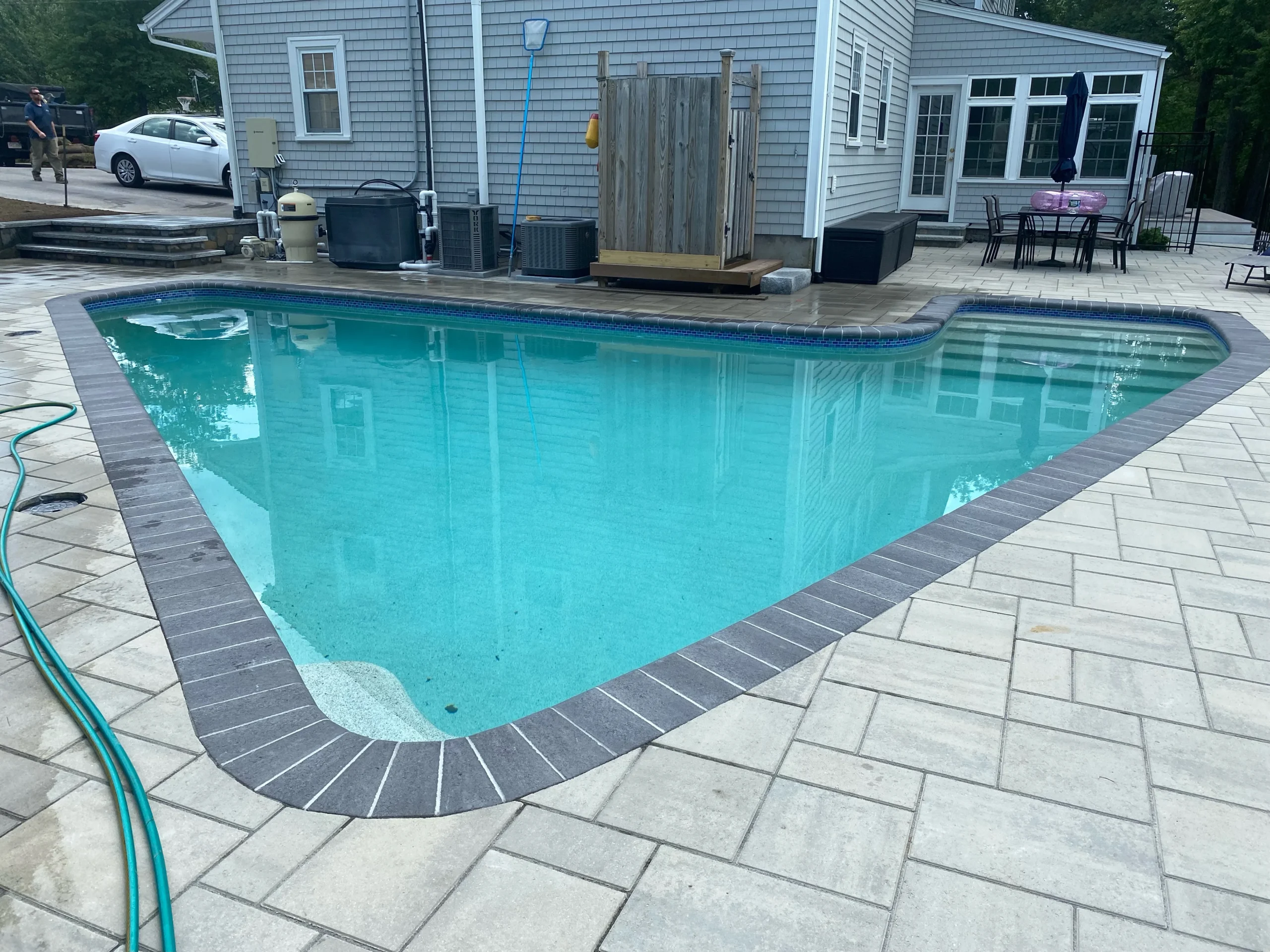

Your Trusted Project Partner


Our pool deck installation services cover everything you stand, sit and walk on around the pool, from the edge of the coping out to the lawn or patio. A good deck feels safe under wet bare feet, stays comfortable on a hot July afternoon and sheds water away from the pool instead of toward it. In Massachusetts and New Hampshire it also has to get through years of freezing and thawing without heaving or cracking. We build new decks around new pools and replace worn, cracked or uneven decks around existing ones. If the deck is part of a bigger refresh, our pool renovation work can plan both together.
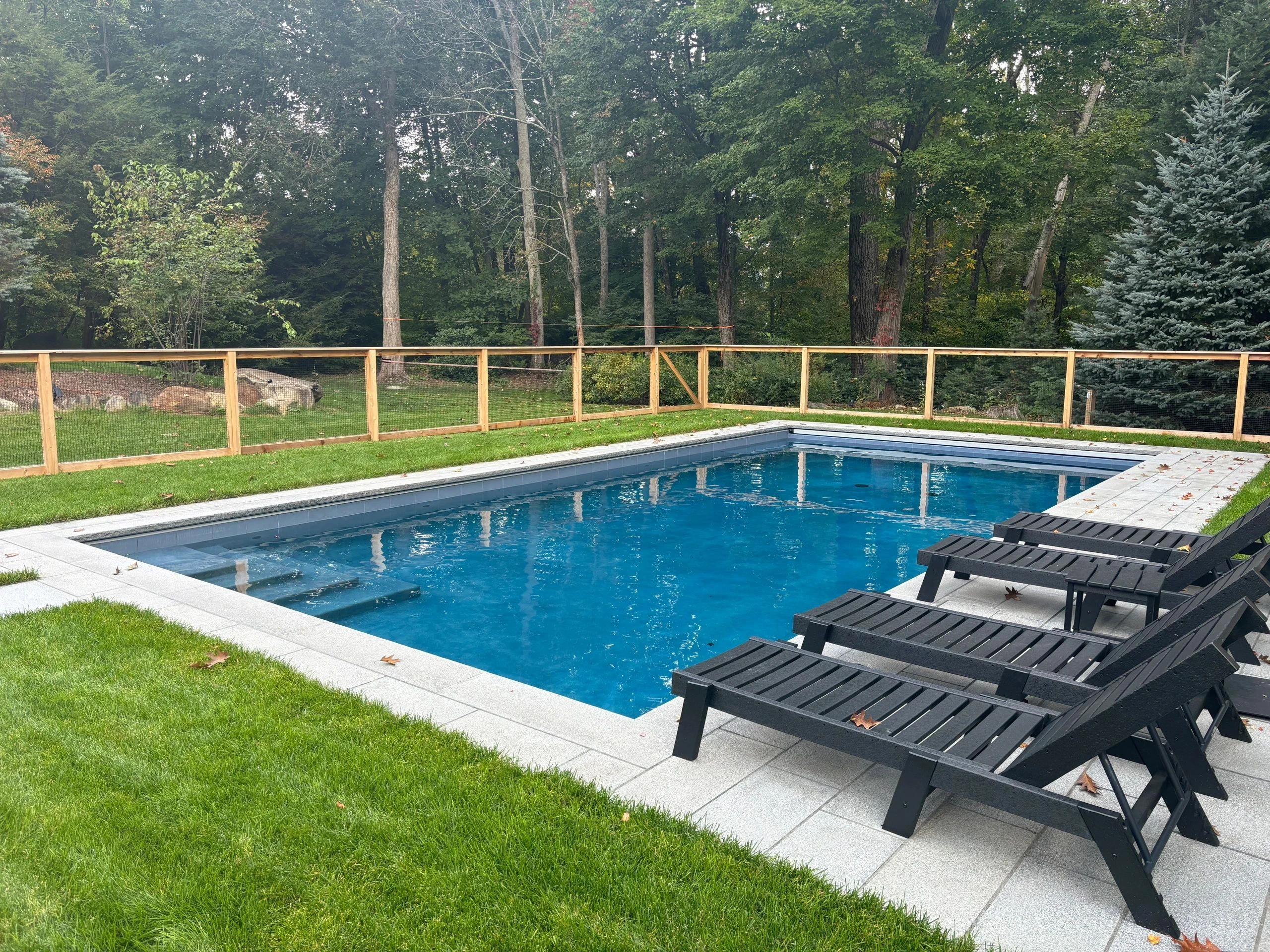
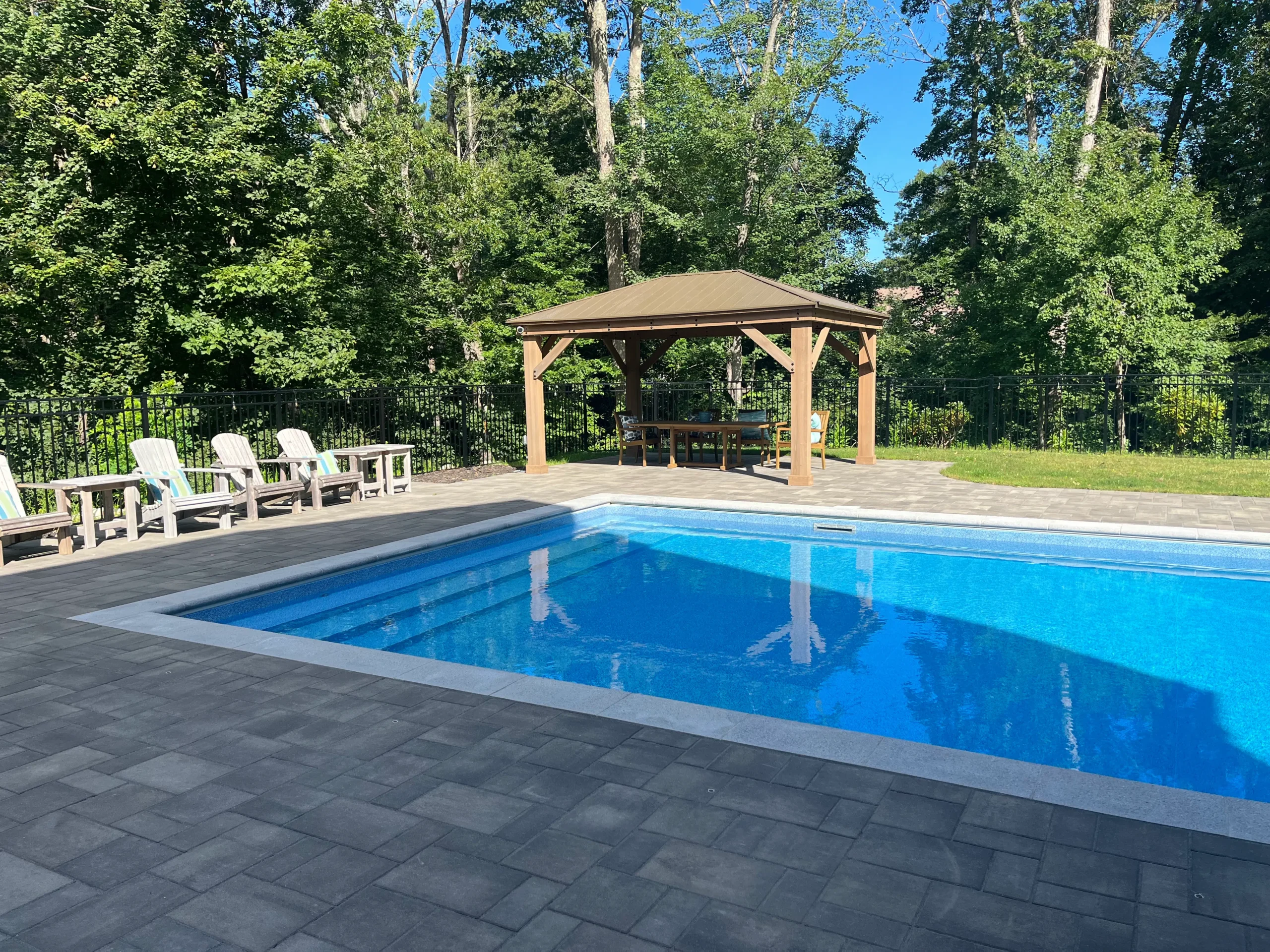
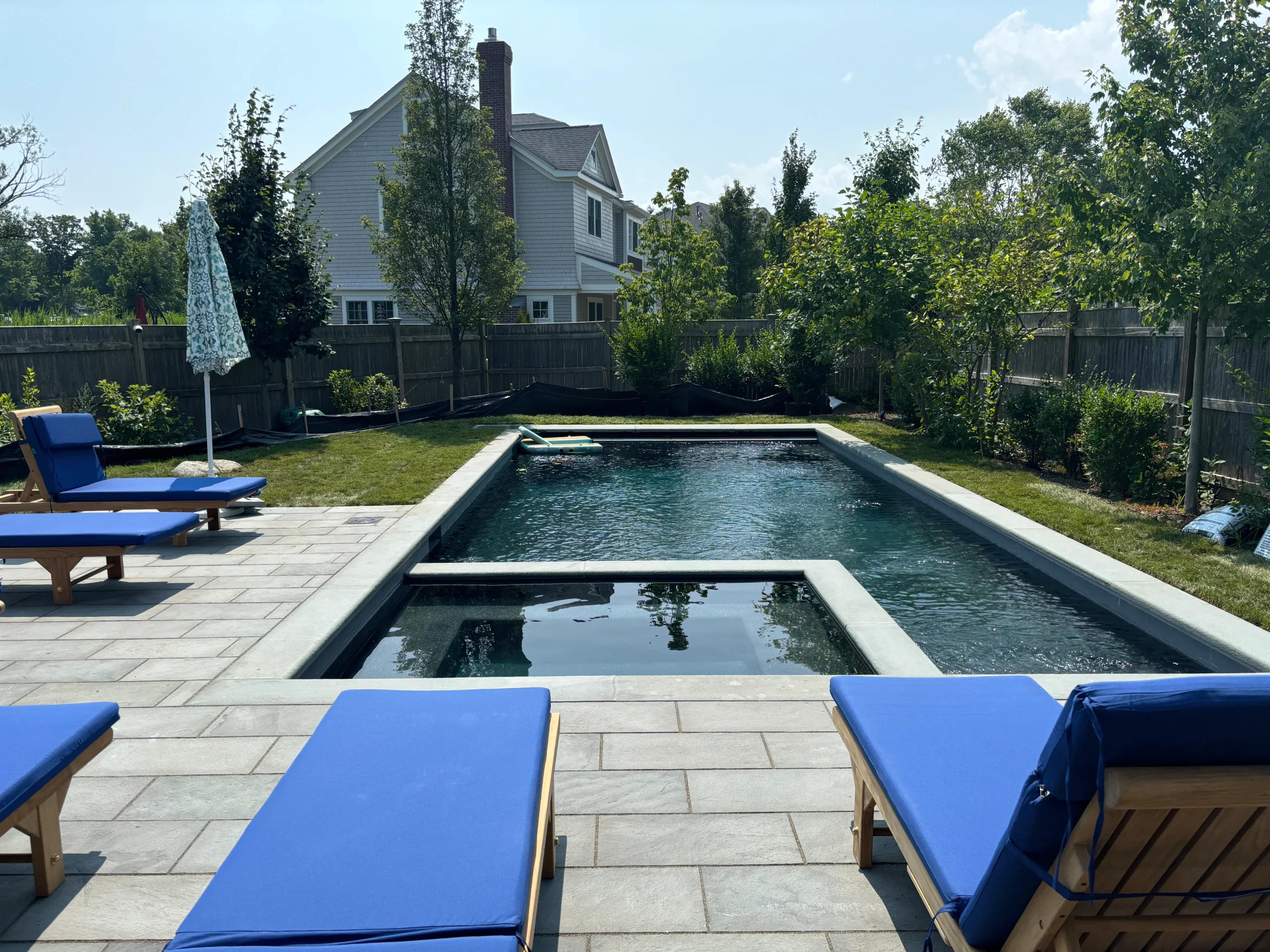
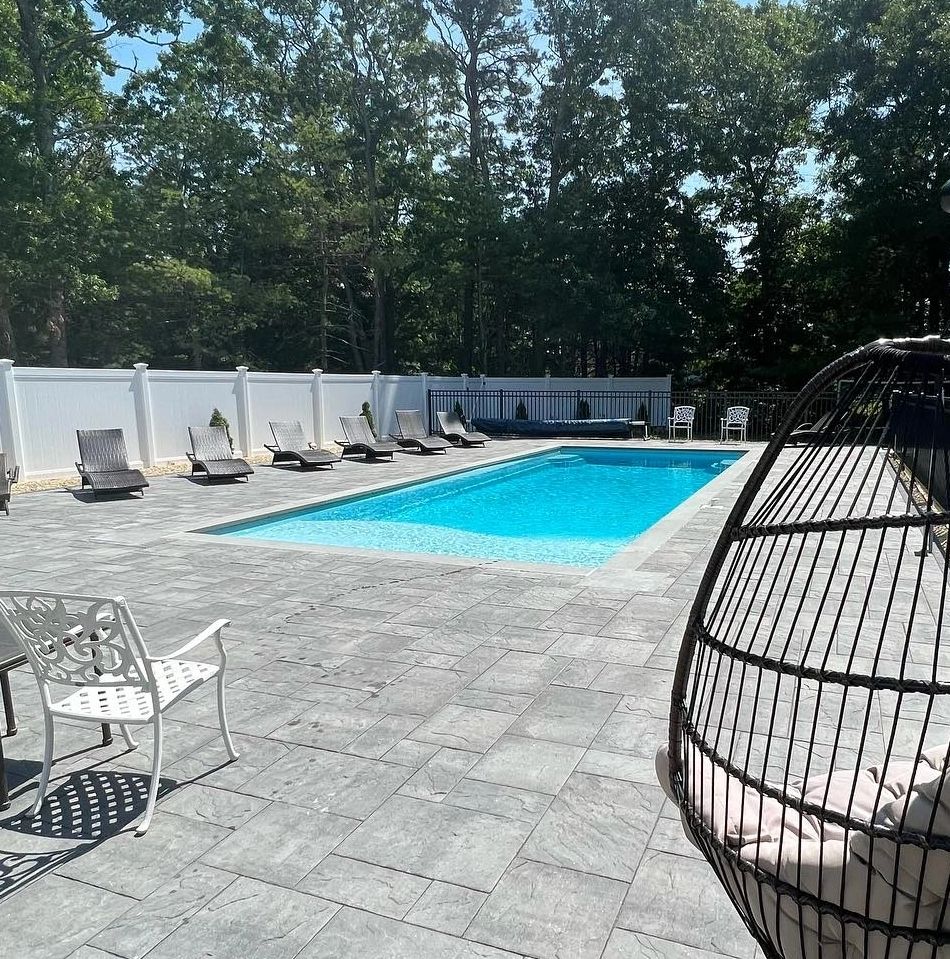
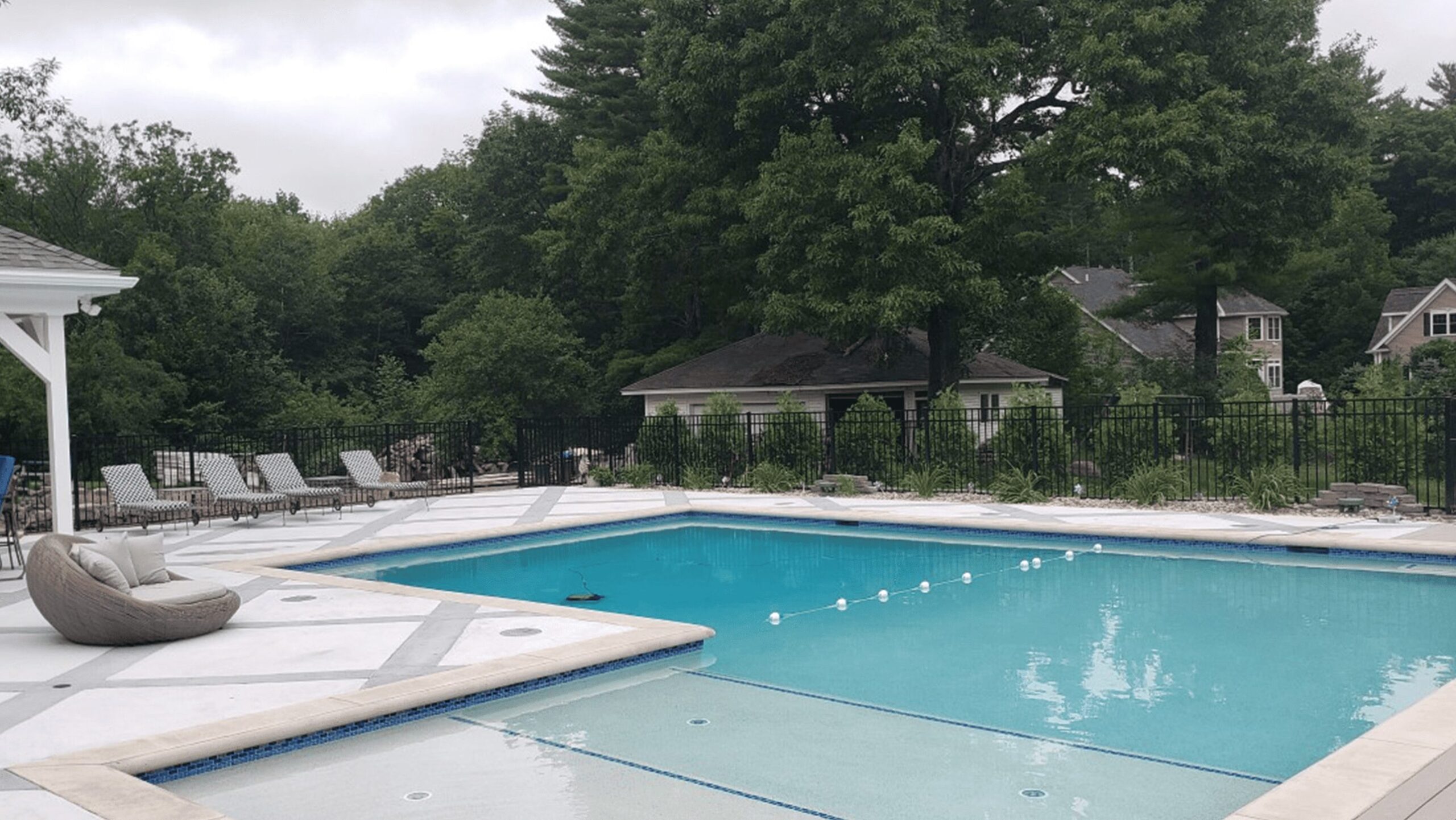
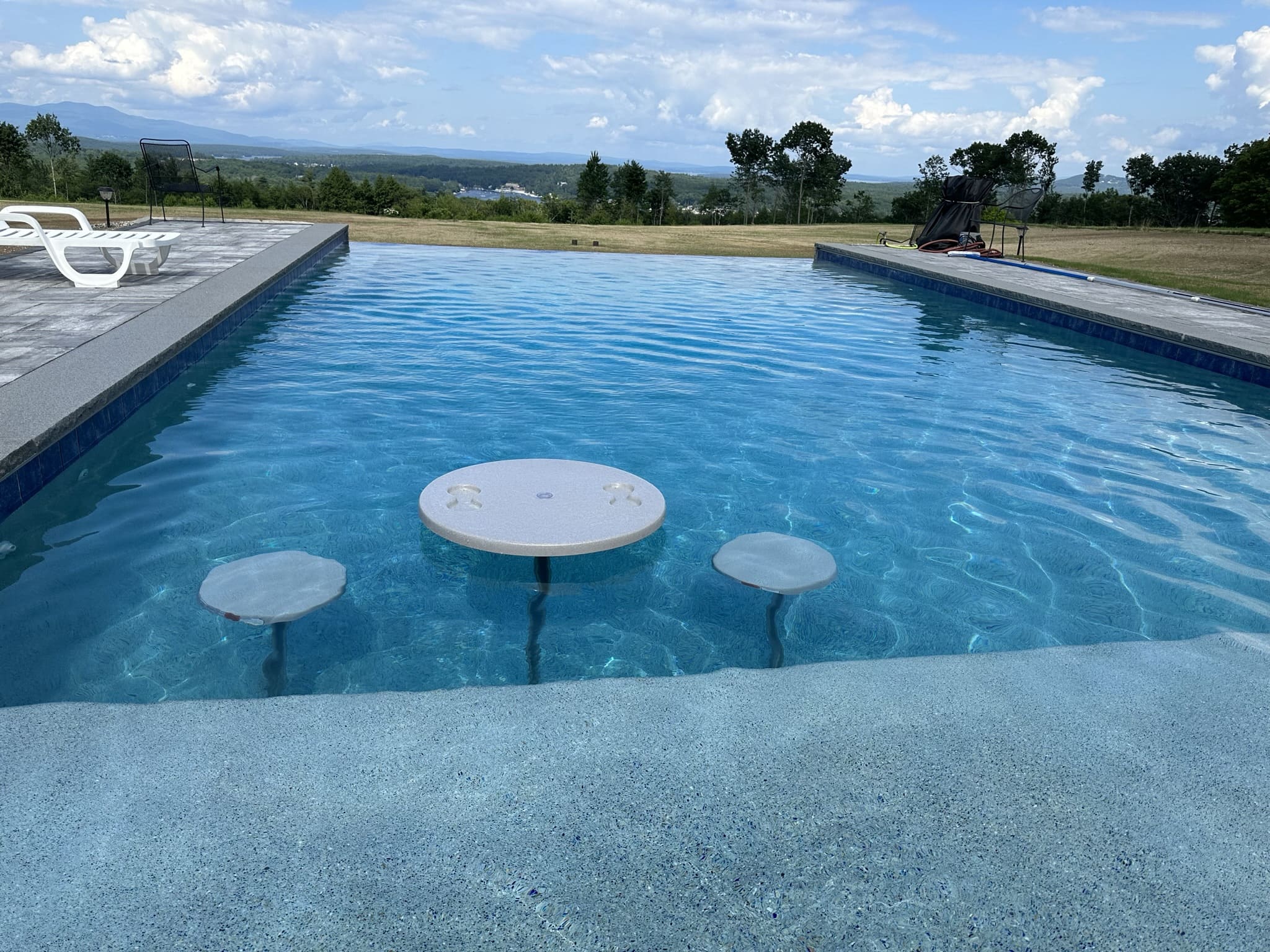
These photos come from real pools and outdoor spaces we have built. Look closely at the deck around each one: the material, the joint lines and how it meets the lawn, plantings and steps. There is more in our gallery.
Most deck complaints trace back to what is underneath: the base, the pitch and the joints. Here is what we see most, and how a properly built deck avoids it.
// Areas We Serve
We work with homeowners across northeastern Massachusetts and southern New Hampshire. Pick your town to see local details, or ask us if yours is not listed.
We start with layout: how wide the deck needs to be for lounge chairs and walking room, where the fence and gate will go, and which way water should run. Then we excavate to firm subsoil, remove organic material and bring in crushed stone in layers, compacting each one. For pavers and stone we set an edge restraint, screed a bedding layer, lay the pattern and sweep in joint sand. For concrete we form, add reinforcement, pour and finish with a textured surface, then cut control joints. Where the deck meets the coping, we leave a flexible joint so the two can move independently.
Why Choose Us
Many pool companies hand the deck to a separate masonry crew. We do both, so the pool, coping, deck, steps and drainage are planned by the same people and built in the right order.

Interlocking pavers come in many colors and shapes, handle frost movement well and can be lifted and reset if a spot settles.

Thermal bluestone, granite and other natural stone give a classic New England look, and thermal finishes add grip for wet feet.

A porous natural stone that stays cooler than many surfaces in direct sun, with a soft, warm look around the water.

Broom finished or stamped concrete gives a continuous surface, with control joints placed to guide where cracks form.

Channel or slot drains catch water on wide or flat areas where pitch alone cannot carry it off.

Stone steps, landings and borders connect the deck to the house, patio, lawn and pool equipment area.
Can pool deck installation happen around an existing pool?
Yes. We remove the old deck carefully so the coping and pool shell are not damaged, check what is underneath, then build a new base and surface. If the coping is loose or cracked, it makes sense to replace it at the same time. Our coping installation page explains that work.
Which pool deck material is the least slippery?
Textured surfaces grip best when wet: thermal finished bluestone, tumbled or textured pavers, travertine and broom finished concrete. Polished or glossy sealed surfaces can get slick, so we choose sealers with grip in mind. Our stone versus concrete guide compares the options in more detail.
Why do concrete pool decks crack?
Concrete shrinks as it cures and moves with frost, so some cracking is normal. Problems start when the base was never compacted, water collects under the slab, or control joints were missing or too far apart. Good base work and planned joints keep cracks small and in places you expect them.
How wide should a pool deck be?
It depends on how you use it. Leave enough room to walk behind lounge chairs without stepping close to the water, and more space where you will eat or gather. Fence and gate locations matter too, since pool barrier rules decide where the enclosure goes. We sketch all of this during design.
Do pavers hold up to New England winters?
Yes, when the base is right. Pavers are separate units, so they flex with freezing and thawing instead of cracking. A deep compacted base, an edge restraint and good drainage keep them level. If one settles, it can be lifted and reset without replacing the whole deck.
Can you replace just part of my pool deck?
Often, yes. Sunken pavers can be lifted and relaid, and a damaged concrete section can sometimes be cut out and replaced, although matching the color of old concrete is hard. We will look at it and tell you honestly whether a repair or a fuller pool remodel makes more sense.