
Your Trusted Project Partner


Our pool lighting installation services cover underwater lights for new pools and LED upgrades for existing ones. Good lighting lets you see the steps, the floor and anyone in the water at night, and it changes how the whole yard looks once the sun goes down. Modern LED fixtures use far less energy than old incandescent bulbs, last longer and can shift between white and a range of colors. Because underwater lights combine water and electricity, every job follows the electrical code, with GFCI protection and wiring by a licensed electrician. For lights around the rest of the yard, see our landscape lighting page.
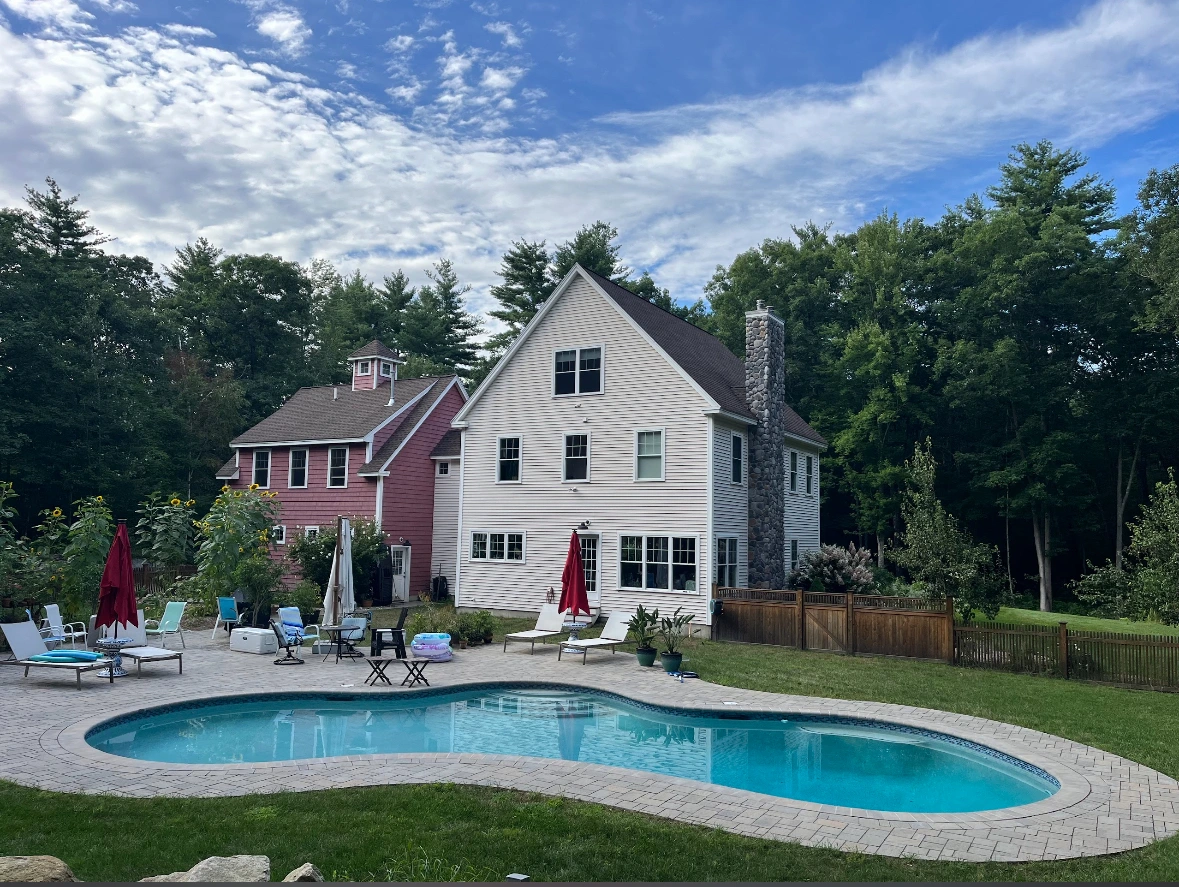
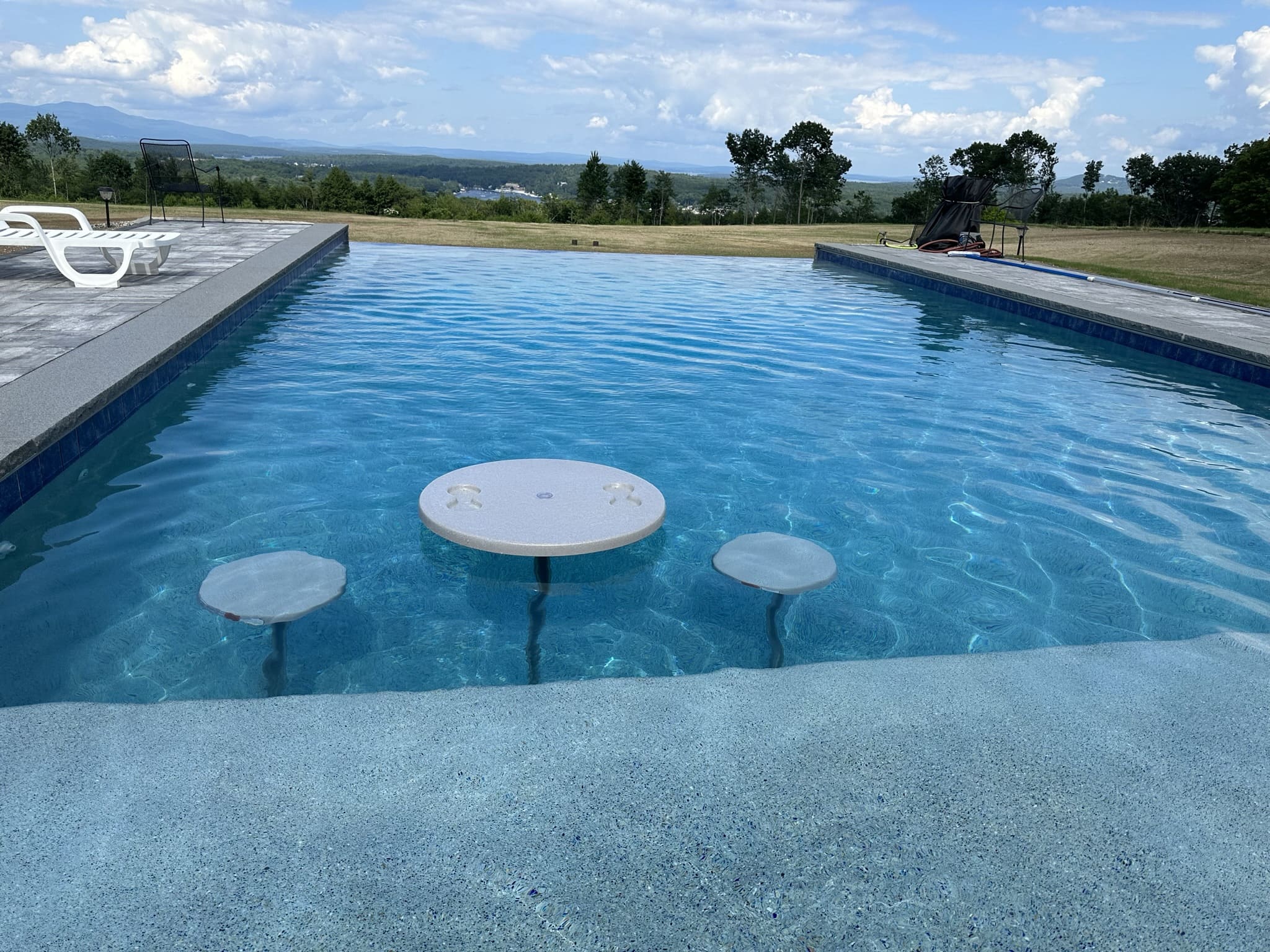
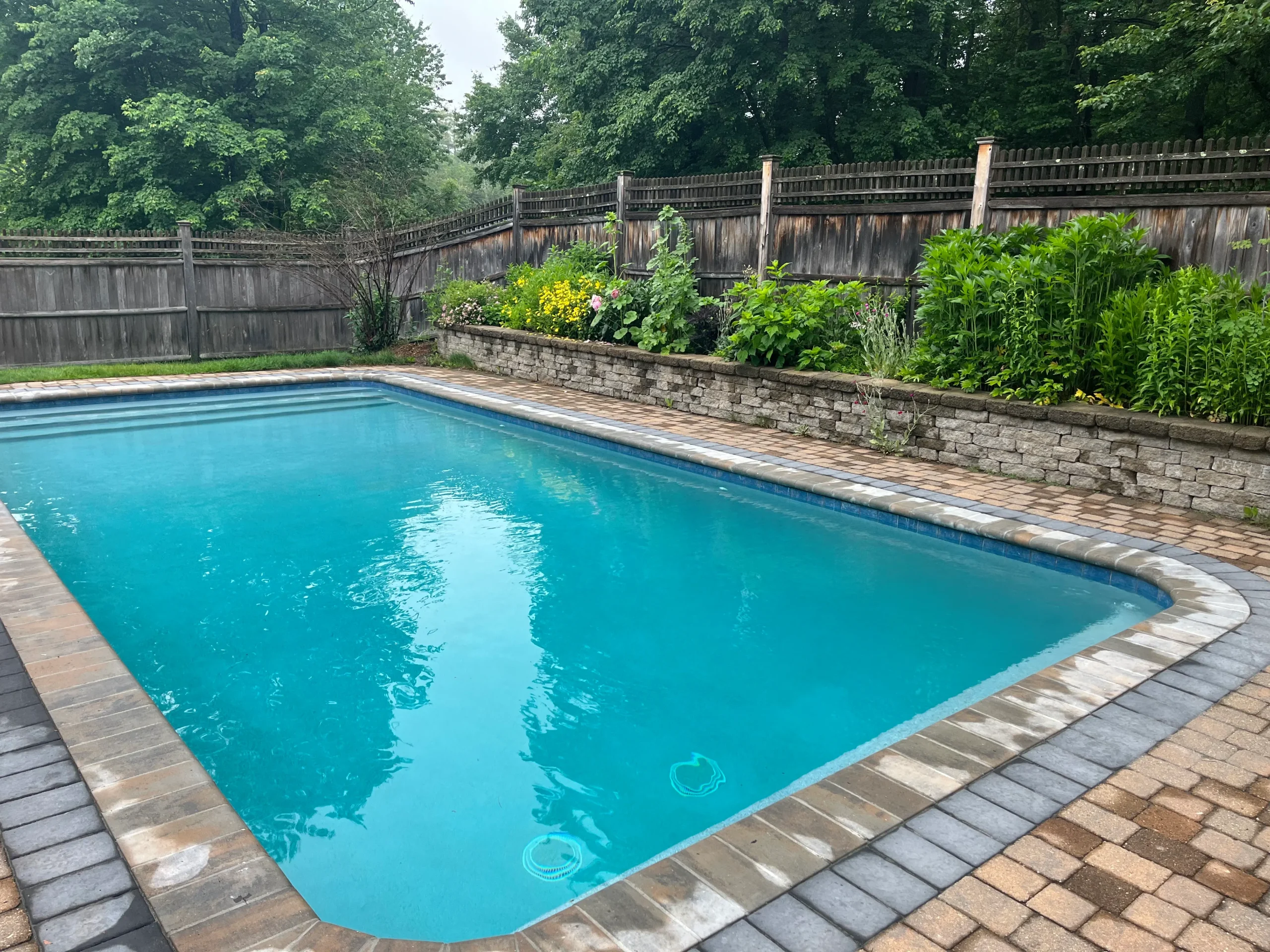
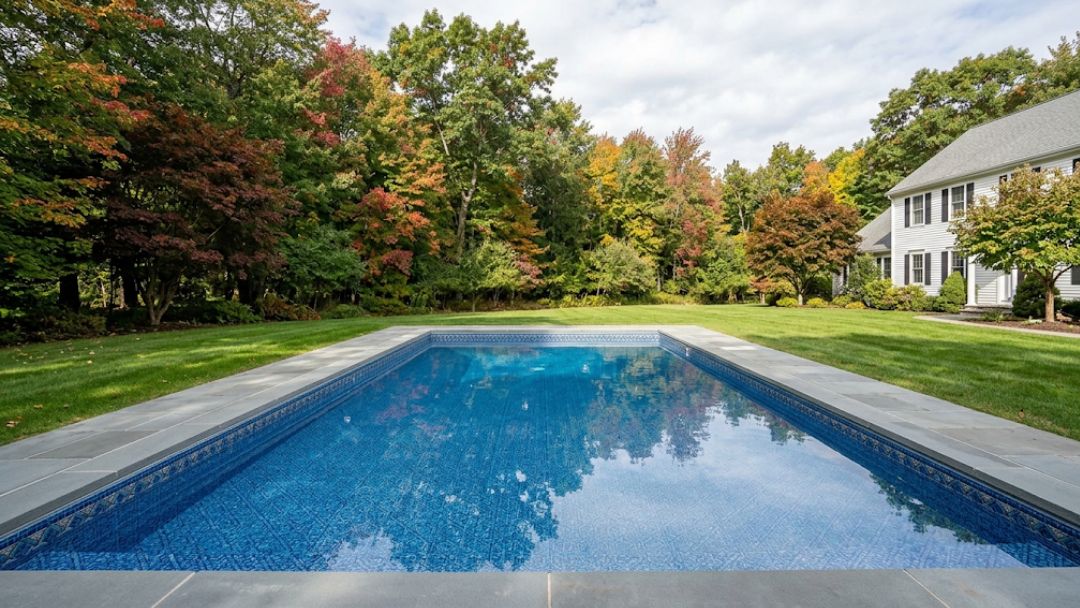
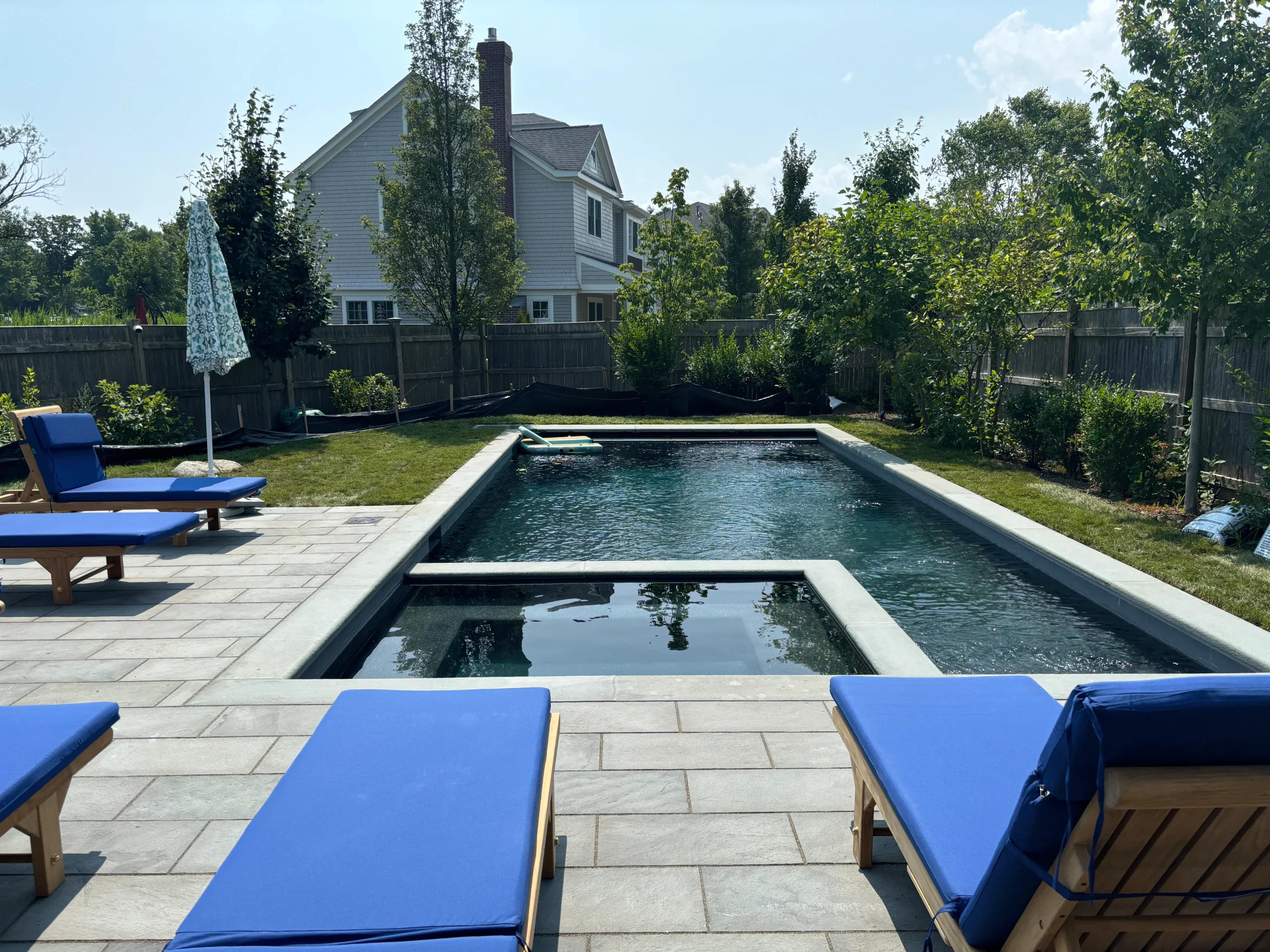
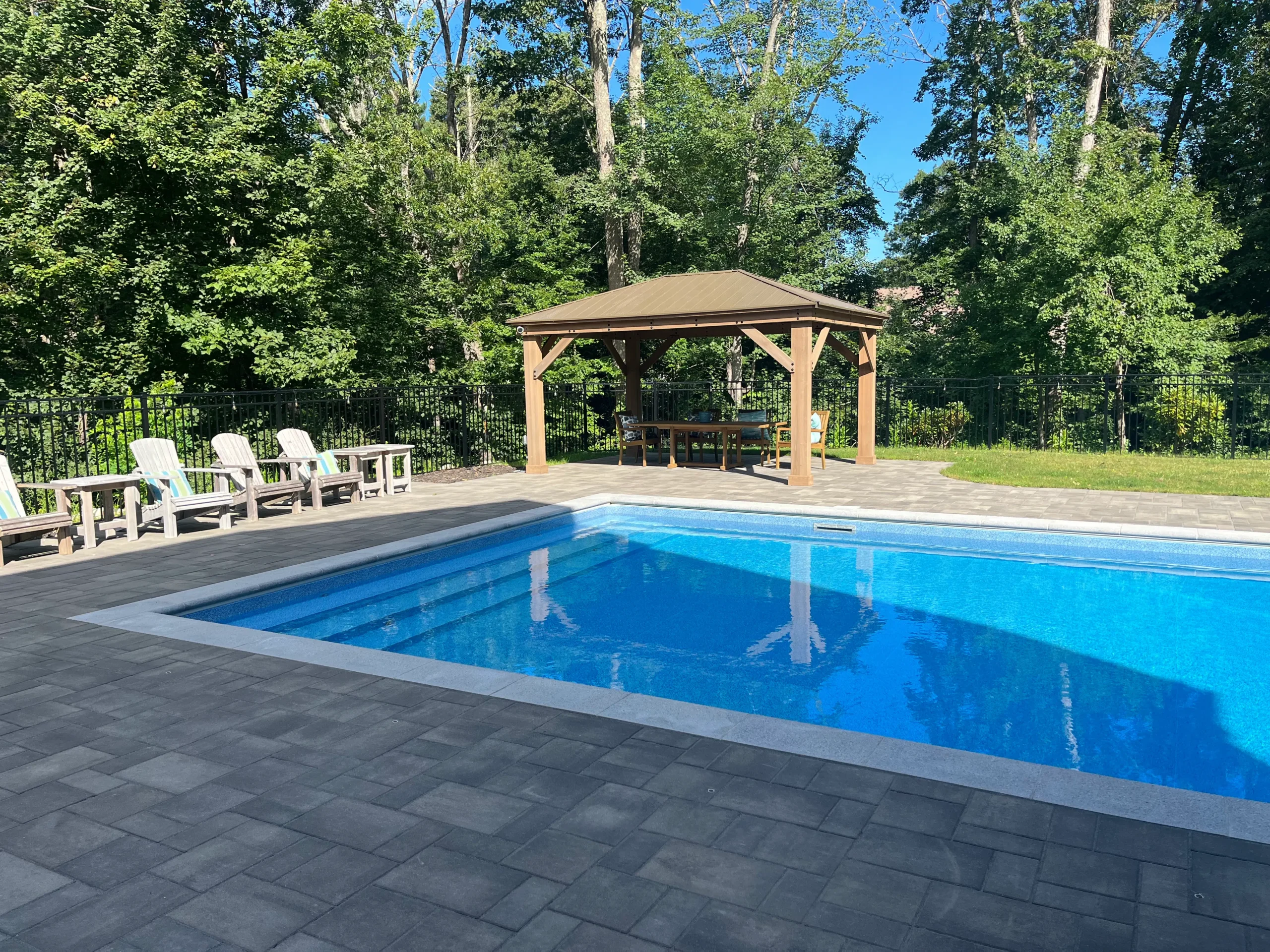
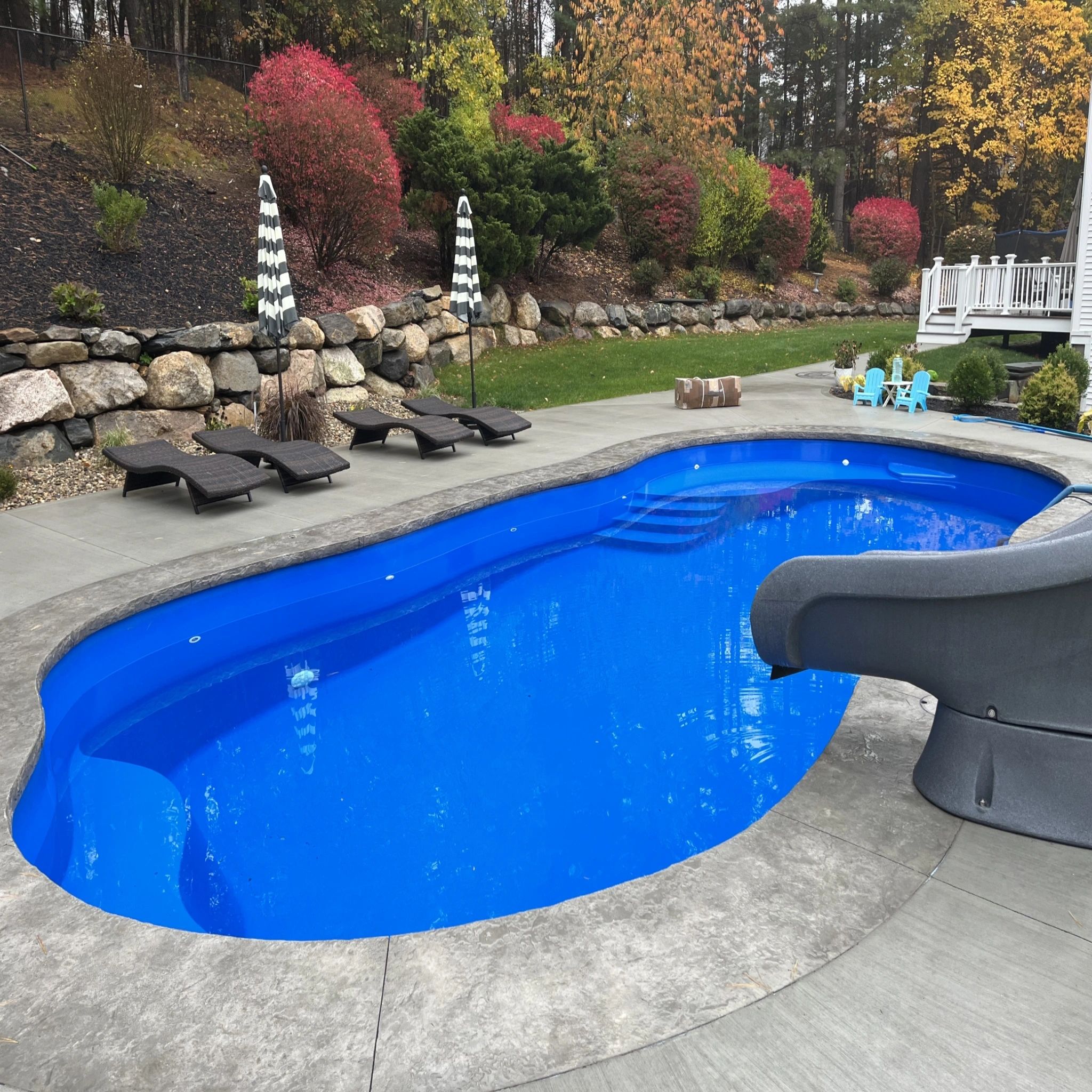
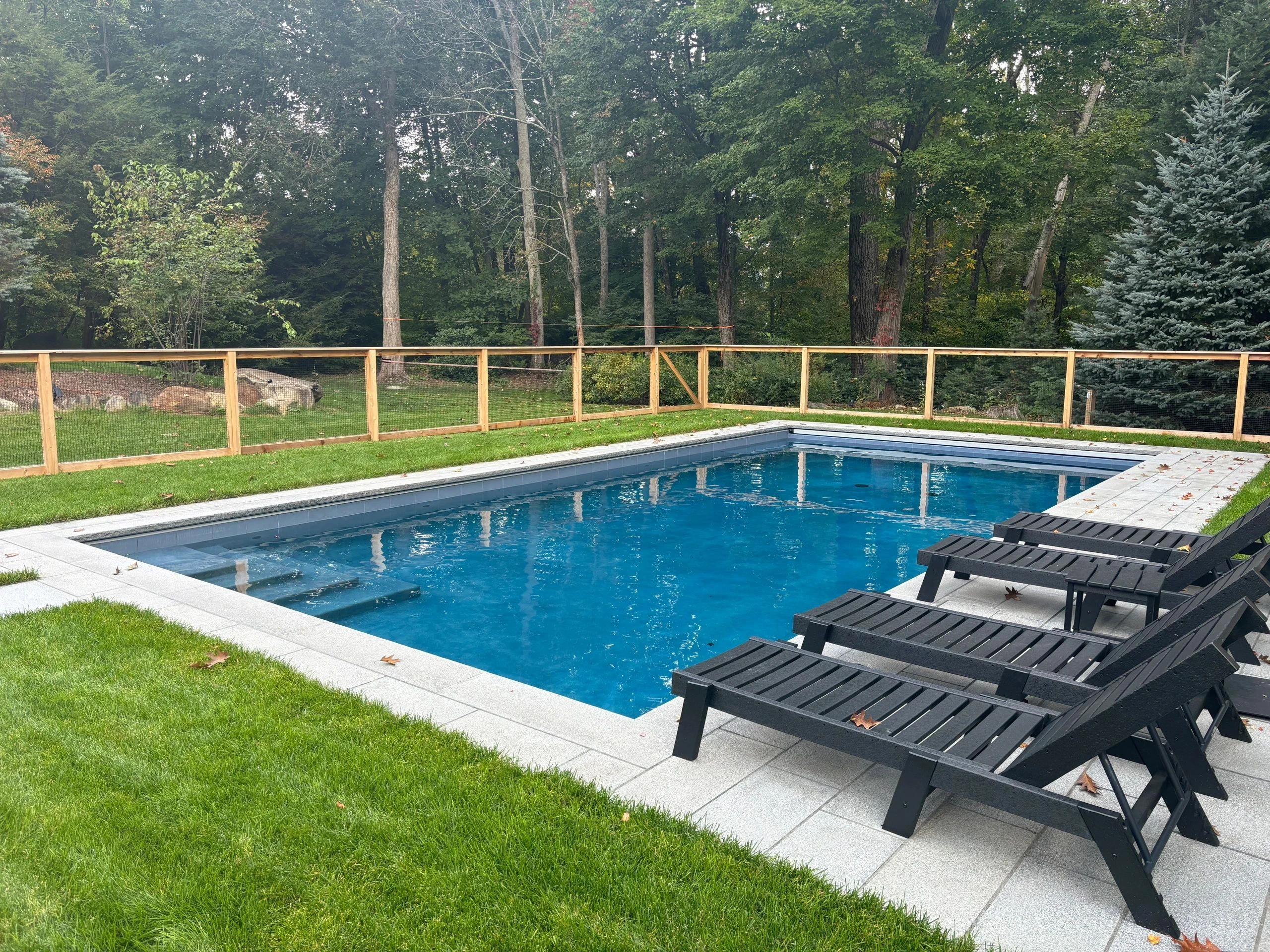
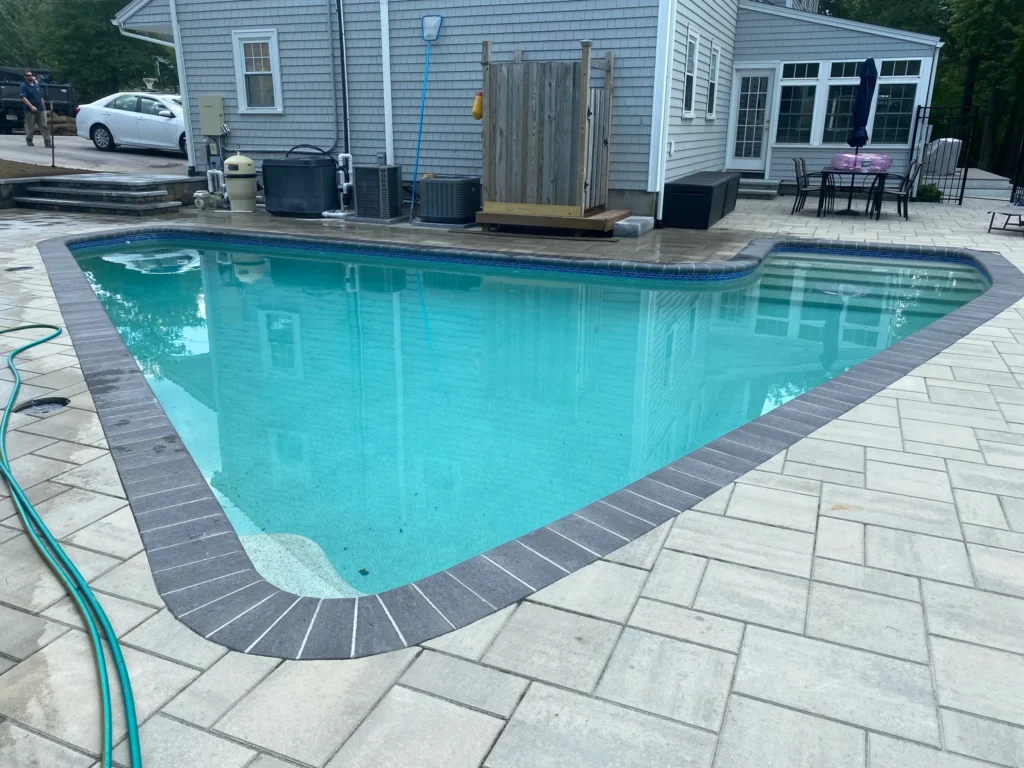
These are photos from our own pool and landscape projects. Lighting is easy to overlook in daytime pictures, but it shapes how each of these spaces gets used every evening.
Older pool lights tend to show their age in a few predictable ways. Here is what owners notice and what an upgrade does about it.
// Areas We Serve
We work with homeowners across northeastern Massachusetts and southern New Hampshire. Pick your town to see local details, or ask us if yours is not listed.
On a new pool, light niches are set in the pool walls during construction, with conduit running to a junction box set above the water level and on to the control panel. On an existing pool, most lights can be serviced without draining: the fixture is unscrewed and lifted onto the deck on its extra coil of cord, then swapped for an LED fixture that fits the niche. We check the cord, bonding, junction box and GFCI protection, then reset the fixture with a new gasket and test it underwater before closing up.
The Difference
We build complete pools, so we understand the niches, conduit and bonding behind a light, not just the fixture. Our landscape architecture background helps us place lights for the look you want from the house.

Choose a steady white or cycle through colors and preset shows, set from a remote, switch or app.

Bright, clean white light for families who mainly want clear visibility for evening swimming.

Replace old incandescent or halogen lights with LED fixtures made to fit existing niches, often without draining.

Small lights at steps, benches and ledges that mark edges and make getting into the pool safer at night.

Lights in the spa, behind a waterfall or inside laminar jets, synced with the main pool lights.
Many pool lights run on low voltage through a transformer, adding another layer of safety near water.
Does pool lighting installation require a licensed electrician?
Yes. Underwater lights sit in water and connect to household power, so the electrical code calls for GFCI protection, proper bonding and correct junction box placement. On our projects, a licensed electrician handles the wiring and connections, and an electrical permit is usually part of the process.
Can you replace a pool light without draining the pool?
Usually, yes. Most wet-niche pool lights have extra cord coiled behind them, so the fixture can be lifted out onto the deck for service while the pool stays full. If the cord is too short or damaged, or the niche is cracked, the job may need more work, and we will explain that first.
Are LED pool lights worth the upgrade?
For most pools, yes. LEDs use a fraction of the power of incandescent bulbs, run cooler, last much longer and offer color options. Many LED fixtures are made to fit common existing niches, which keeps the swap simple.
How many lights does my pool need?
It depends on the size, shape and depth of the pool and on the finish color, since dark finishes absorb more light. A small, simple pool may need only one, while larger or irregular pools need more to avoid dark spots. Spas and features usually get their own.
Can pool lights be controlled from my phone?
Where should pool lights face?
In most pools, lights go on the wall closest to the house, shining away from it, so you see the water lit up without glare in your eyes. That also keeps light out of the windows. Our guide to lighting a backyard without overdoing it covers the rest of the yard.