

Water problems in your yard rarely announce themselves loudly. More often, they show up as a soggy patch here, a crack in the patio there, easy to brush off until the damage runs deep. This guide walks through the 9 most telling signs your backyard needs a drainage system, what’s actually causing them, and what a proper fix looks like for homeowners in Massachusetts and New Hampshire.
Signs Your Backyard Needs a Drainage System
Most homeowners don’t think about yard drainage until something goes wrong, such as a flooded basement, a lawn that never quite dries out, or a concrete patio that’s started to crack along the edges. The frustrating part? By the time those problems show up, the water has usually been doing its damage for months, sometimes years.
Here’s the thing: poor drainage in a backyard isn’t just a landscaping inconvenience. It’s a slow, quiet threat to your property’s structural integrity, your yard’s health, and your home’s value.
The good news is that the warning signs are almost always visible well before the damage becomes serious, if you know what you’re looking for. Whether your yard has been struggling after a few heavy spring rains or you’ve noticed persistent wet spots that just won’t go away, the patterns below are worth taking seriously.
1. Water Still Pools in Your Yard 24 to 48 Hours After Rain
After a heavy rain, it’s pretty normal to see some water sitting on the surface for a bit. The ground needs time to soak it in. No issue there.
But if you walk out the next day and those same spots are still holding water, that’s where it starts to matter. And if it’s still wet two days later? That’s not just how your yard behaves; that’s a drainage issue.
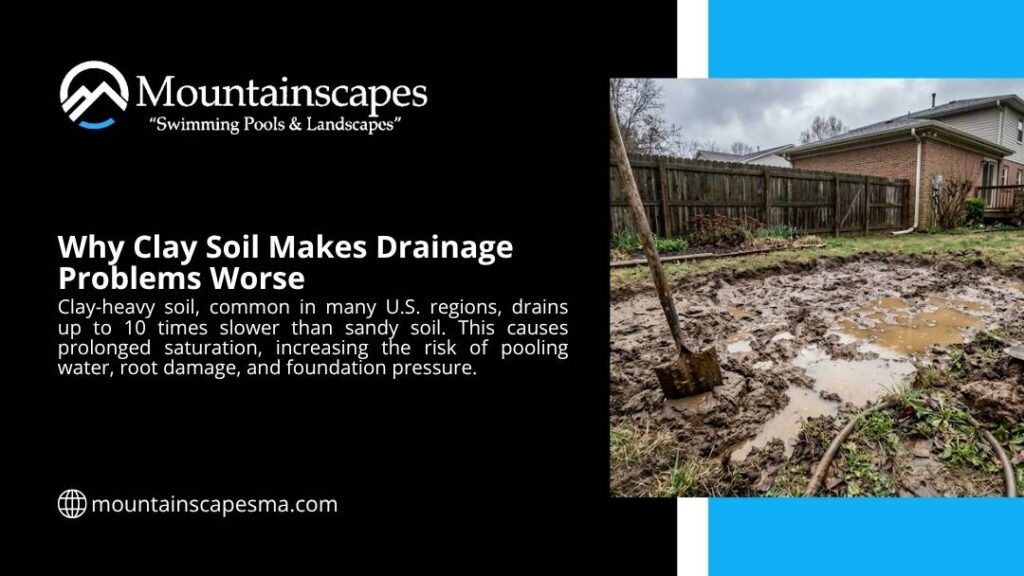
What’s usually going on is fairly straightforward once you look at it closely. Either the soil has become packed down enough that water can’t move through it, or the yard has subtle low areas that collect water without you really noticing. In this part of the country, especially in Massachusetts and southern New Hampshire, clay soil adds another layer to it. It holds onto moisture much longer than most people expect.
The puddle itself isn’t really the main concern. It’s what follows. Give it a day or two, and you’ll start to see the effects: grass thinning out, areas turning patchy, and insects showing up where water sits.
A lot of homeowners try reseeding those spots, thinking it’s just a lawn issue. It usually doesn’t change much. Until the water has somewhere to go, the problem keeps coming back.
| How Long Does Water Stay | What It Tells You |
| Under 6 hours | Everything’s working fine |
| 6–24 hours | Early sign something’s off |
| 24–48 hours | Drainage isn’t working properly |
| 48+ hours | Needs a proper fix |
2. Your Lawn Feels Soft, Spongy, or Leaves Deep Ruts
Sometimes the yard doesn’t look wet, but it feels off when you walk across it. If your foot sinks a bit, or the ground feels soft even after a few dry days, that’s usually a sign that water is sitting below the surface. Same thing if your mower leaves tracks that don’t bounce back.
What’s happening underneath is the real issue. The top layer dries out faster, but a few inches down, the soil can stay wet much longer than it should. That constant moisture changes how the soil behaves.
Roots don’t get enough air. The lawn starts weakening slowly. You might see moss show up or areas that just don’t grow the same anymore.
It’s easy to think it needs fertilizer or new seed. Most people go that route first. But until the water actually moves through the soil the way it should, the lawn never really improves.
3. Soil Erosion and Exposed Roots
When roots start showing, or parts of the yard look like they’ve shifted, it’s usually not random. Water tends to move in whatever direction it can when there’s no clear path for it. Over time, that movement carries soil with it (soil erosion). It’s slow, but it adds up.
You might notice mulch washing out after storms, or certain areas looking uneven compared to how they used to be. Sometimes, grass just disappears from a section without an obvious reason.
That’s erosion happening right in front of you. And it doesn’t stay cosmetic. The same movement that exposes roots can affect anything sitting on that ground, including structures nearby.
4. Moisture or Water Stains Are Appearing in Your Basement
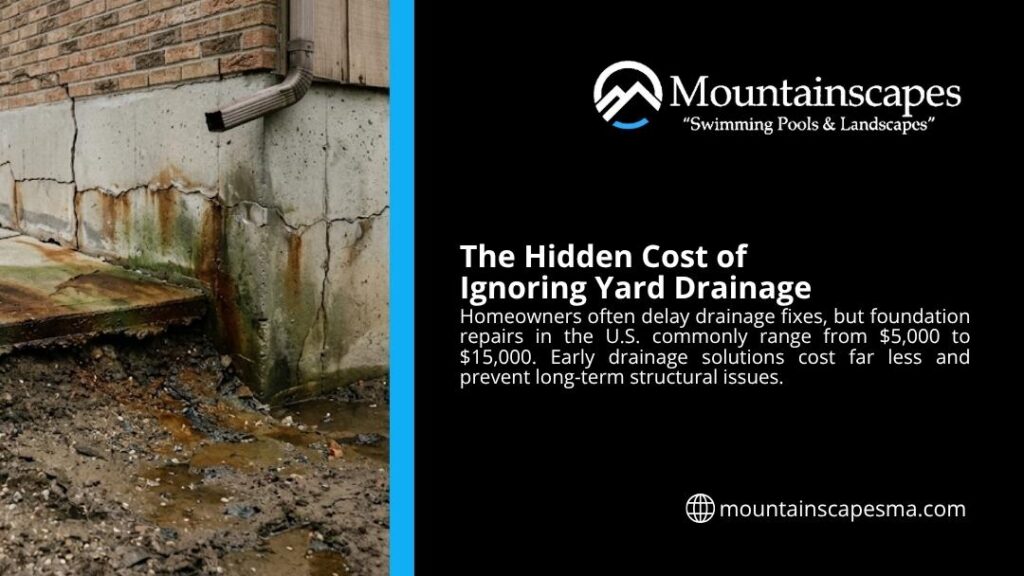
A damp basement often gets blamed on something inside the house, such as a burst pipe or a roof problem. In a lot of cases, the issue actually starts outside. When water builds up around the foundation, the soil holds onto it. Over time, pressure develops, and that water begins working its way through small openings in the concrete.
Basement moisture is frequently a yard problem, not a basement problem. When the soil surrounding a home becomes saturated, especially clay-heavy soil, it exerts hydrostatic pressure against foundation walls. That pressure, sustained over weeks and months, forces water through even small cracks in concrete. Left alone, it causes mold growth, wood rot in crawl spaces, and eventually, structural movement.
According to the industrial data, poor drainage around a home can lead to foundation damage and costly repairs if not addressed early.
Musty smells, white mineral deposits (called efflorescence) on basement walls, or visible damp patches on concrete are all signals that water is getting in from the outside, and that the grading or drainage around your home needs attention.
5. Cracks Are Appearing in Your Patio, Driveway, or Foundation
Concrete doesn’t usually crack overnight. It happens slowly. Small shifts underneath, a little movement here and there, and eventually it shows on the surface.
When soil keeps getting wet and then drying out again, it expands and shrinks. That constant cycle puts pressure on anything sitting above it. Over time, the material gives in.
In areas with heavier soil, especially clay, that movement can be more noticeable. You might first see a thin crack. Then it spreads. Sometimes sections feel slightly uneven underfoot.
According to research, poor drainage is one of the top underlying causes of residential foundation problems across the U.S. and Canada. Foundation repairs triggered by drainage failures typically run between $5,000 and $15,000, and that’s before factoring in any associated waterproofing or landscape correction work. A properly installed drainage system costs a fraction of that, and prevents the problem from reaching that stage.
It doesn’t always stop at the patio or driveway, either. In some cases, you’ll notice doors sticking or windows not closing quite right. That’s usually a sign that something underneath has shifted, even if it’s only a small amount.
Most people assume it’s just normal settling. Sometimes it is. But when drainage is involved, the movement tends to keep going instead of stabilizing.
6. Your Gutters and Downspouts Are Dumping Water Against the House
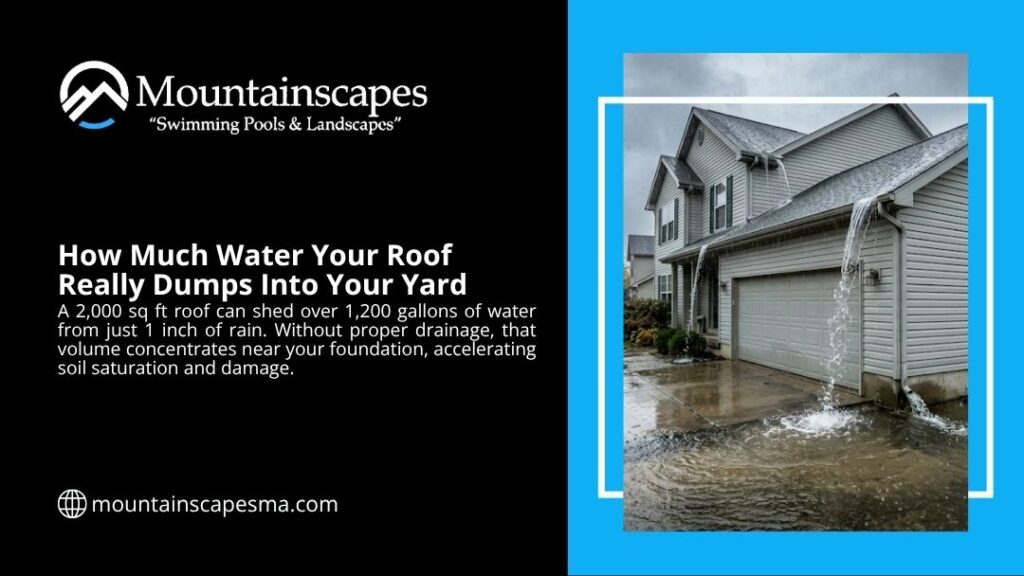
This one gets overlooked more than it should. During a storm, your roof collects a surprising amount of water. All of it gets pushed through the gutters and out the downspouts. If that water ends up right next to the house, it doesn’t take long before the ground there becomes saturated.
You might not notice it right away. But over time, that same area keeps getting hit again and again with runoff. Sometimes it’s as simple as a downspout that ends too close to the foundation. Other times, the gutters overflow because they’re clogged or not sized properly.
Either way, water ends up in the wrong place. And once the soil is holding more moisture than it should, it starts affecting everything around it.
7. You’ve Got Low Spots That Collect Water After Every Rain
Most yards have a bit of slope to them. That’s normal. But when certain areas fill up every single time it rains, those spots are telling you something. Water follows the easiest path. If it keeps ending up in the same place, it means the yard is directing it there.
Those low areas gradually change. The soil becomes denser. It holds more water. Grass starts thinning out, and the spot never quite dries the way the rest of the yard does.
A lot of homeowners try to fix it by adding soil or reseeding. It might look better for a short time, but the water keeps coming back to the same place. When the overall grading is part of the issue, the fix usually involves more than just surface adjustments. The water needs a new path.
8. Moss, Mildew, or Algae Are Taking Over Shaded Areas
Moss doesn’t show up randomly. It grows where conditions allow it to. If parts of your yard stay damp longer than they should, especially in shaded areas, you’ll start seeing it spread. Grass struggles in those conditions, and moss takes advantage of it.
The same goes for mildew or algae on hard surfaces. Patios, walkways, and retaining walls, if they stay wet too long after rain, those growths start to appear. You can clean them off, sure. But if the moisture keeps coming back, so will they. That’s usually a sign the issue isn’t on the surface. It’s the water feeding into it.
9. Water Appears to Come Up From the Ground After Rain
This is the one that tends to confuse people the most. After a heavy rain, instead of soaking in, the water seems to rise back up through the ground. It almost feels backwards.
What’s actually happening is that the soil has already reached its limit. It can’t take in any more water. So the new rain has nowhere to go. That’s when you start seeing it push back to the surface.
It’s more common in areas with dense soil or naturally higher groundwater. And when it happens, it usually means the issue goes deeper than what you see on top. At that point, simple fixes don’t do much. The yard needs a way to move water below the surface and carry it somewhere else entirely.
What Causes Drainage Problems in the First Place?
Drainage issues don’t usually come from one single thing. It’s often a mix. Sometimes the soil becomes compacted over time. Sometimes the yard slopes the wrong way slightly. In other cases, it’s the type of soil itself. Here’s a clearer breakdown:
| Root Cause | What Happens | Common Fix |
| Compacted soil | Water sits on top instead of soaking in | Aeration or regrading |
| Negative slope | Water moves toward the house | Adjust grading |
| Clay-heavy soil | Holds water longer than expected | Drainage system installation |
| Downspout discharge | Water collects near the foundation | Extend or redirect flow |
| No proper outlet | Water has nowhere to go | Add a drainage path |
Which Drainage System Do You Need? French Drains vs Catch Basins vs Regrading
Understanding which drainage solution works best depends on how water behaves on your property. The right system is not chosen randomly; it’s based on where the water comes from and how it moves through your yard.
| Drainage Type | Best Used When | How It Works | Key Benefit |
| French Drain | Water flows from higher ground toward your property | Underground perforated pipe redirects water before it reaches problem areas | Stops water before it becomes a problem |
| Catch Basin | Water collects and sits in low areas after rain | Surface-level inlet collects standing water and pipes it away | Removes visible pooling quickly |
| Regrading | Land slopes toward the home or structures | Adjusts the slope of the yard to guide water away naturally | Permanent correction of water flow direction |
In many cases, a single solution isn’t enough. A well-planned drainage system often combines multiple methods to manage both surface and subsurface water effectively.
How to Improve Lawn Drainage Before It Gets Worse
Some minor drainage issues can improve with small adjustments. Aerating soil, adjusting downspouts, or reshaping surface slopes can help in the early stages.
However, when drainage problems continue or worsen, long-term solutions become necessary. Systems such as French drains, grading corrections, or full landscape redesigns are often required to properly redirect excess water.
This is where planning matters. A well-designed drainage system doesn’t just remove water. It controls how water moves across your entire property.
Early Fixes vs Long-Term Drainage Solutions
| Condition | Short-Term Adjustment | Long-Term Approach |
| Minor puddles | Soil loosening | Regrading lawn |
| Water near downspouts | Extend runoff paths | Install drainage channels |
| Soft lawn areas | Reduce compaction | Subsurface drainage system |
| Repeated wet zones | Surface leveling | French drain installation |
Why Drainage Matters Before Installing a Pool or Landscape
Before investing in a backyard upgrade, drainage should always come first. The same applies to landscaping. Planting beds, lawns, and hardscape areas all depend on controlled water flow. Without that control, you end up correcting the same problems again after the project is complete.
Whether you’re planning a patio, lawn renovation, or working with a team that offers outdoor design services, water control plays a major role in long-term results. Without proper drainage, even well-built features can fail over time. Pools, hardscapes, and planting areas all rely on stable ground conditions. When a new pool is part of the vision, our guide to planning an inground pool installation shows how grading and layout decisions come together early. If you’re exploring custom pool construction or landscape planning, addressing drainage early helps protect that investment.
When It’s Time to Call a Professional
There’s a point where surface fixes no longer work. If you notice repeated water pooling, erosion, or multiple signs of poor drainage soil, it’s time to bring in professional help. A proper assessment looks at grading, soil conditions, water flow, and long-term performance. It’s not just about solving today’s issue. It’s about preventing future damage.
DIY vs Professional Drainage Solutions
| Situation | DIY Works? | Professional Needed? |
| Small puddles | Yes | No |
| Repeated pooling | Limited | Yes |
| Erosion issues | No | Yes |
| Foundation concerns | No | Yes |
FAQs
How do I know if my yard has a real drainage problem?
If water keeps showing up in the same spots after rain and takes a long time to disappear, that’s usually more than just normal wet soil.
Why does one part of my lawn stay wetter than the rest?
It’s often a low area or a place where water naturally collects. Once it starts, it tends to repeat unless something changes.
Can grass fix drainage issues on its own?
Not really. Grass can help a little, but if the soil underneath isn’t draining properly, the problem stays.
Is it okay to leave small puddles alone?
Once or twice might not matter much. But if it keeps happening, it usually gets worse instead of better.
What’s the biggest mistake people make with drainage?
Trying to fix the surface without understanding where the water is coming from.
Does drainage affect new landscaping projects?
Yes, more than most people expect. Poor drainage can undo a lot of work over time.
How long should water stay in my yard after rain?
It should start draining fairly quickly. If it’s still there the next day, that’s worth paying attention to.
When should I stop trying to fix it myself?
If you’ve tried a couple of things and nothing really changes, it’s probably time to look at it more seriously.
What This Means for Your Backyard Long-Term
Ignoring drainage problems often leads to higher costs later. What starts as a simple yard drainage issue can develop into structural damage, landscape failure, or expensive repairs.
Water affects everything it touches. Soil, plants, hard surfaces, and foundations all respond to how water moves through your property. That’s why early action matters.
If you’re seeing signs that your backyard needs a drainage system, it may be worth speaking with a local outdoor design team. A clear plan now can prevent larger problems down the line while helping you get the most out of your outdoor space.