
Your Trusted Project Partner


Our excavation services cover the digging that comes before anything gets built: the hole for an inground pool, footings for an addition or garage, and trenches for water lines, electrical conduit and drainage pipe. Excavation sounds simple, but New England ground hides surprises, from boulders and buried ledge to clay and high groundwater. Planning for those conditions up front is what keeps a project on budget. We dig for our own pool construction and landscape projects and also take on stand-alone digging for homeowners. For shaping the surface rather than digging down, see our site grading services.
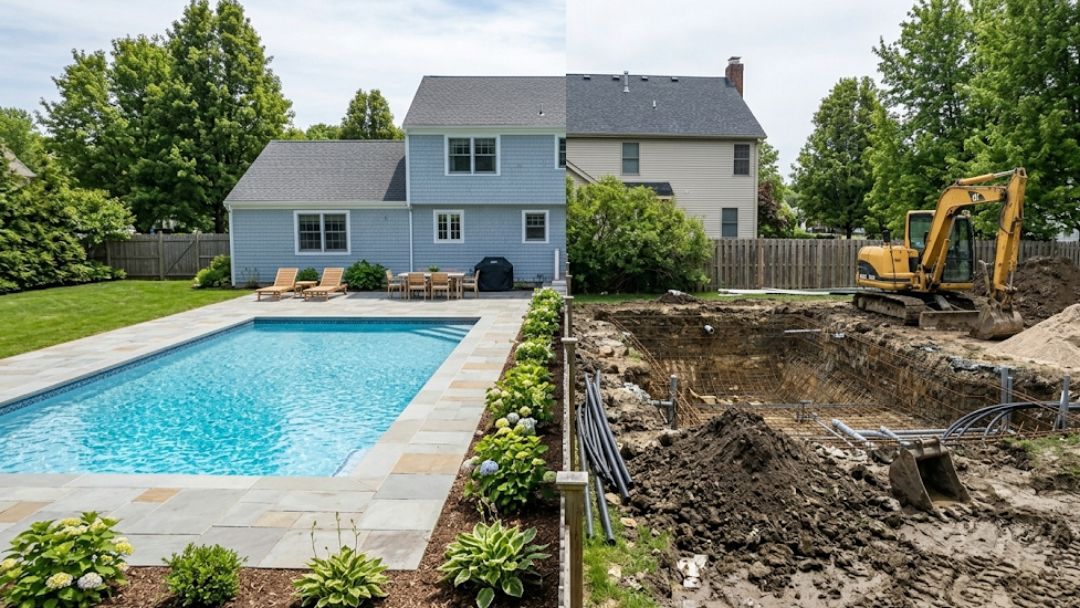
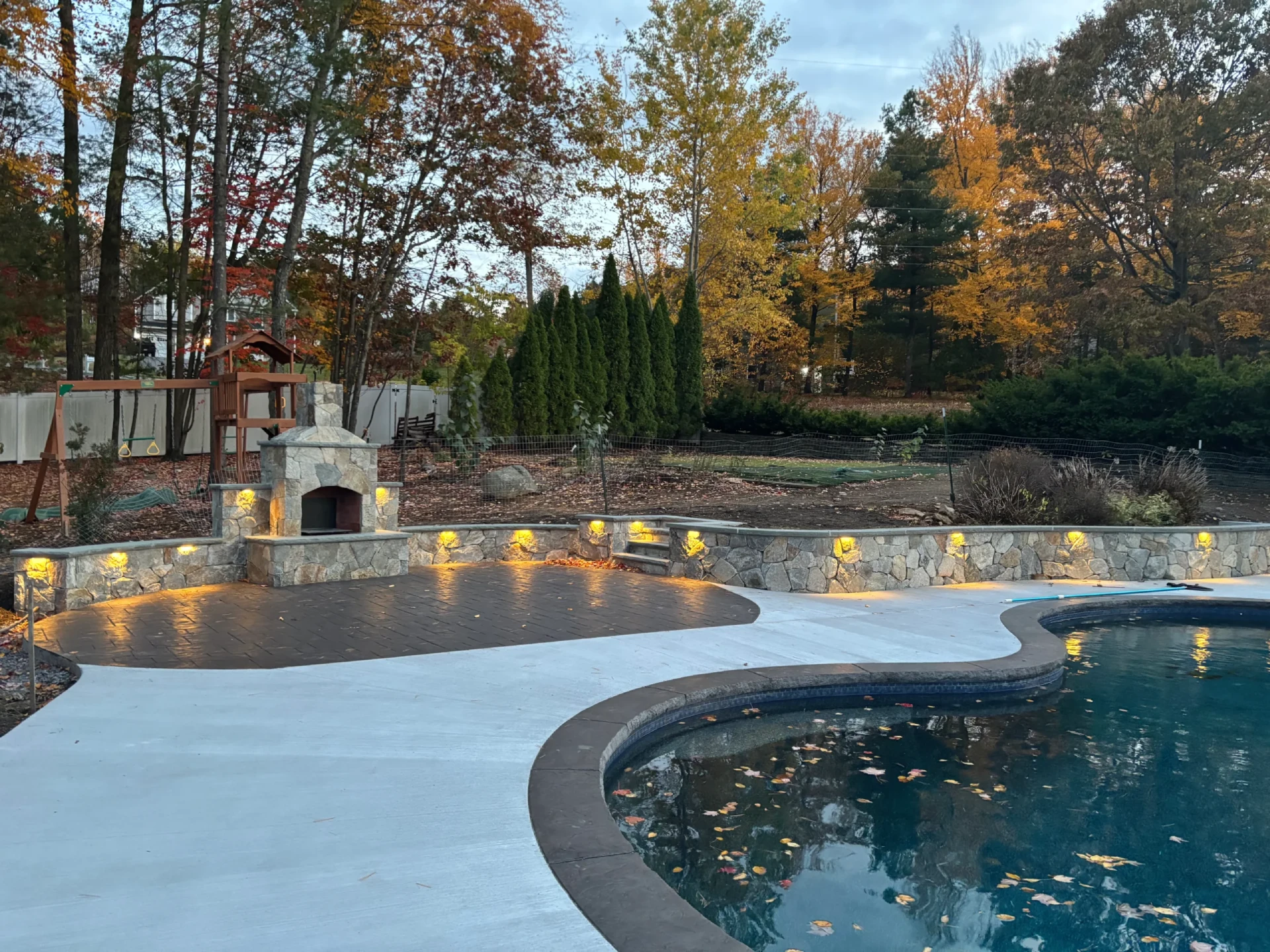
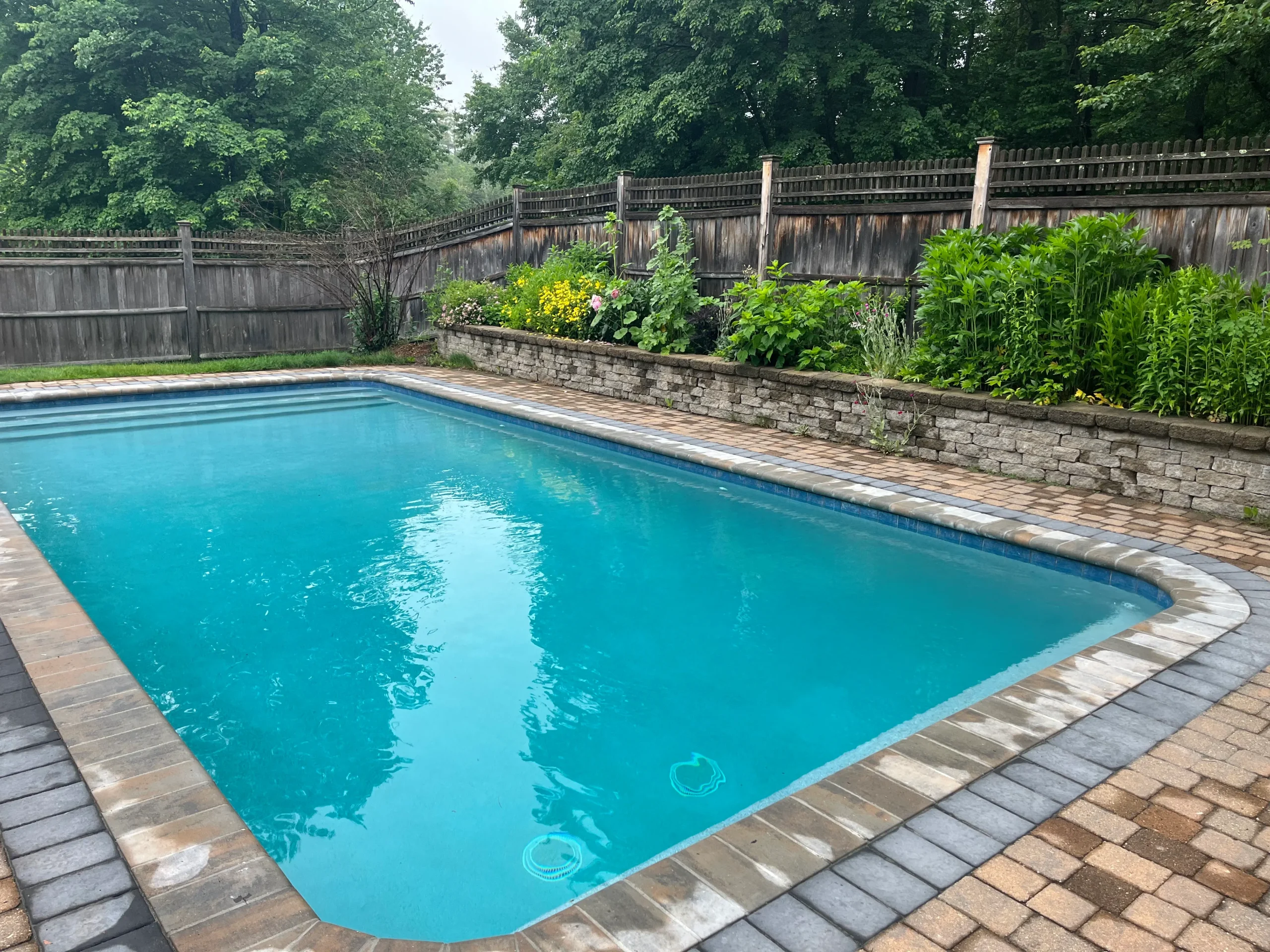
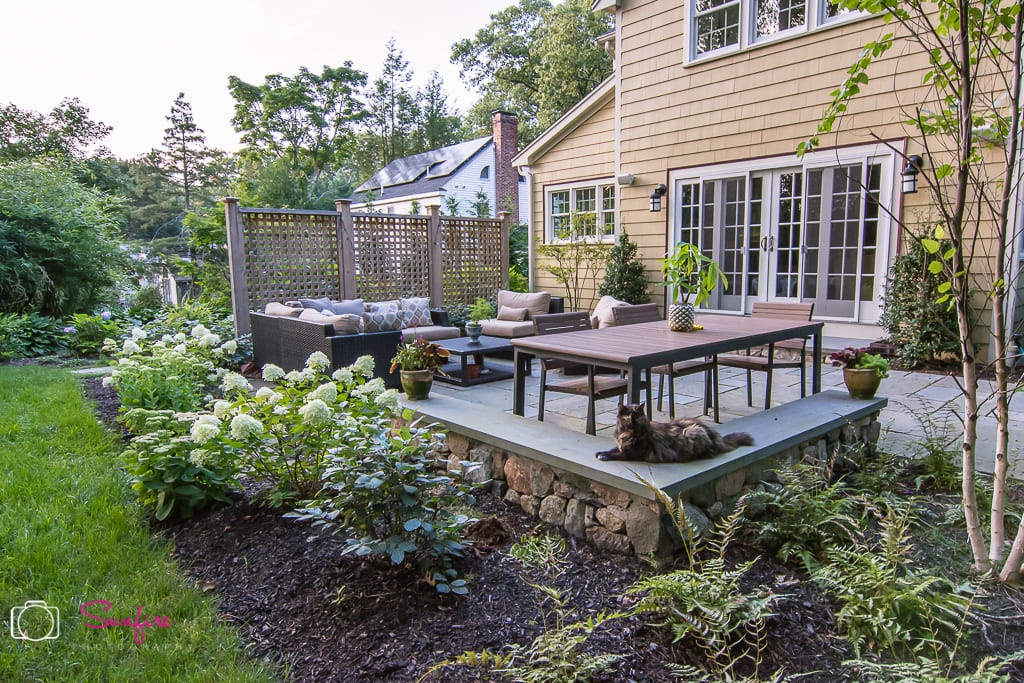
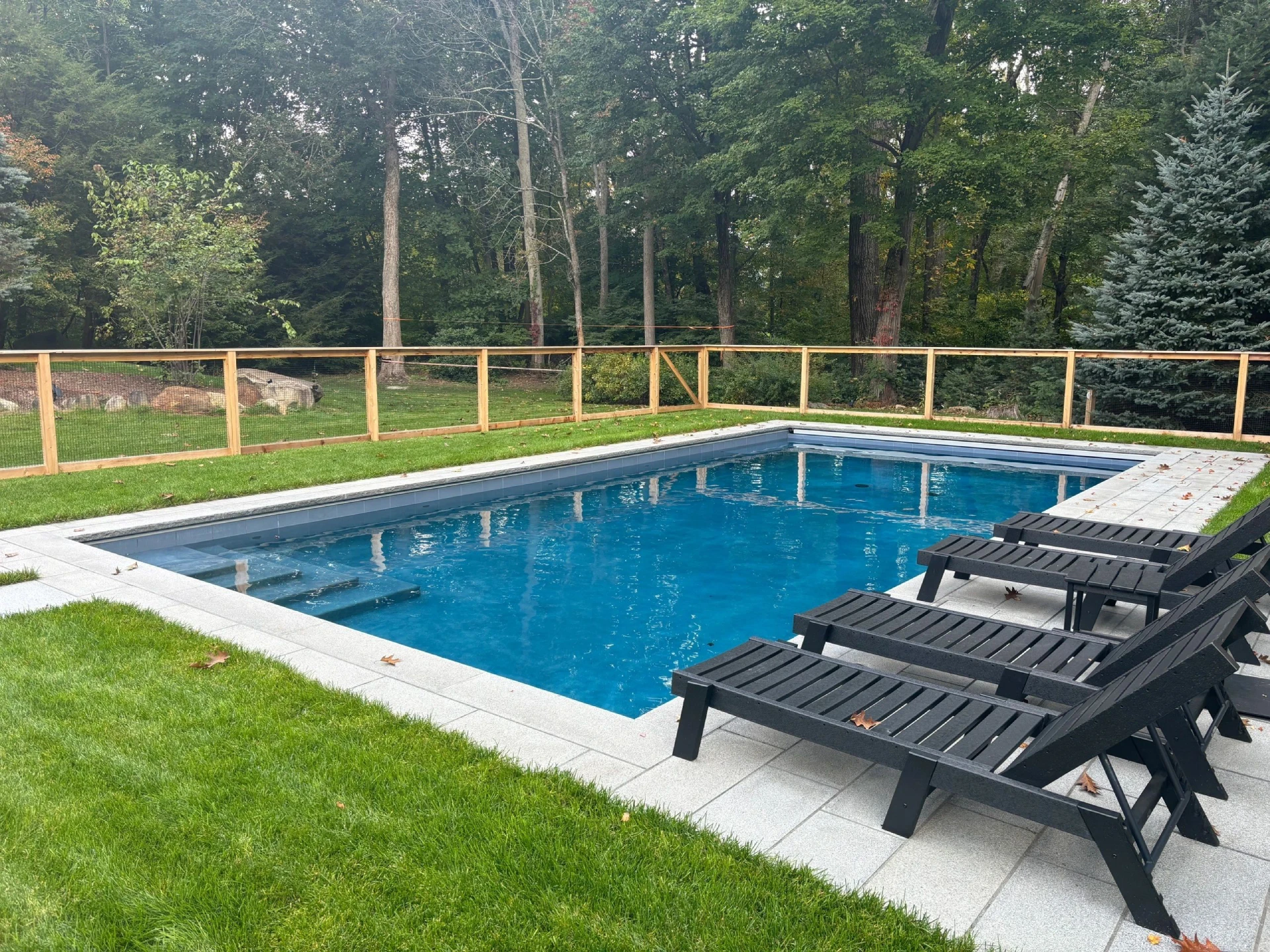
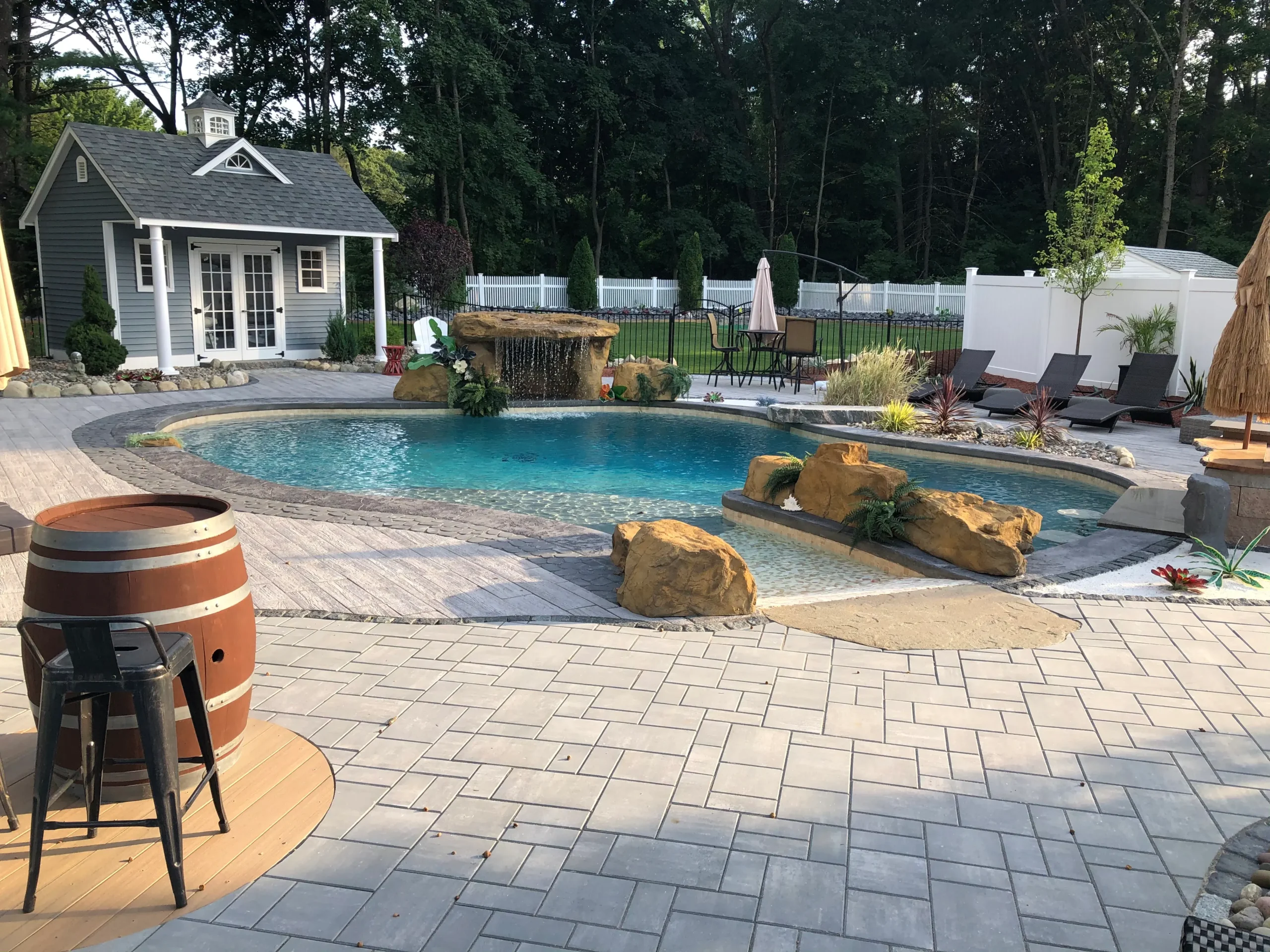
These photos come from projects we have built, from pool digs to the finished yards that followed. Excavation is the first step in most of them, and it shapes everything after. More are in our gallery.
The difficult part of excavation is usually what you cannot see from the surface. These are the conditions we plan for on residential lots.
Our excavation crew works across northeastern Massachusetts and southern New Hampshire, including Woburn, Reading, Lexington, Nashua, Hudson, Windham, Plaistow and Kingston. Each town has its own permit and inspection steps for pools and foundations, and we work through those while planning the dig.
// Areas We Serve
We work with homeowners across northeastern Massachusetts and southern New Hampshire. Pick your town to see local details, or ask us if yours is not listed.
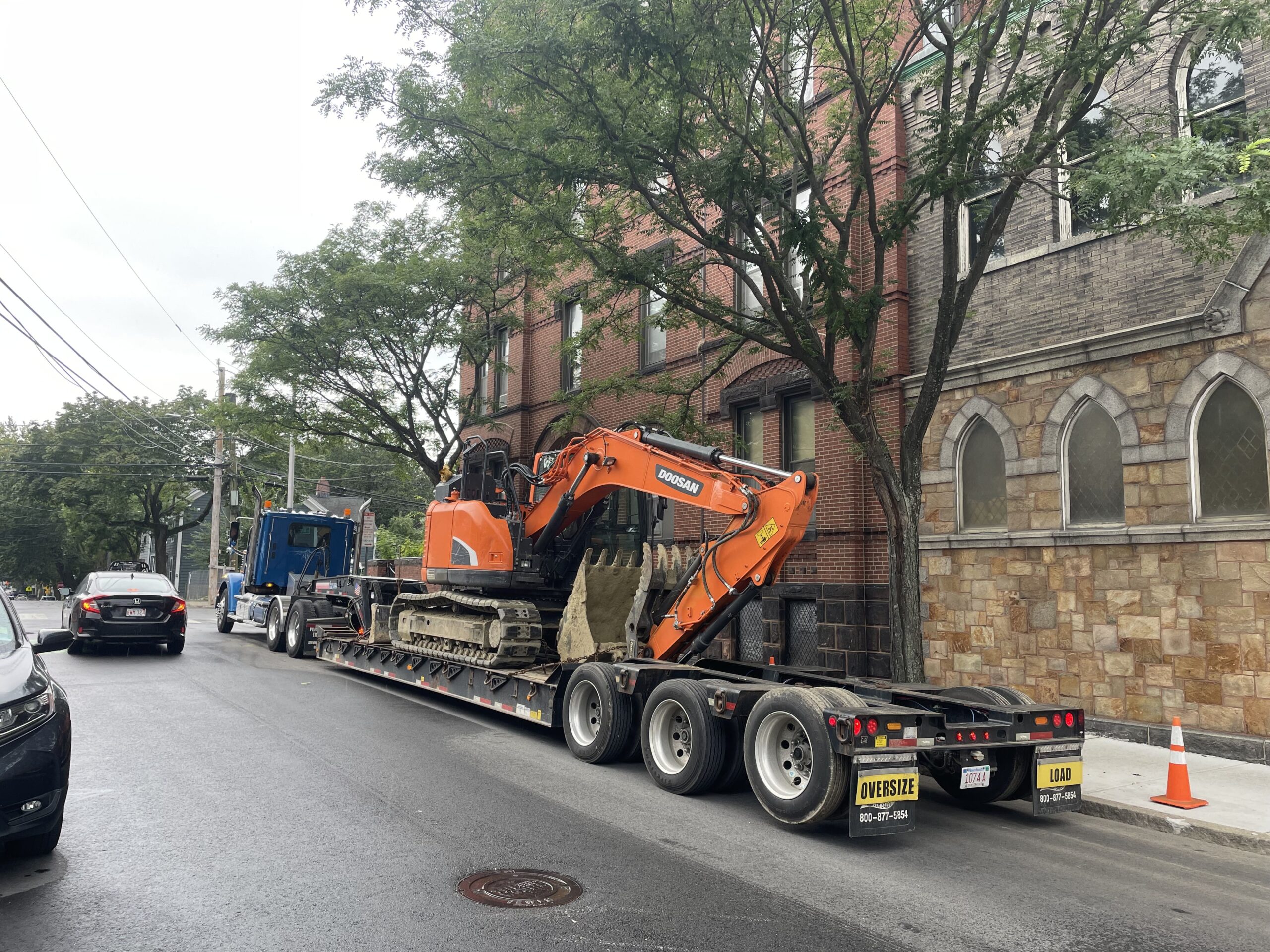
Before any machine arrives, we lay out the dig with stakes and paint, confirm setbacks from property lines and septic systems, and notify Dig Safe so utility companies can mark their lines. On dig day, topsoil is set aside first so it can be reused later. The excavator works down to the planned depth while we check grades as we go. Deeper trenches get sloped sides or shoring so they cannot cave in. Soil we can reuse stays on site for backfill and grading, and the rest is trucked away.
Why Mountainscapes
When the crew digging the hole is also building the pool or the patio, there is no handoff where measurements get lost. We dig to the exact depth and shape the next stage needs.

Digging the hole for gunite, fiberglass or vinyl liner pools to the exact shape and depth in the plan.

Excavation for additions, garages, pool houses and barns, dug below frost depth for solid footings.

Trenches for water lines, electrical conduit and pipe, backfilled and compacted so the surface does not sink.

Breaking out ledge and lifting boulders that block a pool, patio or foundation, with stone reused where it fits.

Loading and trucking excess soil off site, with good topsoil saved for the finished landscape.

Refilling around walls, pools and pipes in layers, compacted so nothing settles under patios or lawns.
What do excavation services for a home include?
Residential excavation covers digging for pools, footings for additions and garages, utility and drainage trenches, rock removal and hauling away soil. It also includes backfilling and compacting once the structure or pipe is in place, so the ground above stays stable.
Do I need to call Dig Safe before excavation?
Yes. In Massachusetts and New Hampshire, anyone digging must notify Dig Safe (811) ahead of time so utility companies can mark their buried lines. We make that call on every job. Private lines, such as a sprinkler system or a power line to a shed, are not marked, so tell us where yours run.
What happens if you hit ledge?
Ledge is bedrock close to the surface, and it is common in this part of New England. Smaller amounts can be broken out with a hydraulic hammer on the excavator. For larger areas, we look at options such as shifting the pool or raising the patio level, and we talk through costs with you before deciding.
How much does it cost to excavate for a pool?
Excavation is one piece of the full pool budget, and it changes with soil, rock, access and how much material has to leave the site. Our guide on how much it costs to build a pool explains where digging fits in the total.
Will excavation damage my lawn and driveway?
Heavy machines leave marks, but planning limits them. We choose the access route with you, lay ground mats where needed and keep trucks off soft areas. Anything disturbed is regraded and seeded or sodded at the end of the project.
Can you dig near wetlands or a lake?
Sometimes, with approvals. In Massachusetts, work near wetlands may need review by the local conservation commission under the Wetlands Protection Act. In New Hampshire, work near protected shorelines falls under the Shoreland Water Quality Protection Act and NHDES. We help you through those steps before any digging starts.