
Your Trusted Project Partner


Our landscape lighting installation services add low-voltage fixtures that light walkways, steps, patios, trees and the front of the house. A transformer plugs into an outdoor outlet and steps household power down to a safe low voltage, and buried cable carries it to each fixture. LED fixtures use little power and run for years. The skill is in restraint: a few well-placed lights feel calm and inviting, while too many look like an airport. Our post on lighting a backyard without overdoing it covers the principles we design by.

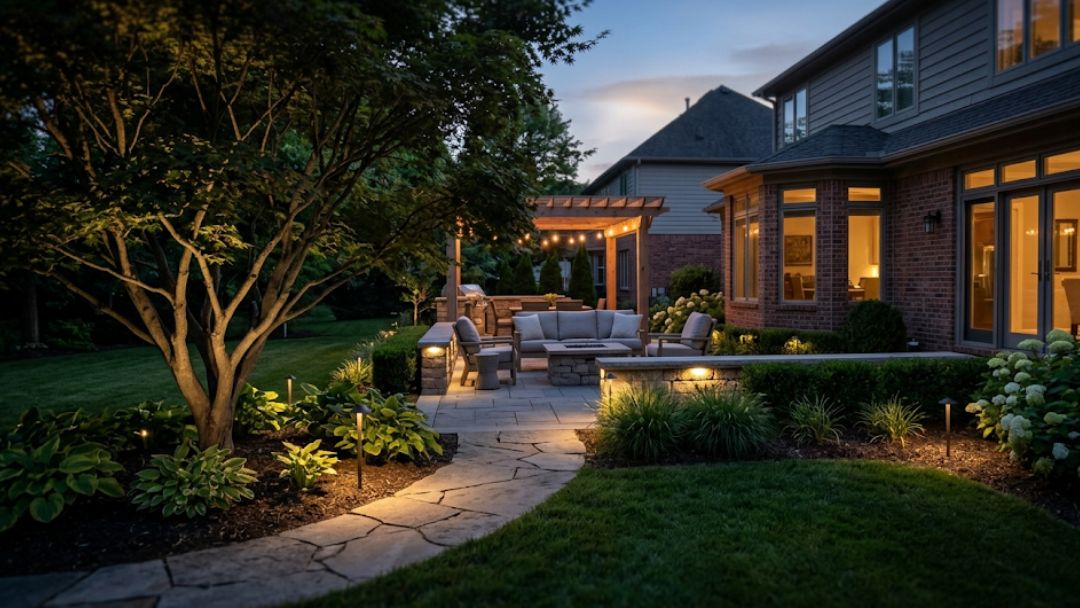
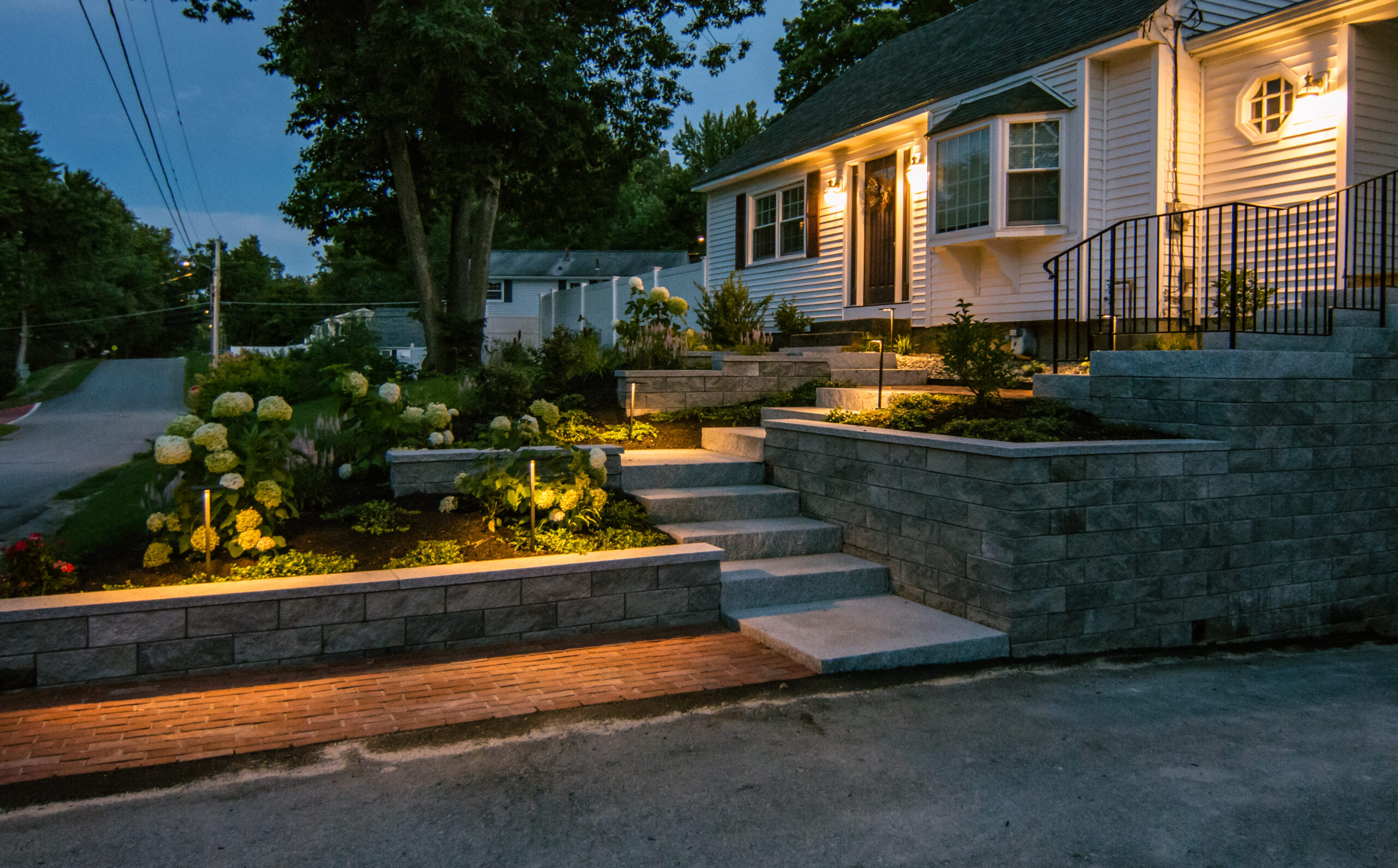
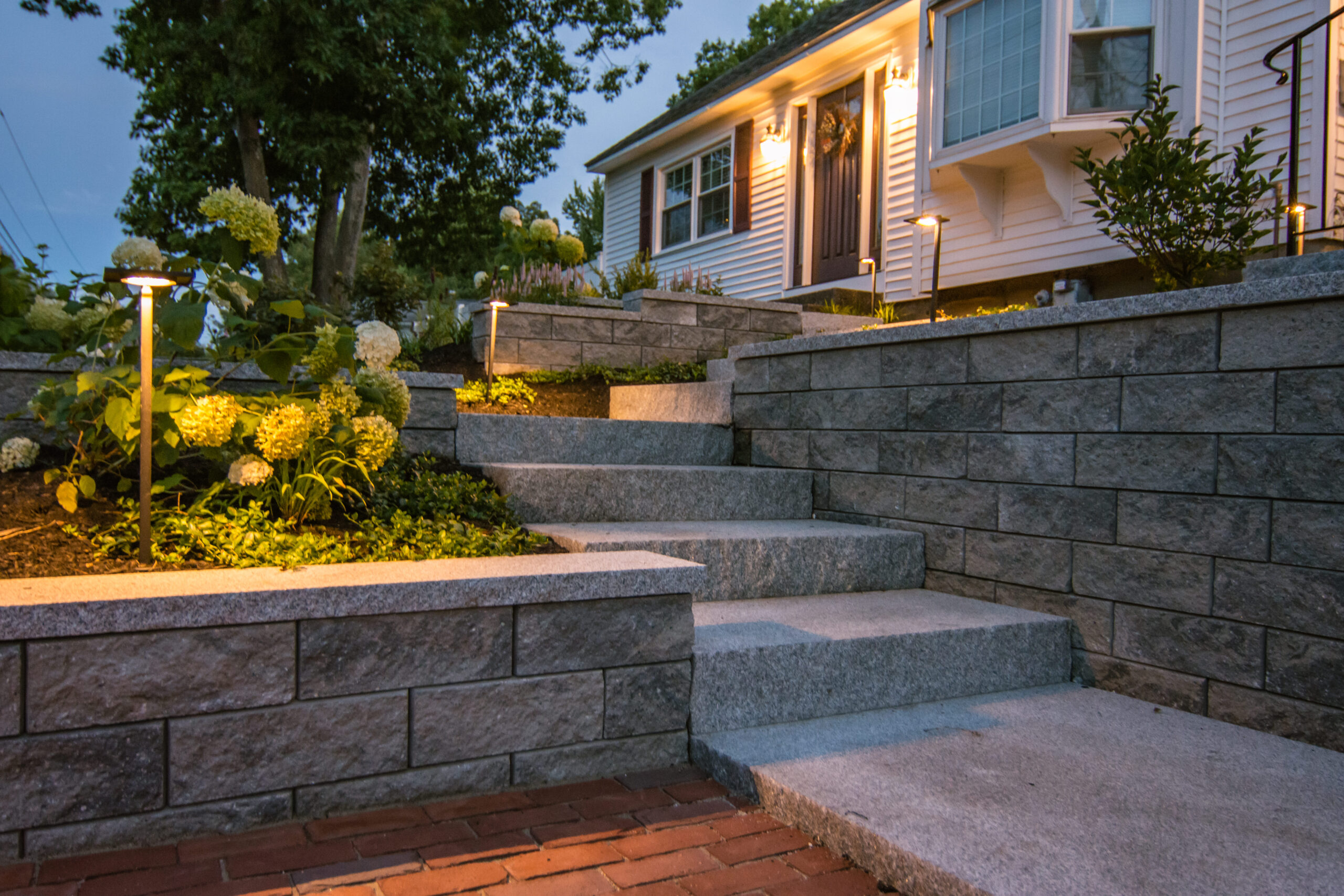
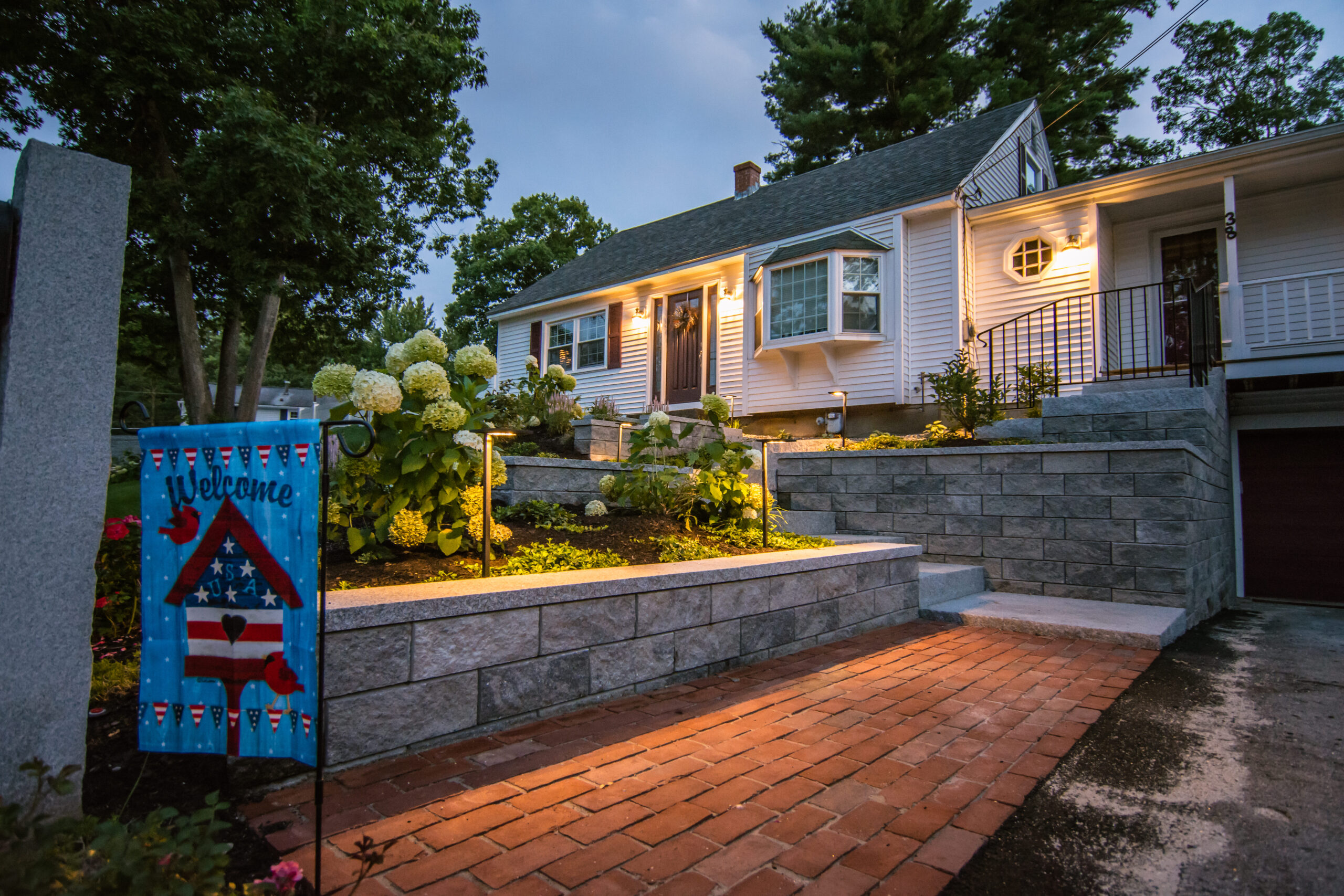
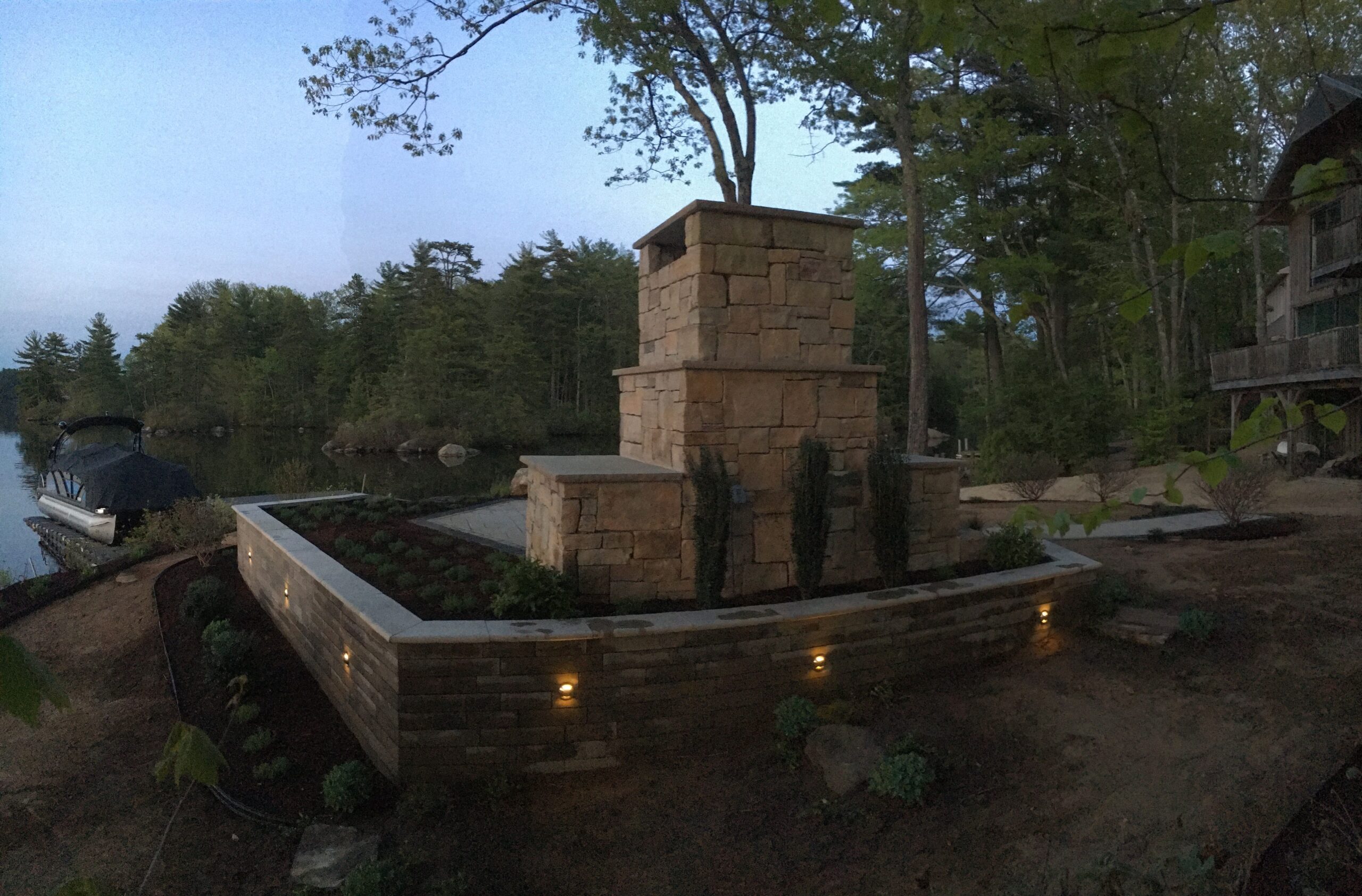
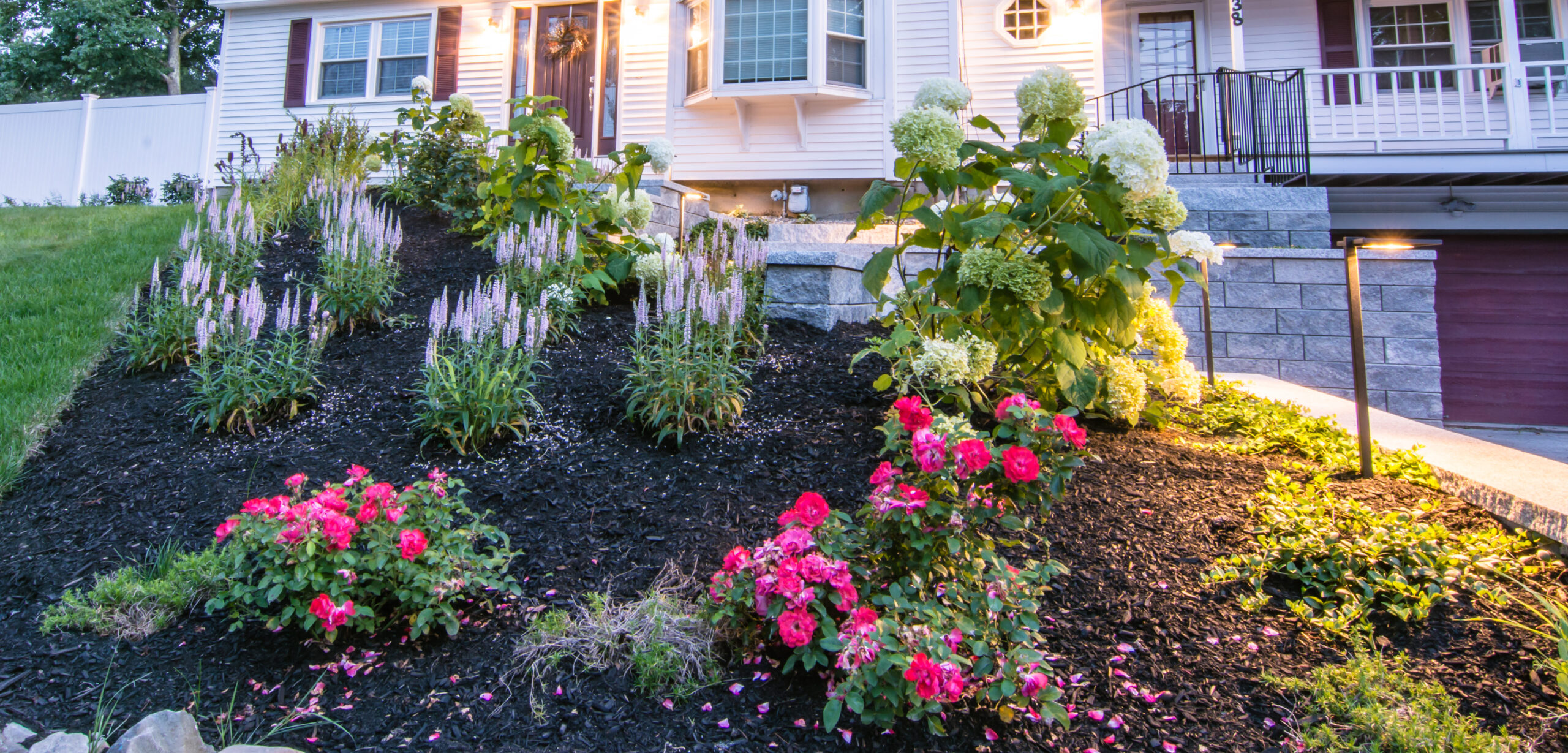
Lighting works best when it is planned along with the patios, walls and plantings it shows off. Below are outdoor spaces our team has built. More are in our gallery.
Many yards are either too dark to walk safely or lit so brightly they glare. Here is what goes wrong, and how good design fixes it.
We design and install landscape lighting for homes in Lexington, Acton, Westford, Burlington, Bedford, Amherst, Salem and Nashua, and other towns close by. Lighting is often added to a patio or walkway we are already building, but a lighting-only job for an existing yard is just as welcome, from a handful of path lights to a full layout.
// Areas We Serve
We work with homeowners across northeastern Massachusetts and southern New Hampshire. Pick your town to see local details, or ask us if yours is not listed.
We like to visit at dusk to see how the yard reads in low light. Then we mark fixture positions for paths, steps, trees and the house front, and size the transformer to the total load. Cable runs are buried shallow along beds and lawn edges, with sleeves under walks and patios. If a new outdoor outlet is needed, a licensed electrician installs a GFCI-protected circuit. Once everything is in, we return after dark to adjust aim and brightness, then set the timer or photocell.
Why Mountainscapes
Because we build patios, walls, steps and plantings, we can run cable and sleeves while the work is open, instead of cutting into finished surfaces later. That keeps installs neat and fixtures exactly where they belong.

Low fixtures that cast light down onto walkways and beds, placed in a staggered pattern rather than straight lines.

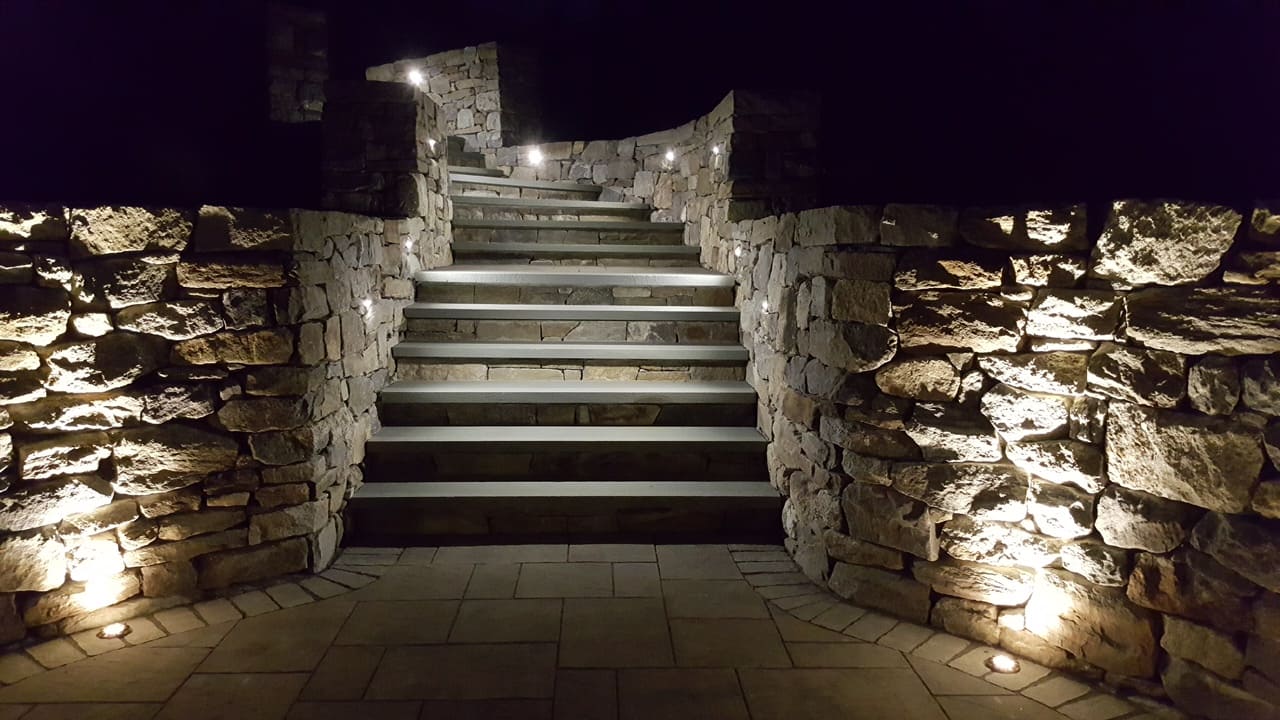
Small fixtures set into risers or seat walls to light each level change and prevent trips.

Ground fixtures aimed up into a canopy or trunk, turning a mature tree into a focal point at night.

Fixtures mounted high in trees and aimed down, casting soft, dappled light through the branches like moonlight.

Gentle light for patios, fire pits and dining areas so you can stay outside comfortably after sunset.

Photocells, timers and zones that switch lights on at dusk and off at a set hour.
What is included in landscape lighting installation?
A lighting layout, the fixtures, a low-voltage transformer, buried cable, timers or photocells and a night visit to adjust everything. If you need a new exterior outlet, a licensed electrician adds it. Existing systems can often be updated to LED rather than replaced entirely.
Is low-voltage landscape lighting safe?
Yes. Low-voltage systems typically run at 12 volts after the transformer, which is far safer around soil, water, kids and pets than household current. The transformer plugs into a GFCI-protected outdoor outlet, and the low-voltage cable only needs to be buried at a shallow depth.
How much does landscape lighting cost to run?
LED fixtures draw very little power compared with older halogen bulbs, so running costs are modest for most homes. Timers and photocells also stop lights from staying on all night. The bigger decision is fixture quality, since solid, well-sealed fixtures handle New England winters far better.
Can you add lighting to an existing patio or walkway?
Yes. Path lights and uplights are easy to add to an existing yard. Built-in step or wall lights are harder after the fact, so if a new patio or retaining wall is planned, add lighting at the same time.
How do I avoid an overdone look?
Light the things you want to see, not the fixtures themselves. Use fewer lights, warm color temperatures and shielded fixtures, and leave some areas dark for contrast. Uplighting one good tree often does more than a dozen path lights.
Can landscape lights work together with pool lights?
Yes. We can plan both together so the pool, deck and surrounding garden share a consistent color and brightness. See our pool lighting installation page for underwater options, and ask about running both on the same schedule.