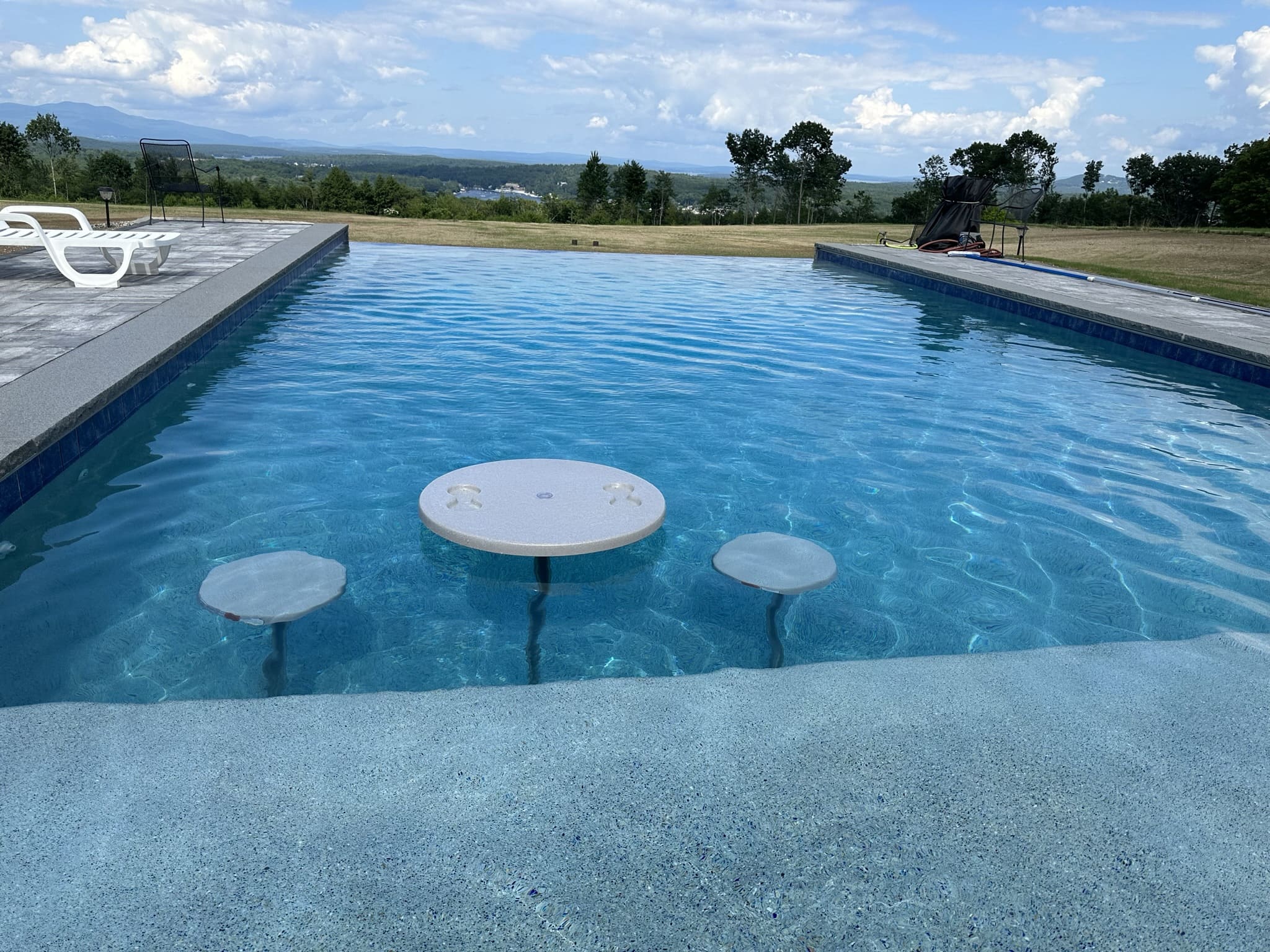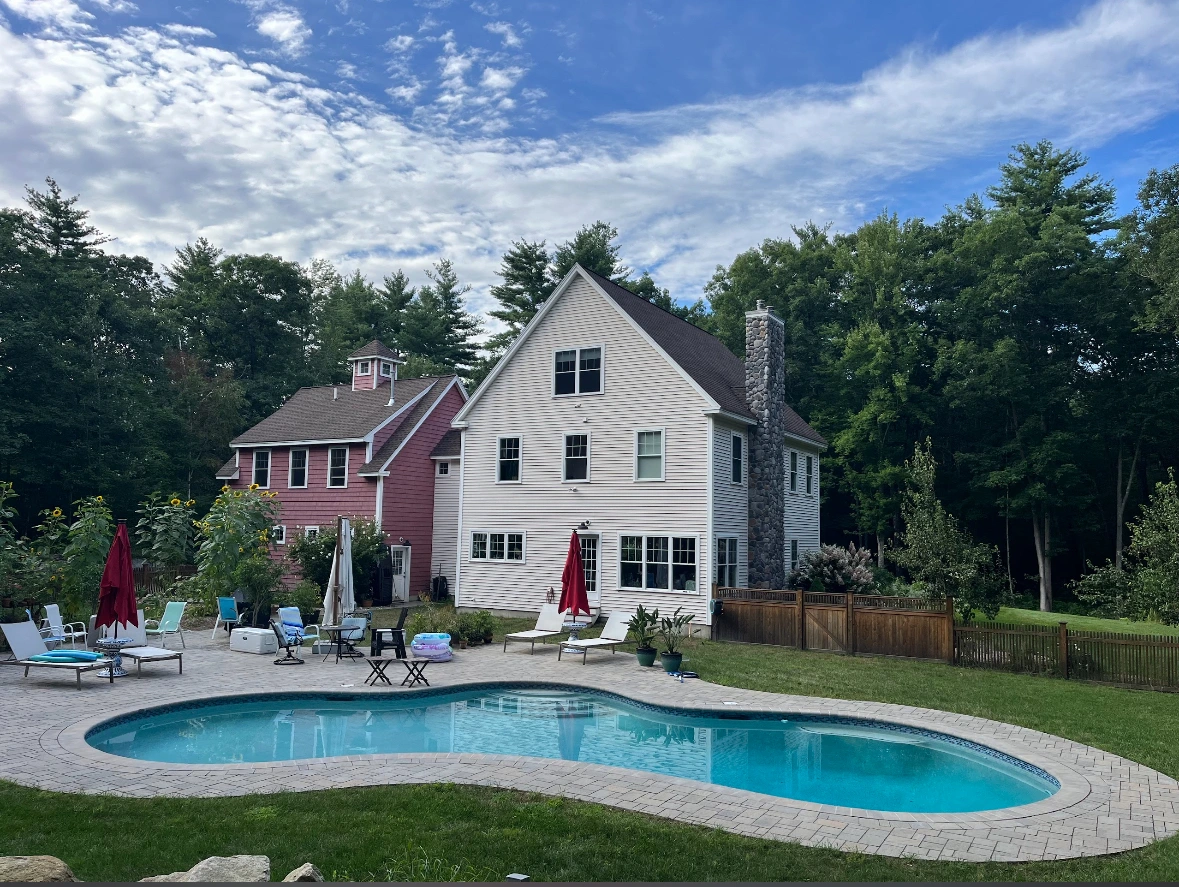

Your Trusted Project Partner


Our inground pool installation services cover the physical build on your lot: marking out the pool, getting machines in, excavating, running plumbing and power, setting the pool structure and backfilling around it. New England yards bring their own challenges, from ledge and boulders to high groundwater and tight side yards, and the way we plan access and sequence the work decides how smoothly it goes. We protect what we can, restore what we cannot, and keep you informed as each stage wraps up. Our article on what really happens during an inground build walks through it from a homeowner’s point of view.
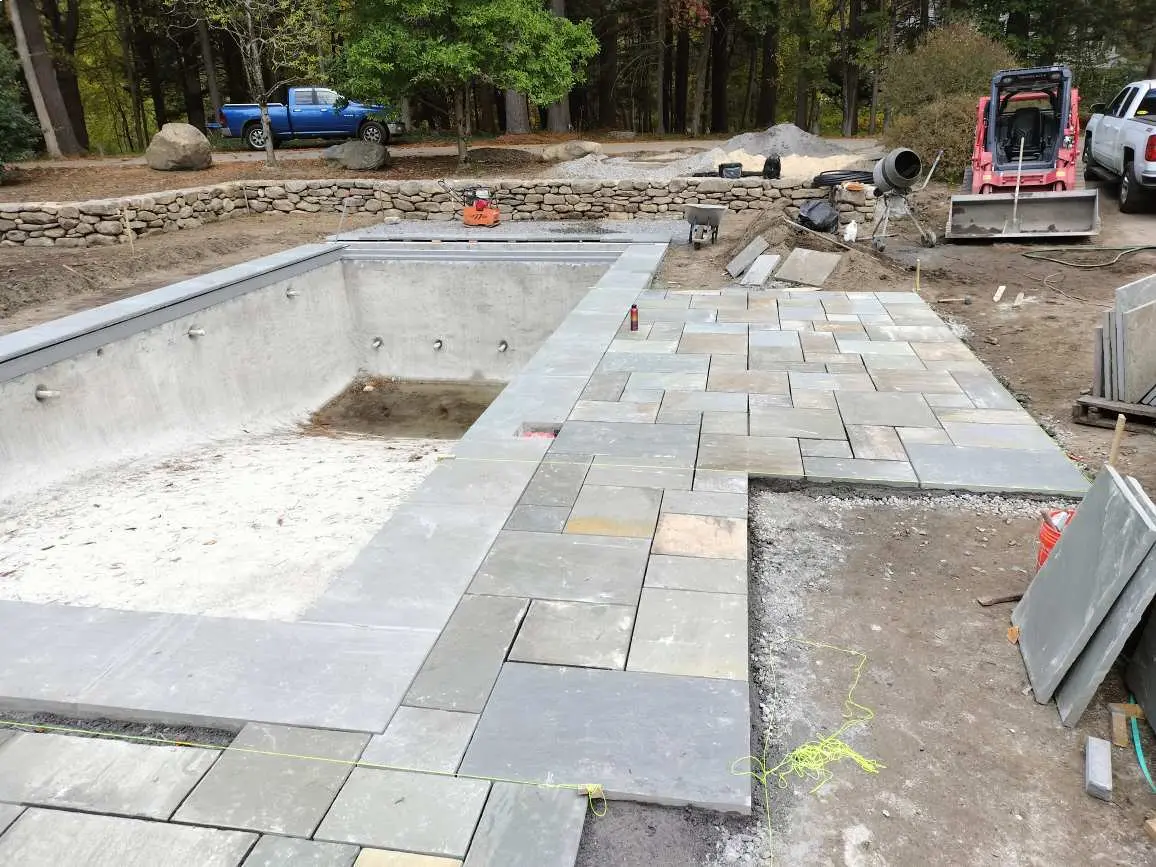
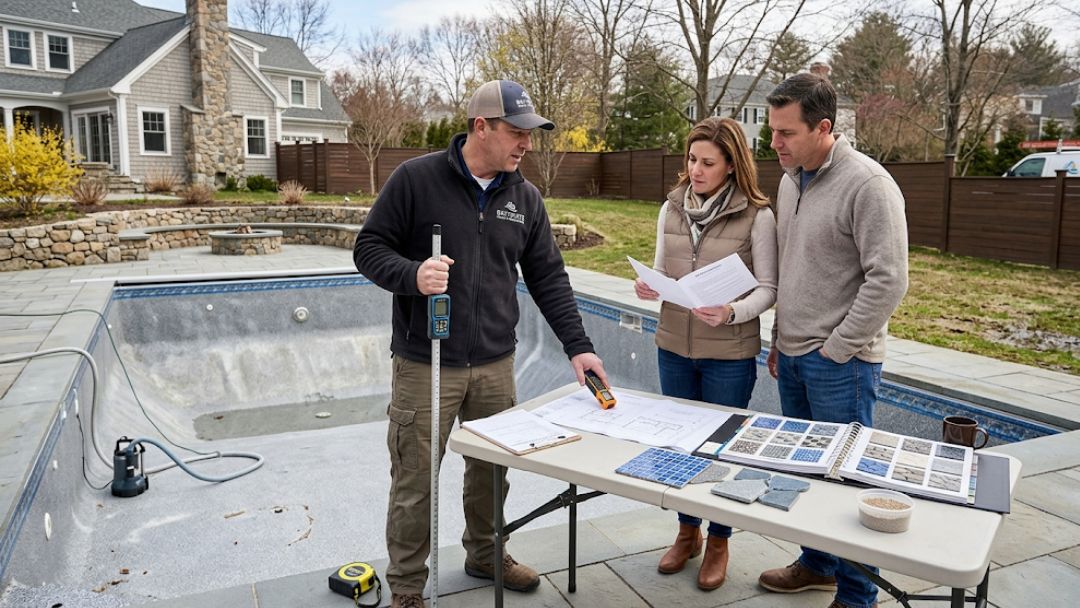
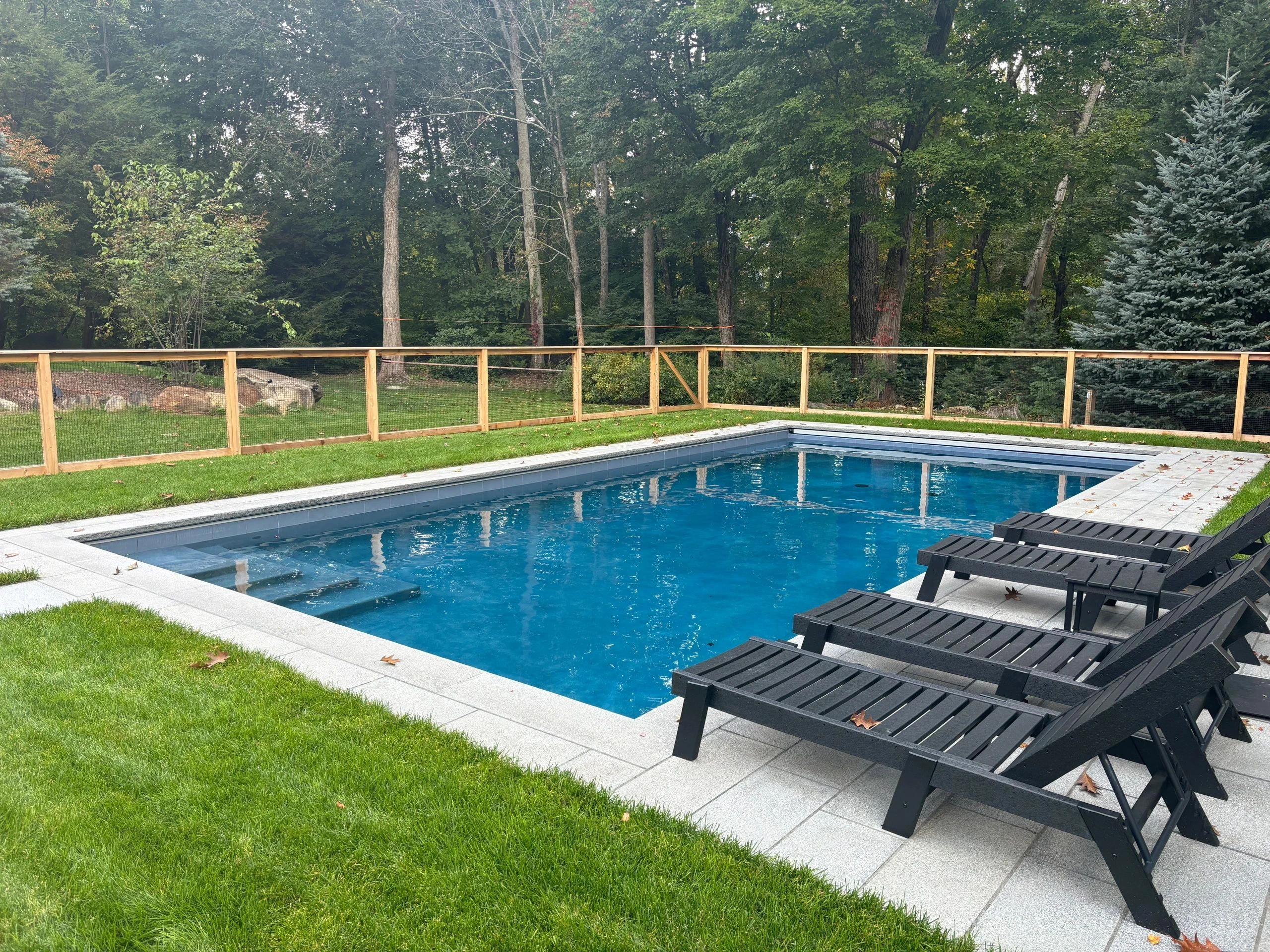
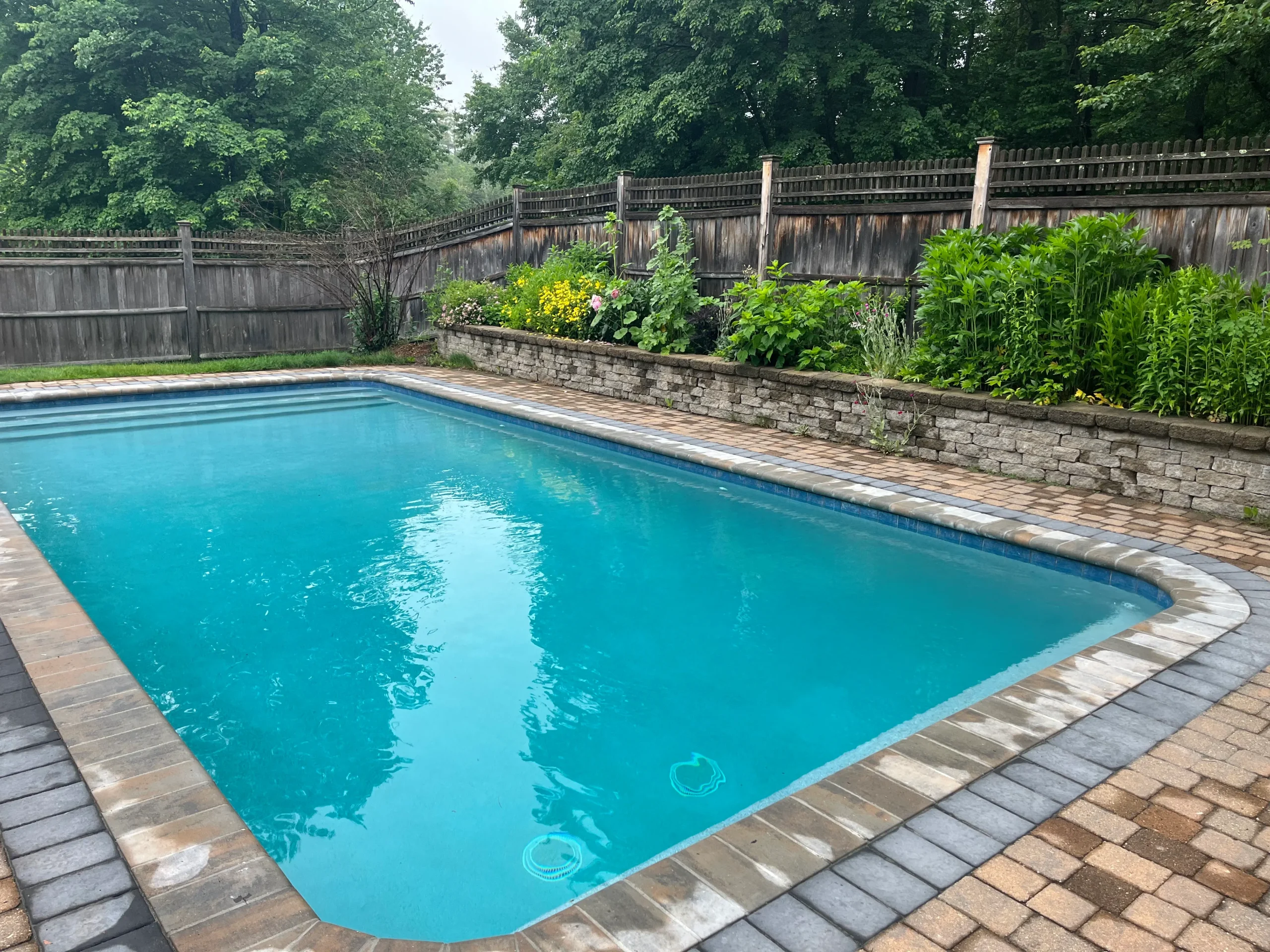
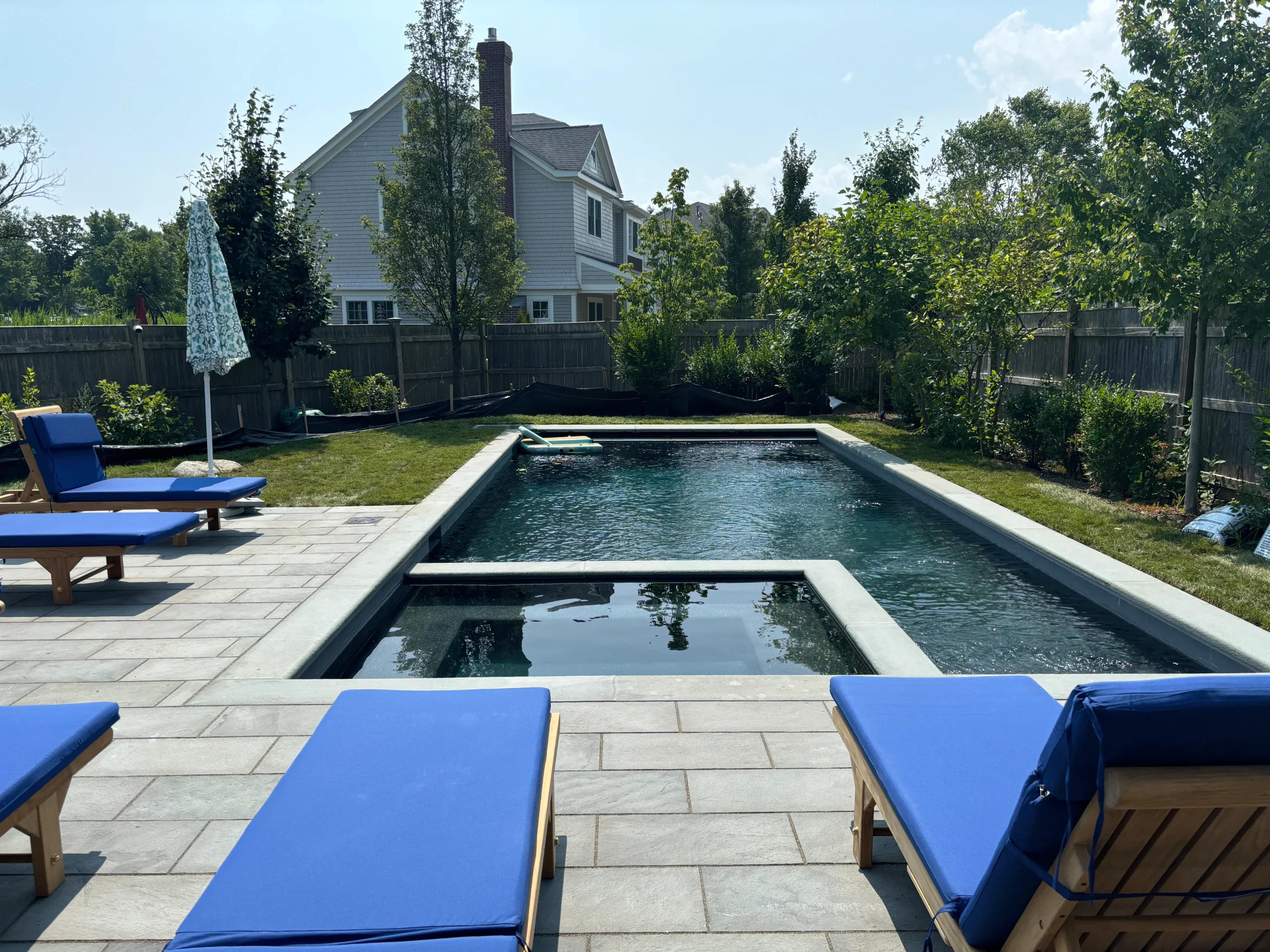
Flat suburban lots, sloped yards and tight corners all show up in the photos below. Each one needed its own plan for access and digging. You will find more finished work in our gallery.
Most installation trouble comes from the ground itself and the route into the yard. These are the issues we look for first, and how we deal with each one.
// Areas We Serve
We work with homeowners across northeastern Massachusetts and southern New Hampshire. Pick your town to see local details, or ask us if yours is not listed.
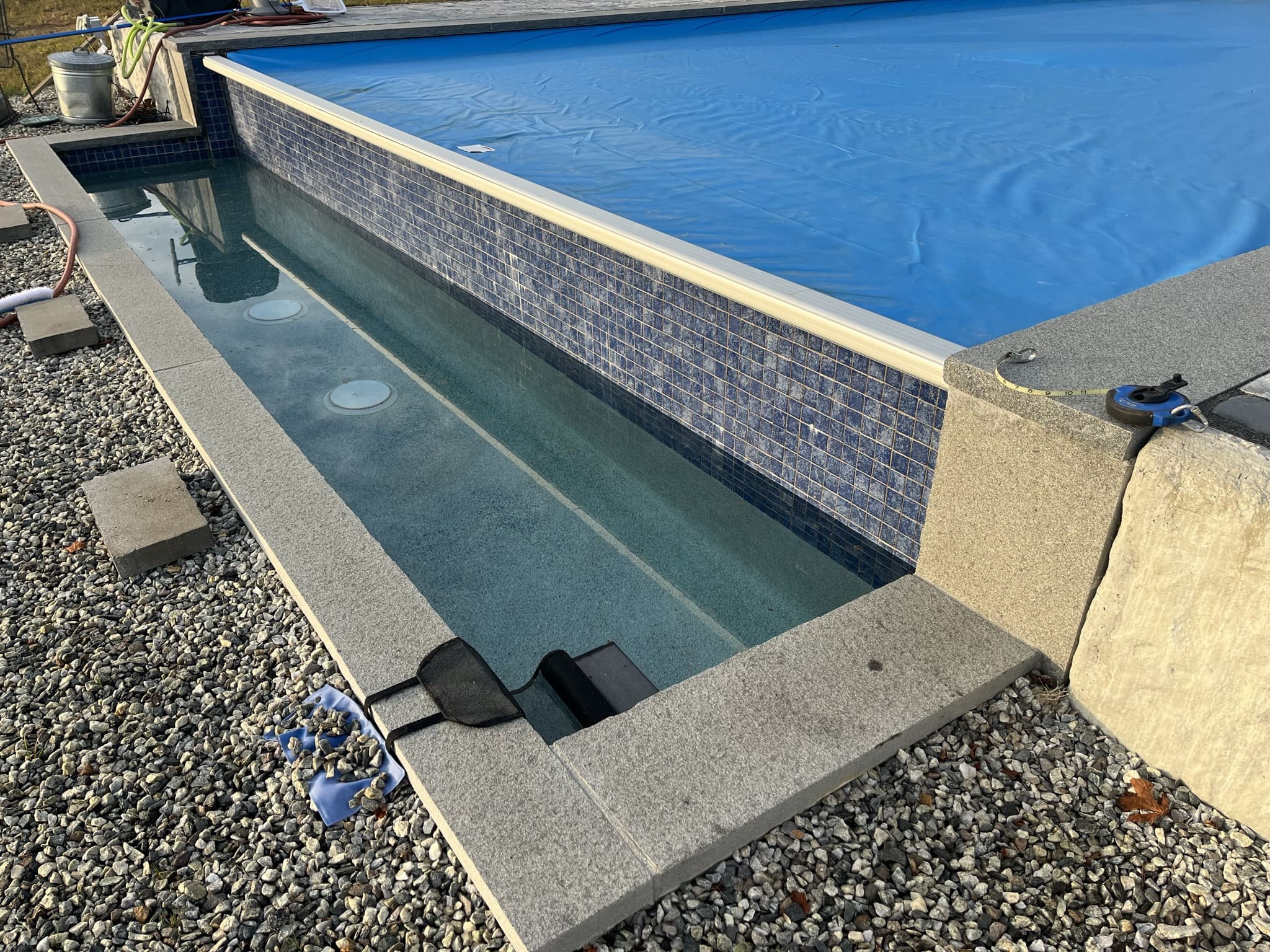
Before any digging, Dig Safe (811) is called so underground utilities get marked. We stake the pool outline and check elevations against the house and yard. Excavation follows, with soil either hauled away or kept for regrading. Then the pool goes in: a gunite shell, a fiberglass shell or vinyl liner walls, depending on your choice. Trenches carry plumbing and electrical lines to the equipment pad, and the inspector checks bonding and wiring before anything is buried. Backfill, coping, decking, fencing and final grading complete the job.
Why Us
Our own crews run the machines, set the forms and coordinate the trades, so everyone on your lot answers to one company. Christopher Underwood brings over 20 years in landscape construction and pools, so digging and grading are planned with the finished yard in mind.

We mark the pool, patio and equipment pad on the ground so you can see placement before any digging.

Digging to the right depth and shape, with extra soil trucked off or reused for grading elsewhere.

Trenches and pipe from skimmers, drains and returns to the pump, filter and heater.

Power for pumps, lights and heaters, plus equipotential bonding, installed by a licensed electrician.

Stone or soil placed and compacted around the pool so the deck above stays level for years.

Barrier fencing that meets code, then grading and lawn repair around the finished pool.
How long does inground pool installation take?
It depends on pool type, access, soil and weather, plus how long permits and inspections take in your town. Fiberglass is usually the quickest to install, and gunite the longest because the shell has to cure before plaster. Once the design and permits are settled we give you a schedule for your project, then keep you updated as each stage finishes.
What happens if you hit ledge while digging?
Ledge is common in parts of MA and NH. We look for signs of it during the site visit, and where the risk is high we talk through options before digging, such as raising the pool slightly or breaking the rock with a hydraulic hammer. If ledge turns up anyway, we stop, show you, and agree on a plan before going further.
Will the machines ruin my lawn and driveway?
Heavy equipment leaves marks, but planning keeps it in check. We choose the access route with you, use ground protection where it helps and keep machines off septic areas. When the pool is done we regrade and reseed or sod the disturbed ground. Our lawn installation service shows how we finish.
Do I need to be home during the installation?
No. Most homeowners carry on as usual. We do need clear access, pets kept inside, and someone available for quick decisions, such as the final height of the pool edge or where the equipment pad sits. You hear from us as each stage is completed.
What utilities does a new pool need?
A pool needs power for the pump, filter, lights and any heater, run and bonded by a licensed electrician. A gas heater needs a gas line, and a heat pump needs its own circuit. Plumbing runs from the pool to the equipment pad. Before digging, Dig Safe (811) marks existing underground lines so nothing is hit.
How do I prepare my yard before inground pool installation starts?
Clear outdoor furniture and play sets from the access route, mark sprinkler heads and buried pet fences, and tell us about any lines you know of. Our guide on planning your backyard for a pool has a fuller checklist.