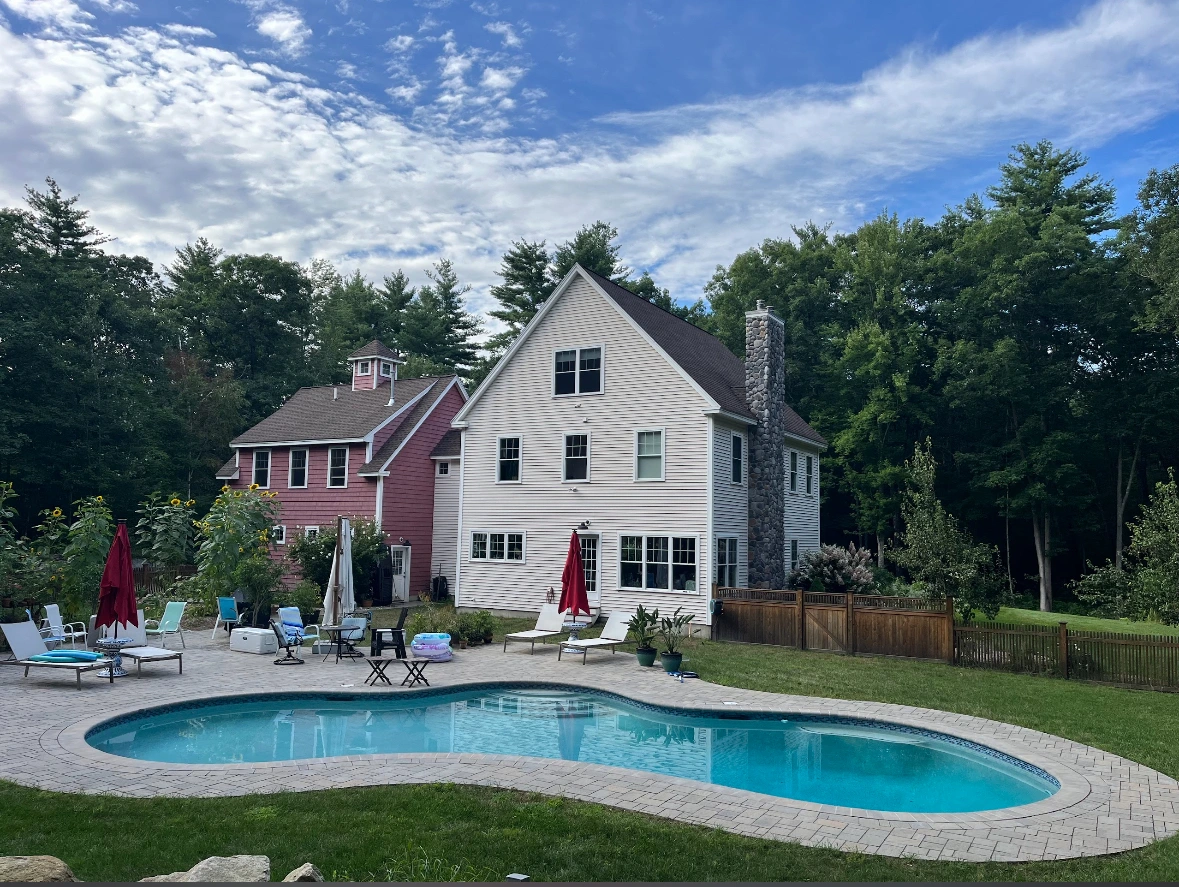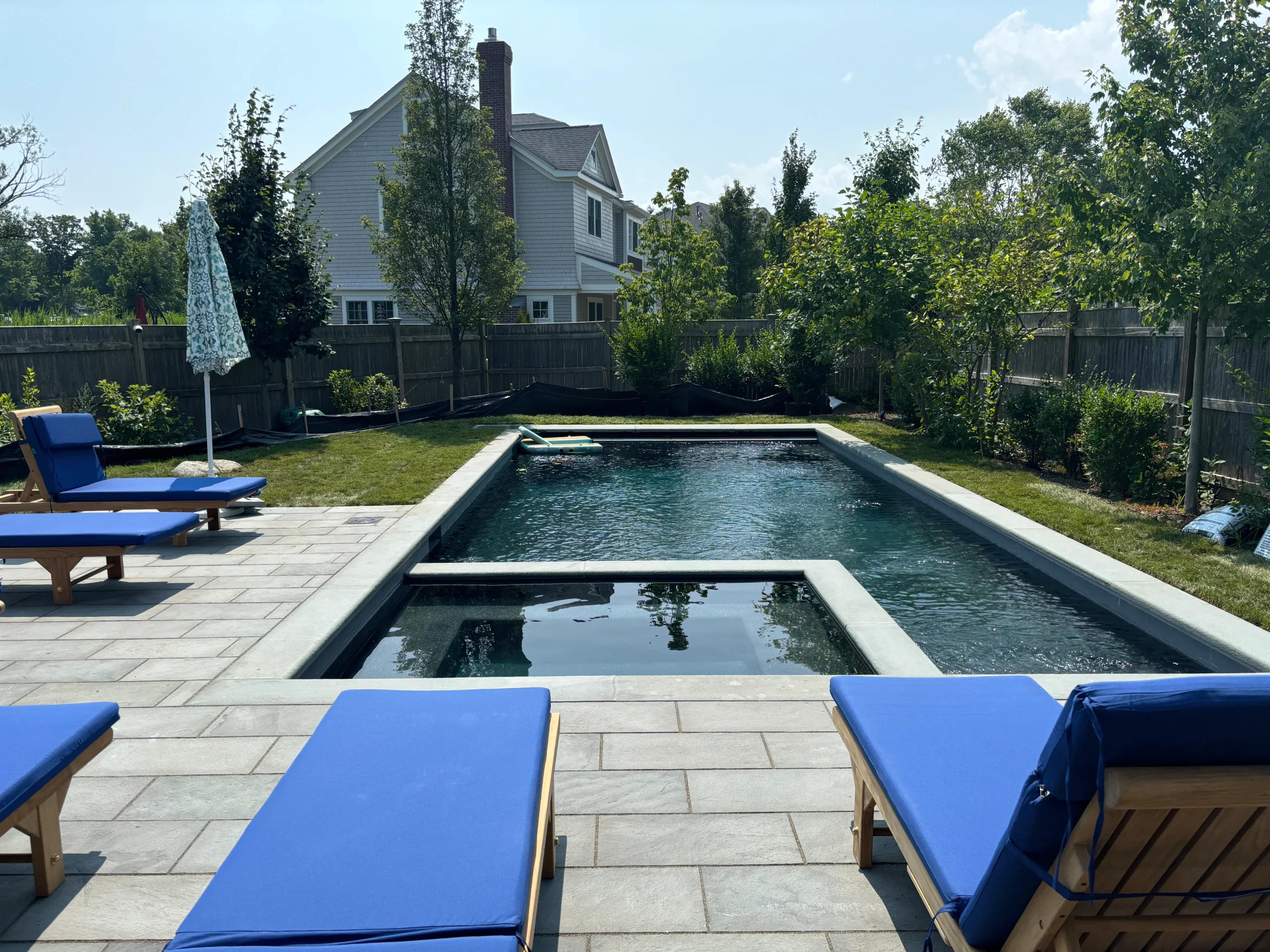

Your Trusted Project Partner


Our gunite pool installation services build a concrete pool shell in your yard, shaped to the exact outline, depths and built-in features of your design. Gunite is a dry concrete mix blown through a hose, with water added at the nozzle, and sprayed over a grid of steel rebar to form a solid, one-piece shell. Because nothing is factory-made, you can have curves, a raised spa or a tanning ledge exactly where you want them. With good care a gunite shell lasts for decades, and its interior finish can be renewed when it wears. Compare it with the other types on our pool construction page.
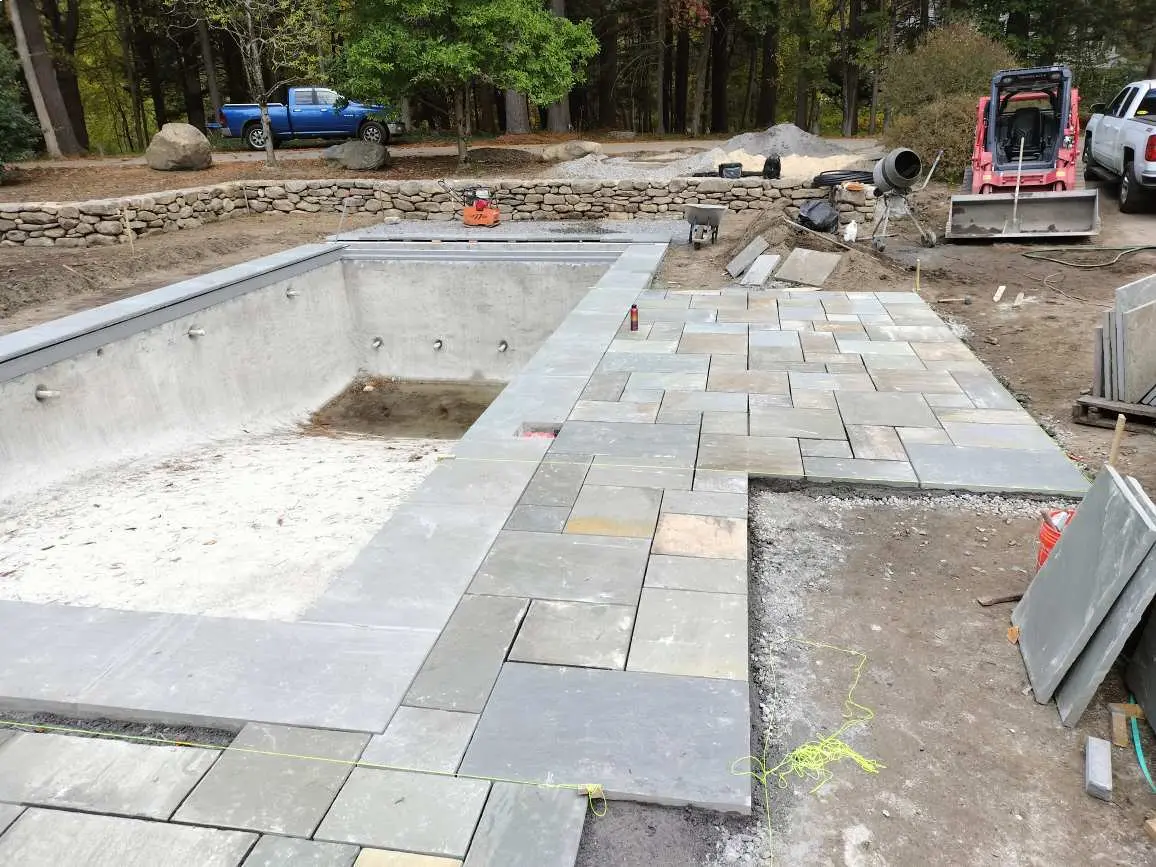
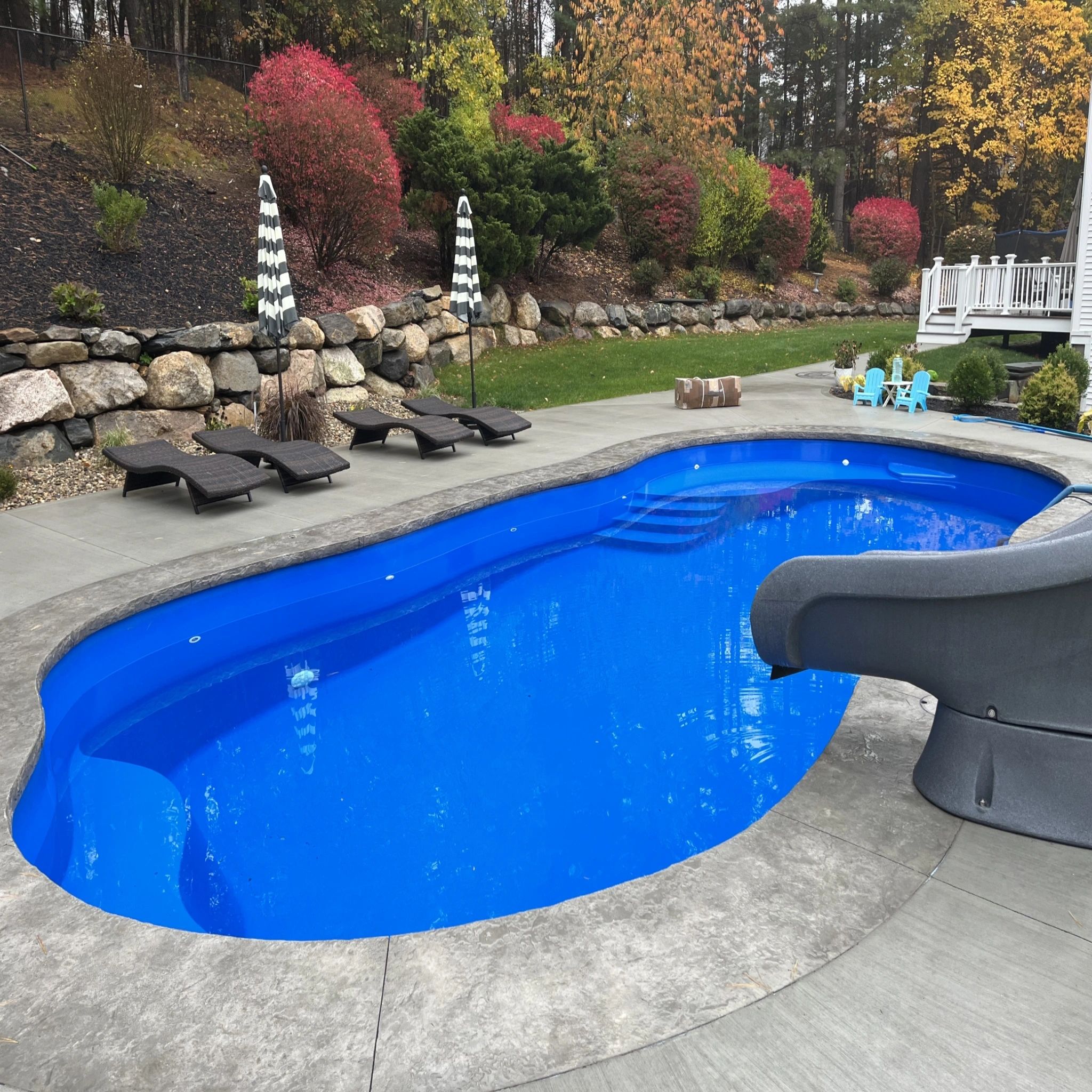
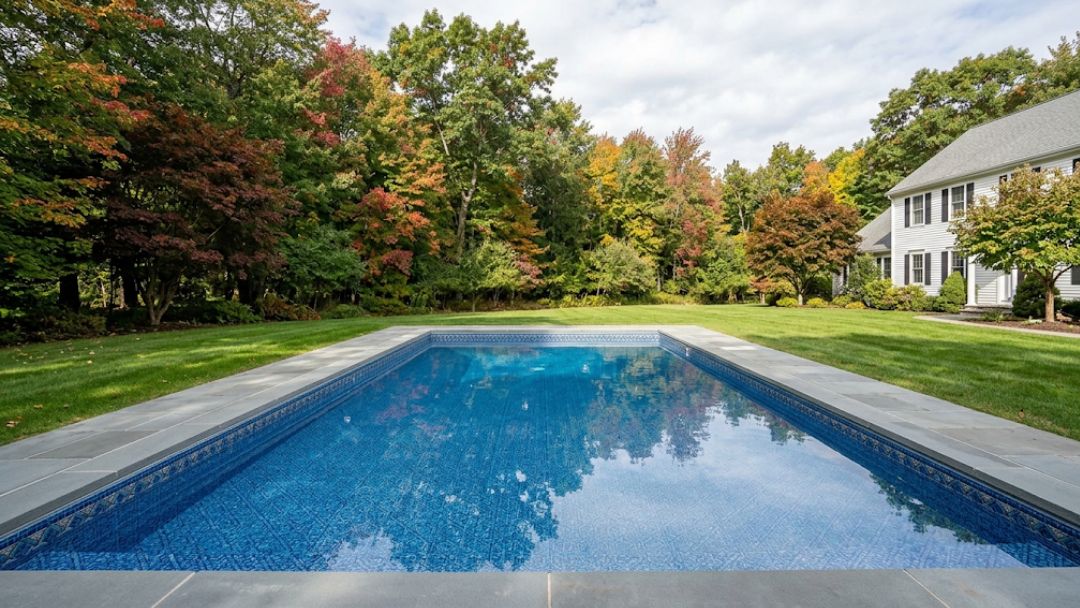
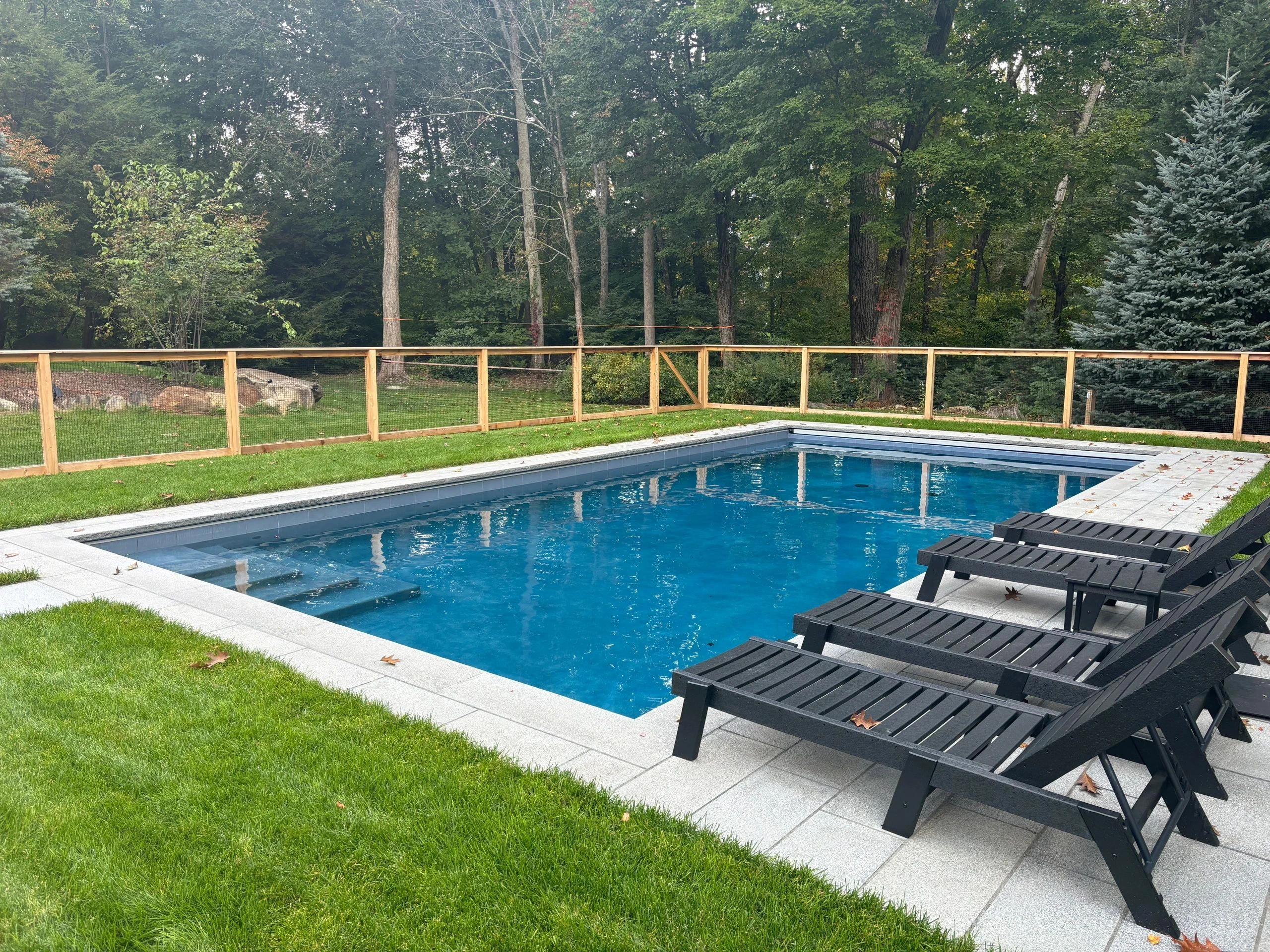
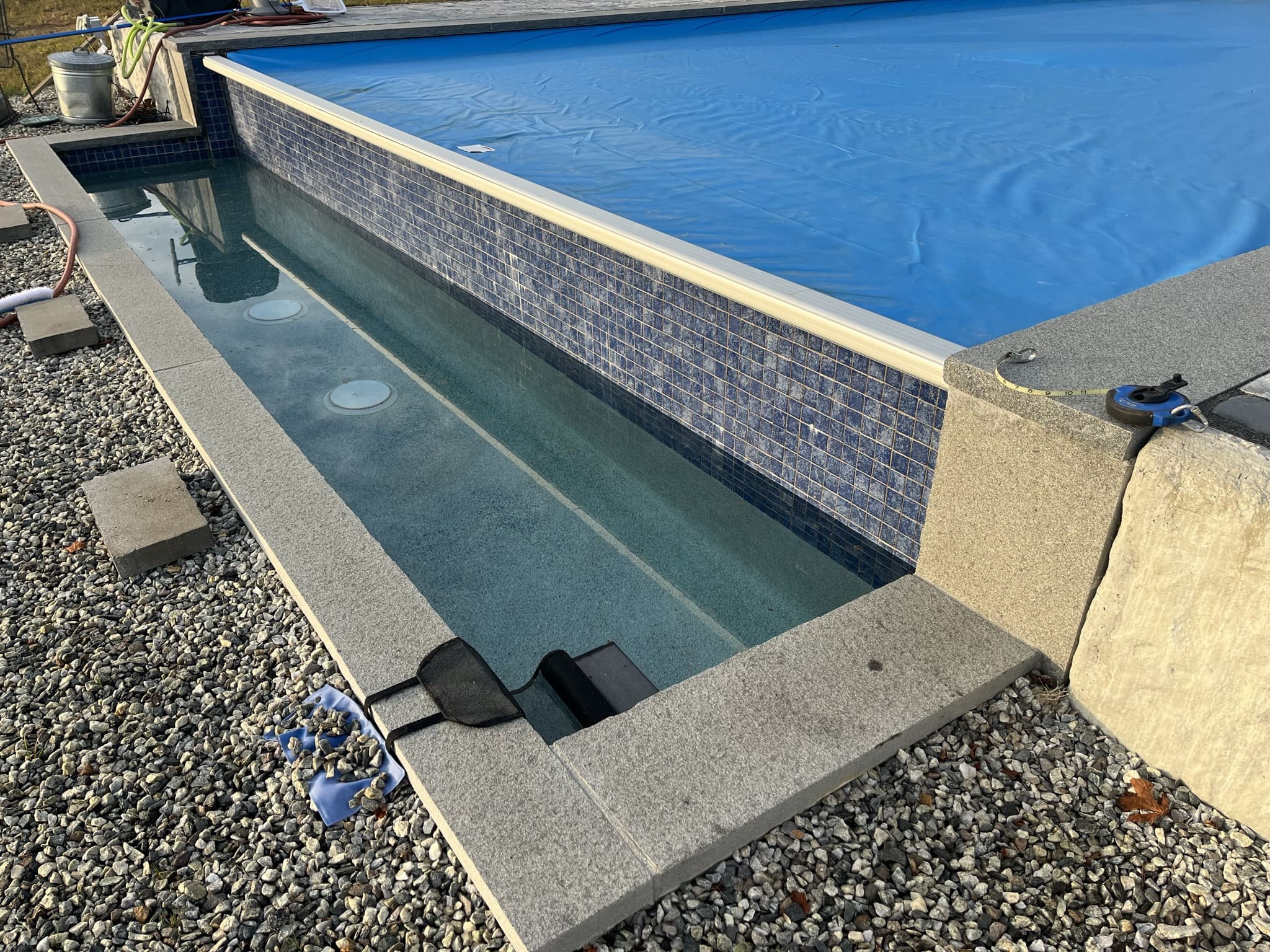
The pools below show what sprayed concrete makes possible: unusual shapes, raised walls, spas and natural stone edges. More photos are in our project gallery.
Gunite answers needs that a prebuilt shell or a liner cannot. Here is what usually leads people to it, and what gunite delivers.
We build gunite pools for homeowners in Lexington, Sudbury, Acton, Westford and other towns west and north of Boston, and in southern New Hampshire communities such as Windham and Amherst. Gunite work depends on good access for the concrete delivery and spray equipment, so we review the route into your yard on the first visit.
// Areas We Serve
We work with homeowners across northeastern Massachusetts and southern New Hampshire. Pick your town to see local details, or ask us if yours is not listed.
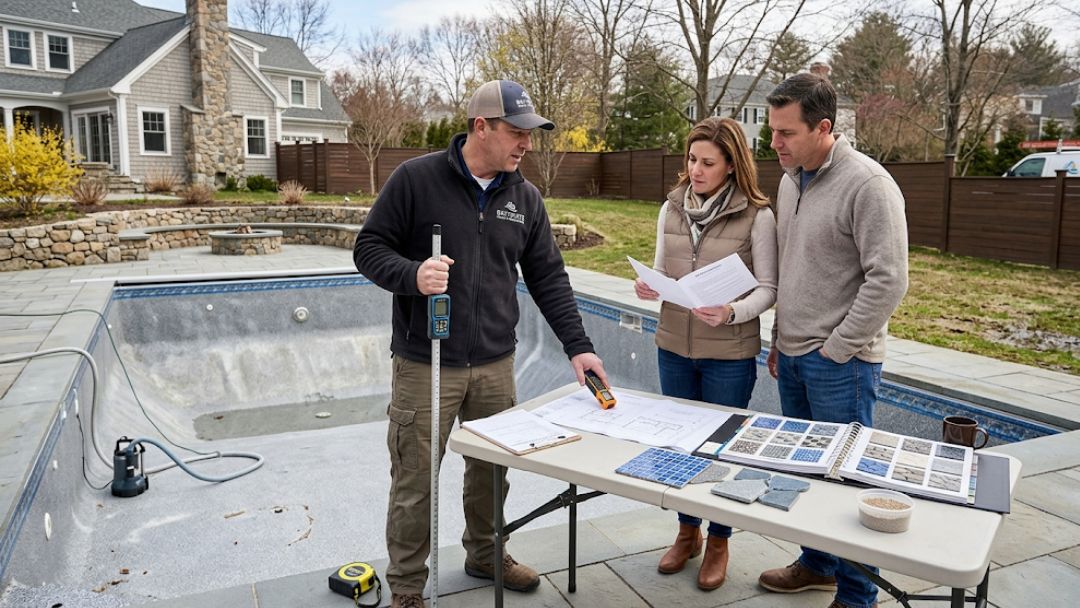
After excavation, crews set forms along the edges and tie a cage of steel rebar that follows every curve, step and bench. Plumbing lines for drains, returns and skimmers are placed before spraying. The gunite crew then sprays the concrete, packing it around the steel, and shapes walls and steps by hand. The shell needs time to cure and gain strength, and is kept damp in the early stage. Tile, coping and decking go on next, then the interior is plastered and the pool filled. New plaster needs regular brushing and careful water balancing at startup.
Why Mountainscapes
A gunite pool involves more trades than any other type: excavators, steel workers, the spray crew, tile setters, masons, plumbers, electricians and plasterers. We coordinate all of them as general contractor, so the sequence stays right and you have one person to call.

A tied grid of reinforcing steel following the pool shape, giving the shell its strength.

Gunite applied at high speed and hand-trimmed into walls, floor, steps and benches.

Time for the concrete to harden and gain strength before tile and plaster go on.

A band of tile at the surface that is easy to clean and frames the water.

Smooth plaster, sparkling quartz or textured pebble, each with its own color and feel.

Raised spas, waterfalls, ledges and deck jets planned into the shell from the start.
What is the difference between gunite and shotcrete?
Both are sprayed concrete. Gunite is mixed dry and water is added at the nozzle, so the operator controls the mix as it goes on. Shotcrete arrives already mixed with water from a concrete truck. Both make strong pool shells when applied well, and many people use the two words interchangeably.
How long does gunite pool installation take?
Gunite usually takes longer than fiberglass or vinyl liner because the shell has to cure before tile and plaster, and more trades are involved. Weather, permits and site access also play a part. We share a timeline for your build after the plans and approvals are finalized.
How long does a gunite pool last?
The concrete shell itself can last for decades when it is built and cared for properly. The interior finish wears with time and water chemistry, and eventually needs resurfacing. Our guide to the signs a pool needs resurfacing explains what to look for.
Is gunite harder to maintain than other pools?
A little. Plaster is more porous than fiberglass or vinyl, so it needs regular brushing and steady water balance to prevent algae and staining. Good chemistry also protects the finish. If you would rather hand that off, our pool maintenance service covers it.
Can a gunite pool handle New England winters?
Yes, when it is closed properly. Water lines are blown out and protected, the water level is set correctly and the pool is covered. Freeze damage usually comes from water left in pipes or equipment, not the shell itself. See our pool opening and closing service.
Can you build a gunite pool on a sloped yard?
Often, yes. Because the shell is formed on site, one side can be raised as a wall or the pool can step down the slope, sometimes with a retaining wall nearby. Tall walls and steep sites may need an engineer’s design, which we coordinate as part of the project.