
Your Trusted Project Partner


Our patio installation services begin with questions, not stone samples. How many people do you usually host? Will the patio hold a dining table, a grill, lounge chairs or a fire pit? Does it need to catch afternoon sun or stay in shade? The answers decide the size, shape and position of the patio, and those choices matter more to how often you use it than any single material. Once the plan is right, we help you pick between bluestone, pavers, concrete and natural stone, then build it on a base made for Massachusetts and New Hampshire winters.
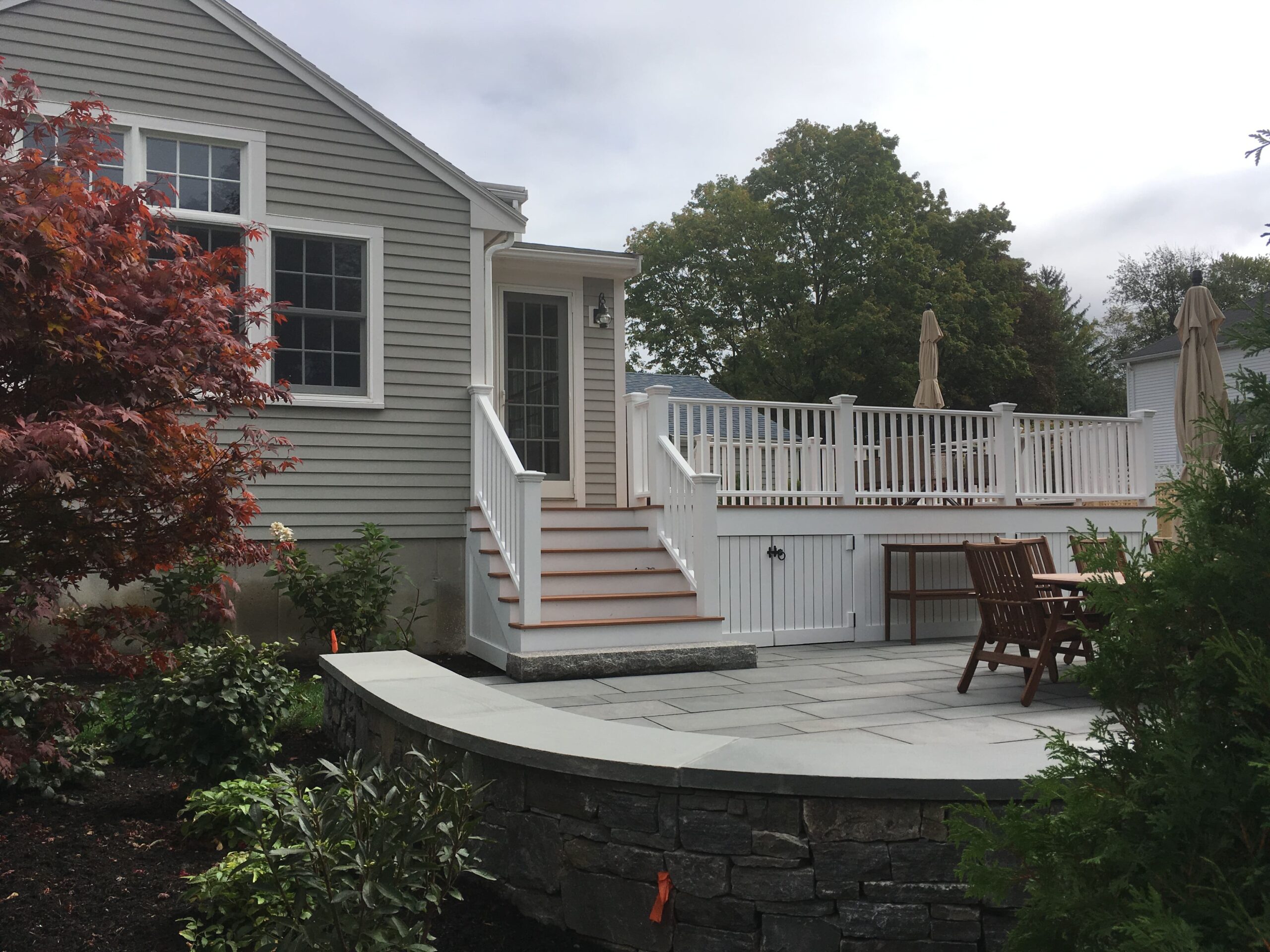
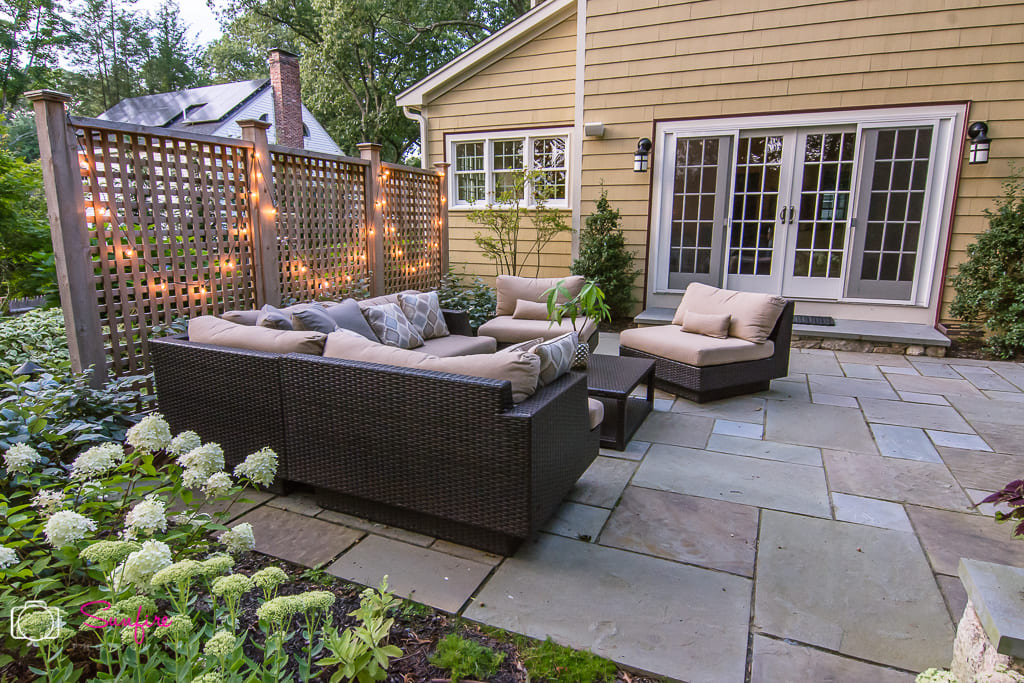
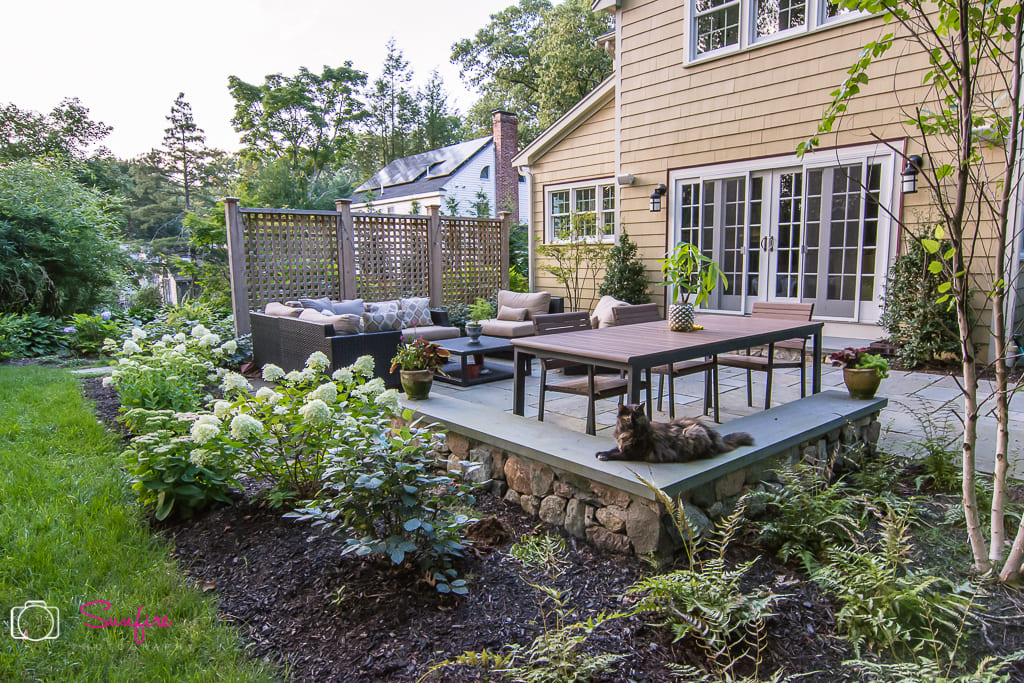
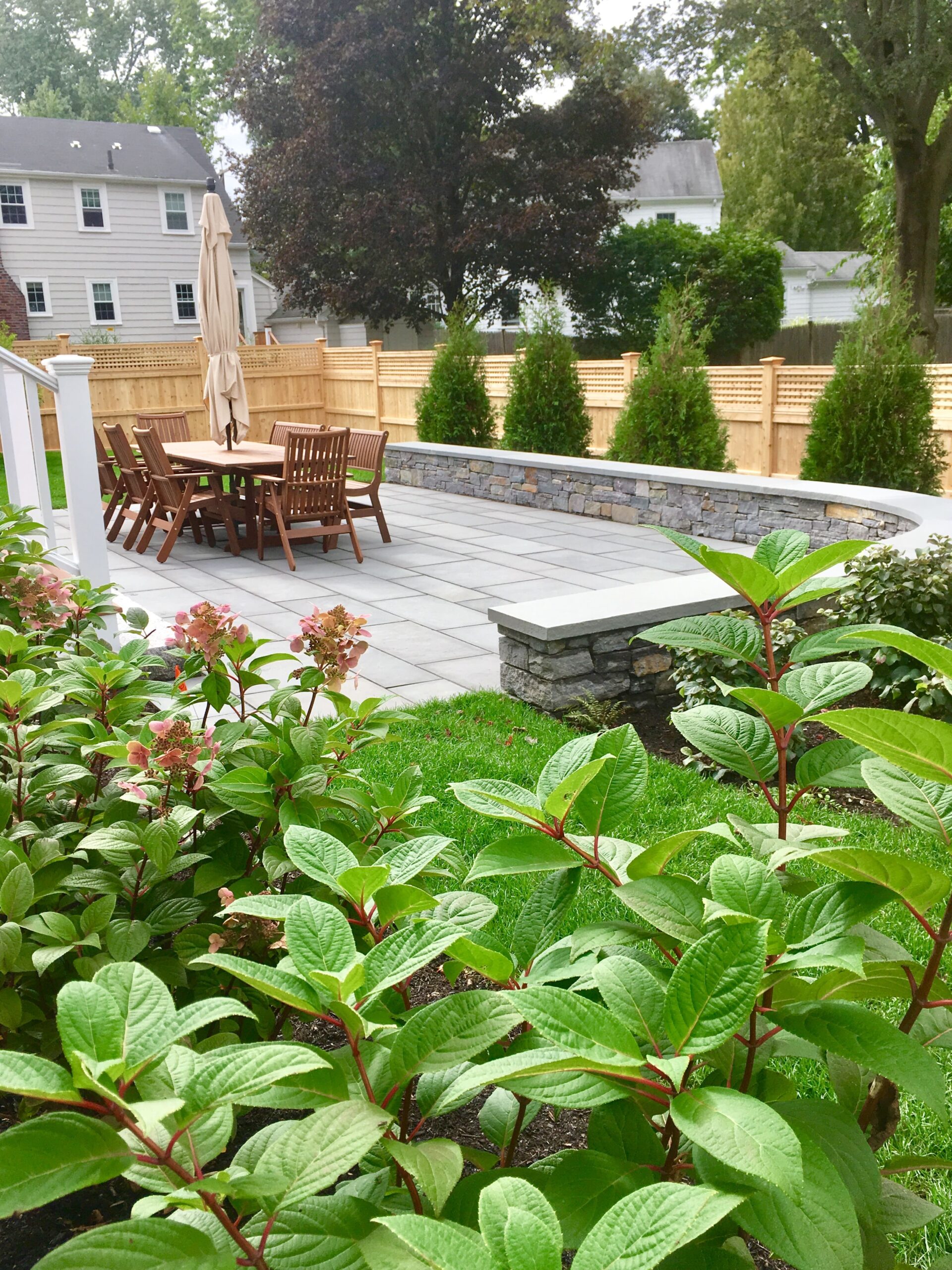
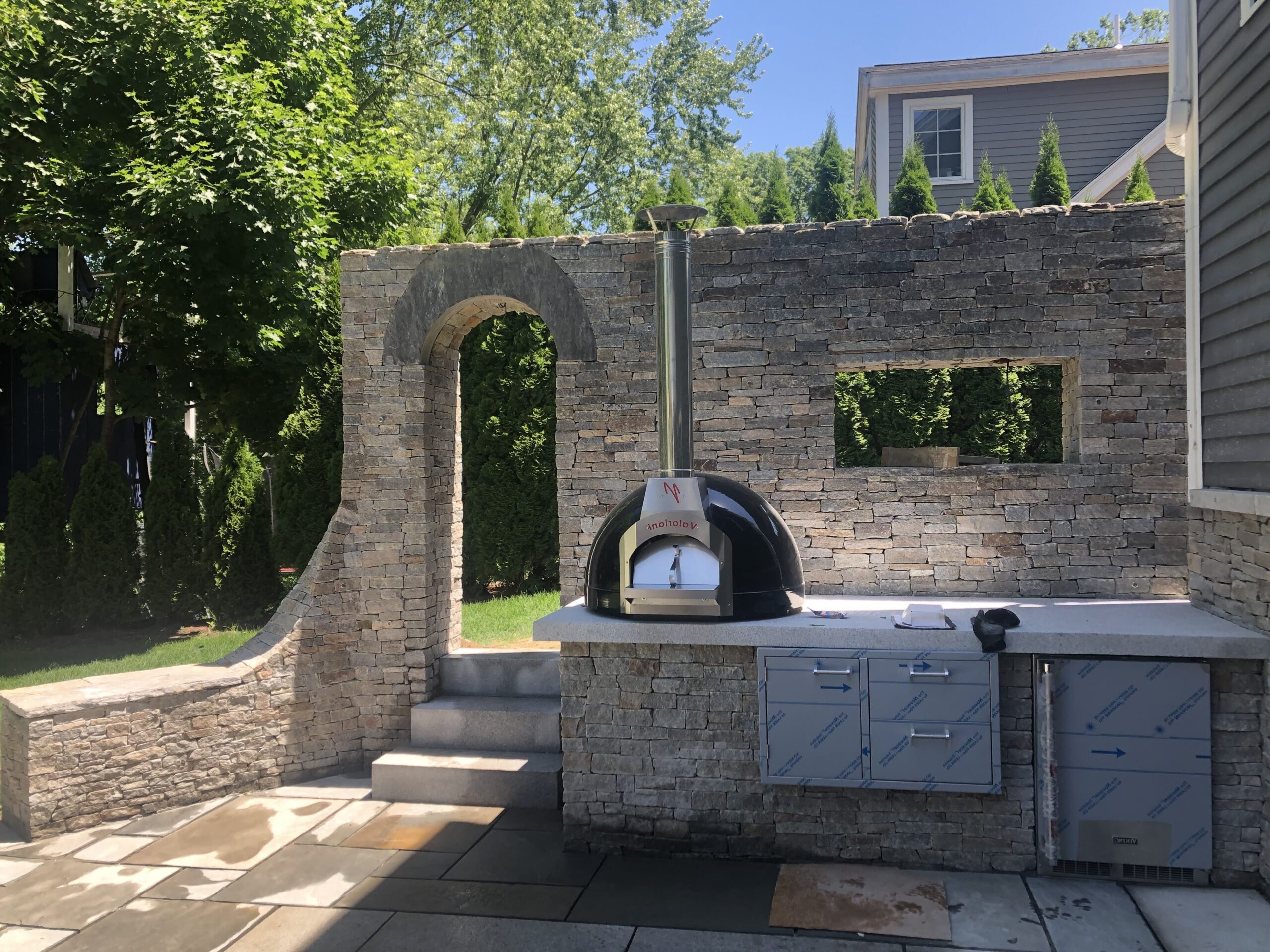
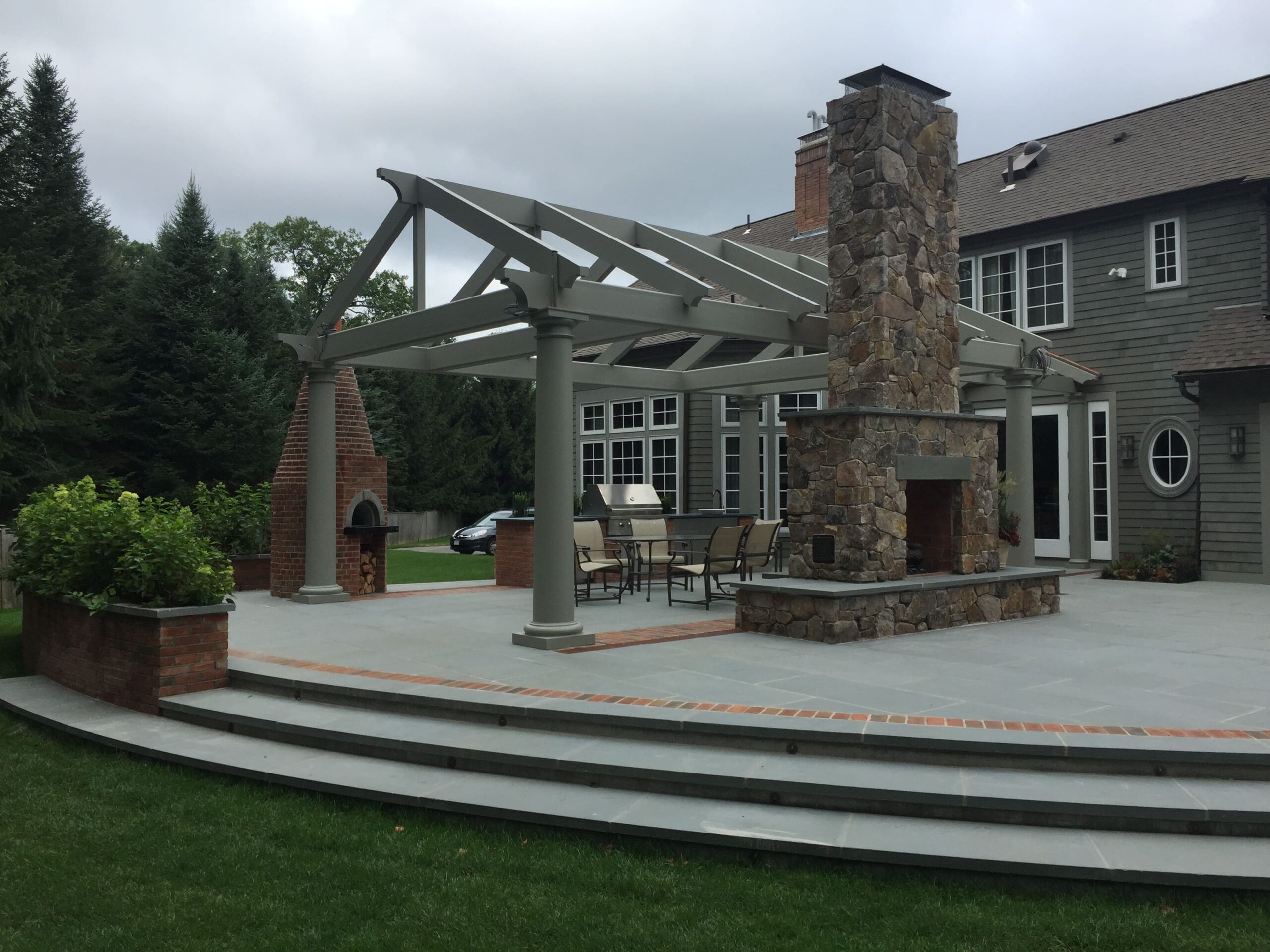
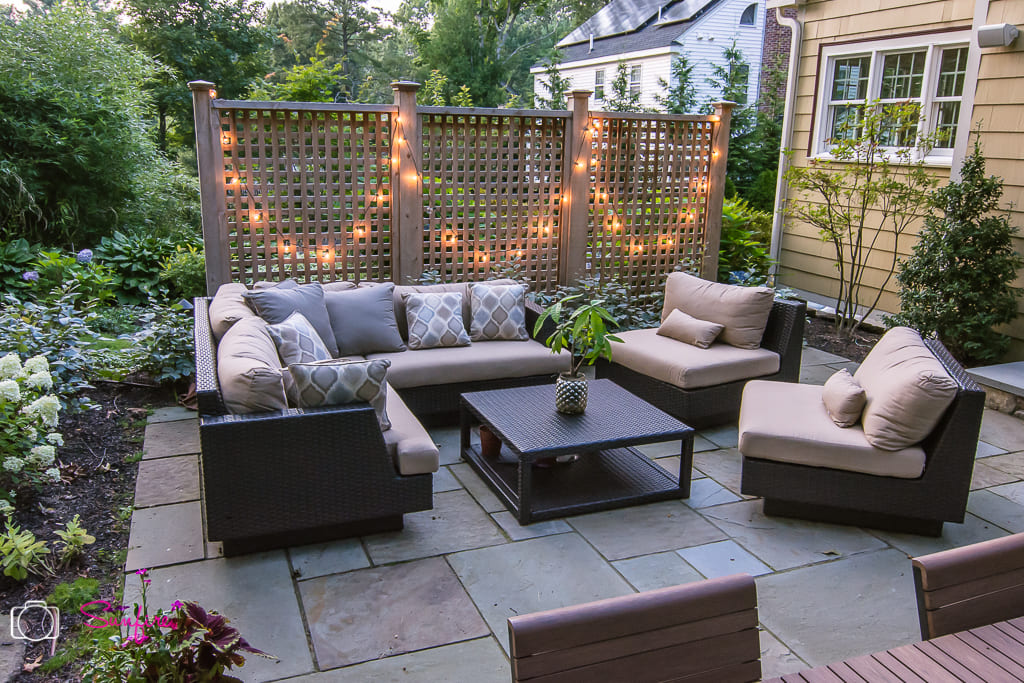
Every patio in these photos was shaped to fit a particular house and yard. Notice how each one connects to a door, a path or a pool. Our gallery has plenty more examples.
A patio can be well built and still sit empty if the planning was off. These are the design mistakes we see most often in older yards.
Homeowners in Westford, Acton, Reading, Burlington, Londonderry, Derry and Windham call us for patios of every size, from a small bluestone landing off the back steps to a multi-level space with room for dining and a fire. Live in a nearby town in either state? Get in touch. A modest patio is a project we take seriously.
// Areas We Serve
We work with homeowners across northeastern Massachusetts and southern New Hampshire. Pick your town to see local details, or ask us if yours is not listed.
We start by standing where the patio will go, checking the view from inside the house, the slope of the ground and where water flows during a storm. We then mark the outline on the lawn with paint or stakes so you can set your own furniture inside it and see how it feels. After you approve the layout and material, the crew excavates, builds the base and pitches it gently away from the house. Edges, steps and any seat walls go in with the surface, and the lawn or beds around the patio are restored at the end.
Why Mountainscapes
Our owner’s background in Landscape Architecture shows in the planning stage. We think about sight lines, foot traffic and sun before materials, and we fit the patio to the house and the rest of the yard.

A dense natural stone with blue-gray tones, cut into rectangles or laid as irregular flagstone. A New England classic.

Manufactured units in many shapes and colors, easy to repair one piece at a time if one cracks or stains.

A smooth, lower-cost slab that can be brushed, colored or stamped, with control joints to manage cracking.

Irregular stone set with wider joints for a relaxed, informal look that suits older homes and stone walls.

Very hard and long wearing, used for steps, borders or a full surface in a flamed or split finish.

Pavers bordered in bluestone, or stone set inside a concrete frame, to balance budget and character.
How big should my patio be?
Start with the furniture. Measure your table and chairs, add room to pull chairs back and walk around them, and do the same for a lounge area or grill. Separate zones often work better than one big square. Marking the outline on the lawn before we dig is the easiest way to check.
Which is better for patio installation, bluestone or pavers?
Bluestone has natural variation and a classic look but can cost more and gets warm in full sun. Pavers are uniform, come in many colors and are easy to repair piece by piece. Our article on stone versus concrete patios goes deeper into cost and upkeep.
Where should a patio go on my property?
Usually near the door you use most, often the kitchen, so carrying food is easy. After that, think about afternoon sun, privacy from neighbors and the street, and the view back from inside. Septic tanks, leach fields and well heads must stay accessible, so we plan around them.
Can a patio be built on a sloped yard?
Yes. We can cut the patio into the slope with a low wall behind it, or build it up with a retaining wall on the downhill side. Either way, the ground around it needs shaping so water drains away, which our site grading crew handles.
Do I need a permit for a new patio?
A simple ground-level patio often needs no building permit, but it varies by town. If the yard is near wetlands in Massachusetts, the local conservation commission may need to review the work. Near protected shorelines in New Hampshire, state shoreland rules limit new hard surfaces. We check before building.
Can you replace or extend an old patio?
Yes. We can break out a cracked concrete slab and replace it, or extend an existing patio with matching or complementary stone. When the whole yard feels tired, we often fold the patio into a broader landscape renovation.