
Your Trusted Project Partner


Our land clearing services remove trees, brush, stumps and debris so you can use more of the land you already own. Many properties back onto woods that have crept toward the house over the years, or include a strip of brush nobody has touched in decades. Clearing can be selective, keeping healthy trees you like and taking out the rest, or a full clear for a new pool, a garage or a bigger lawn. Because we also handle grading and lawn installation, the cleared ground does not sit bare and muddy afterward.
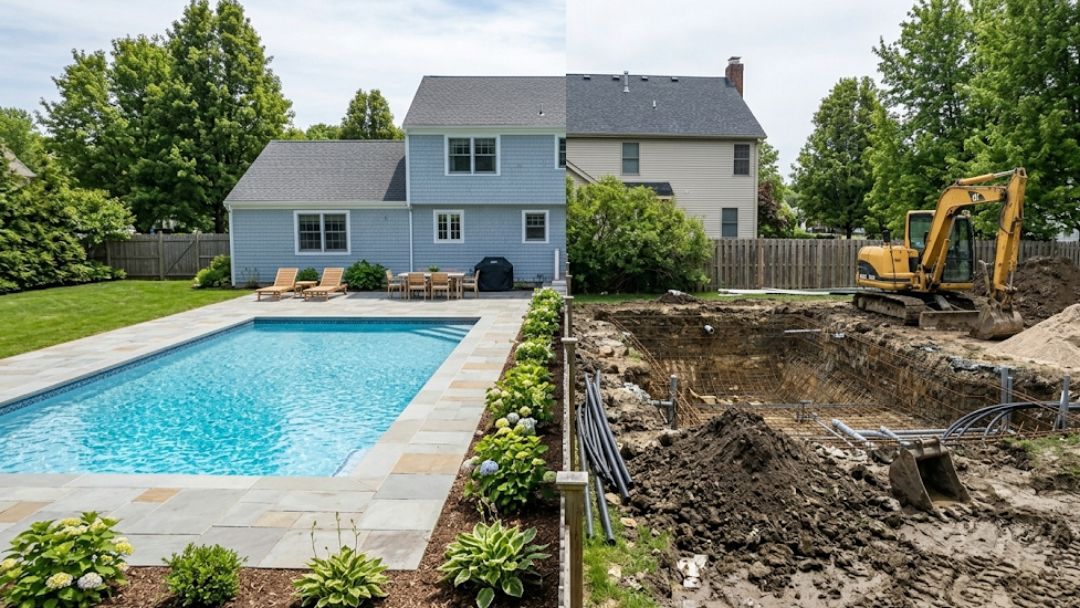
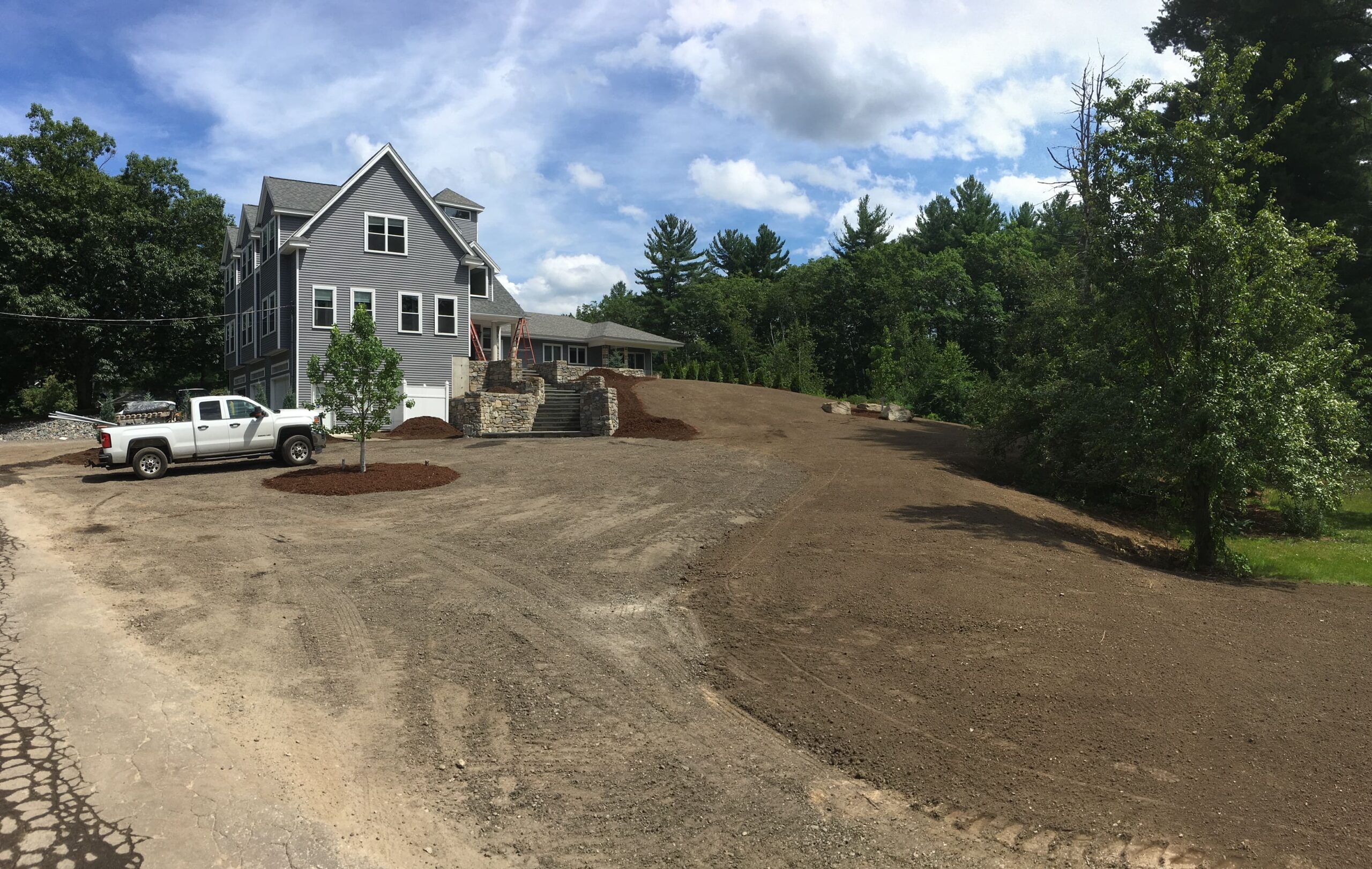
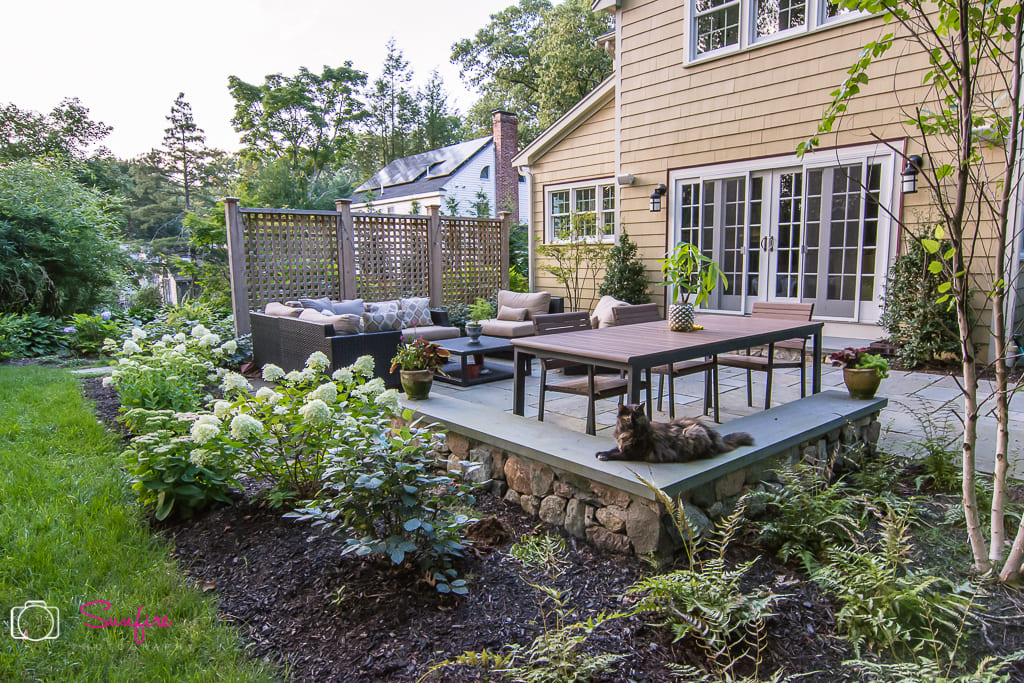
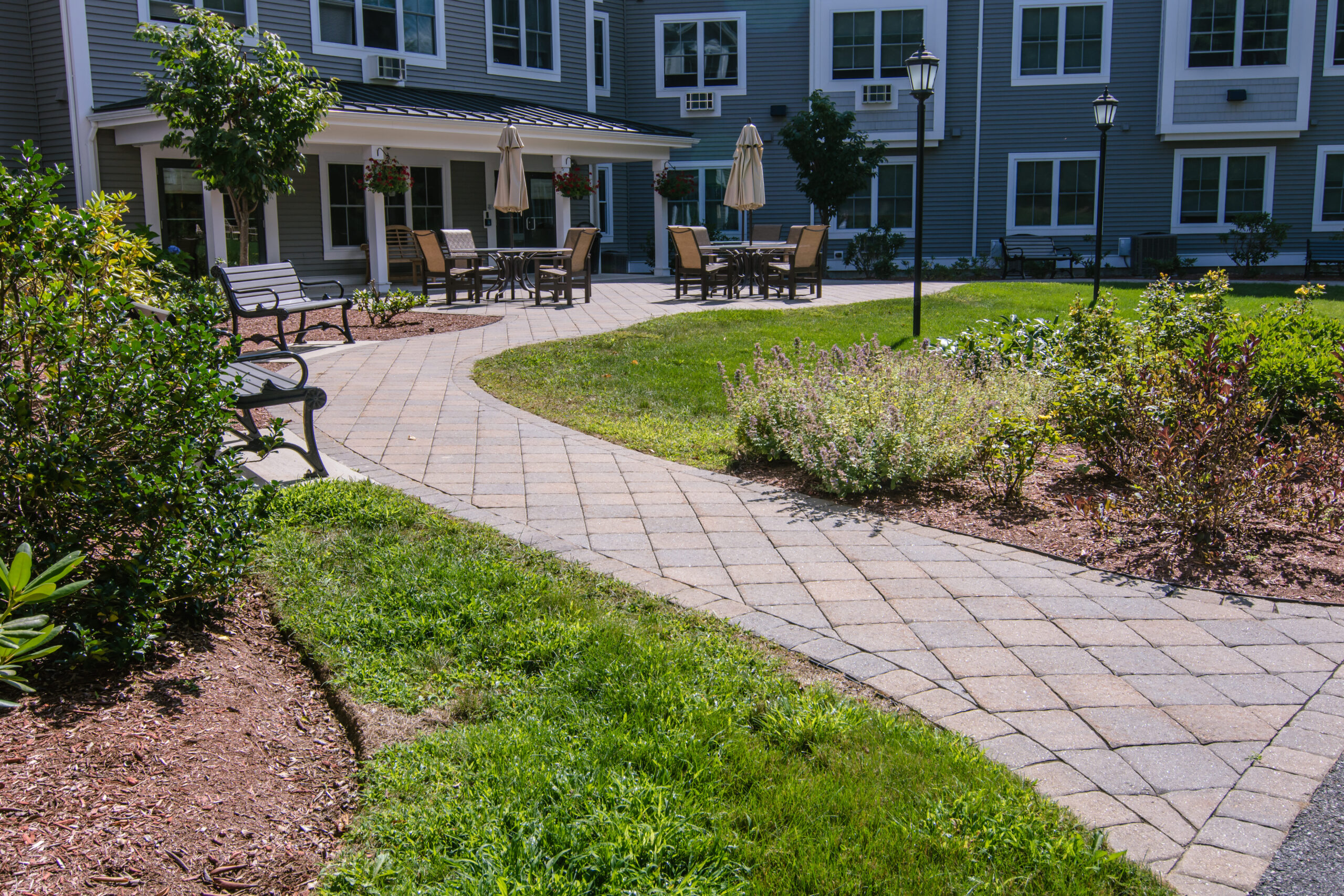
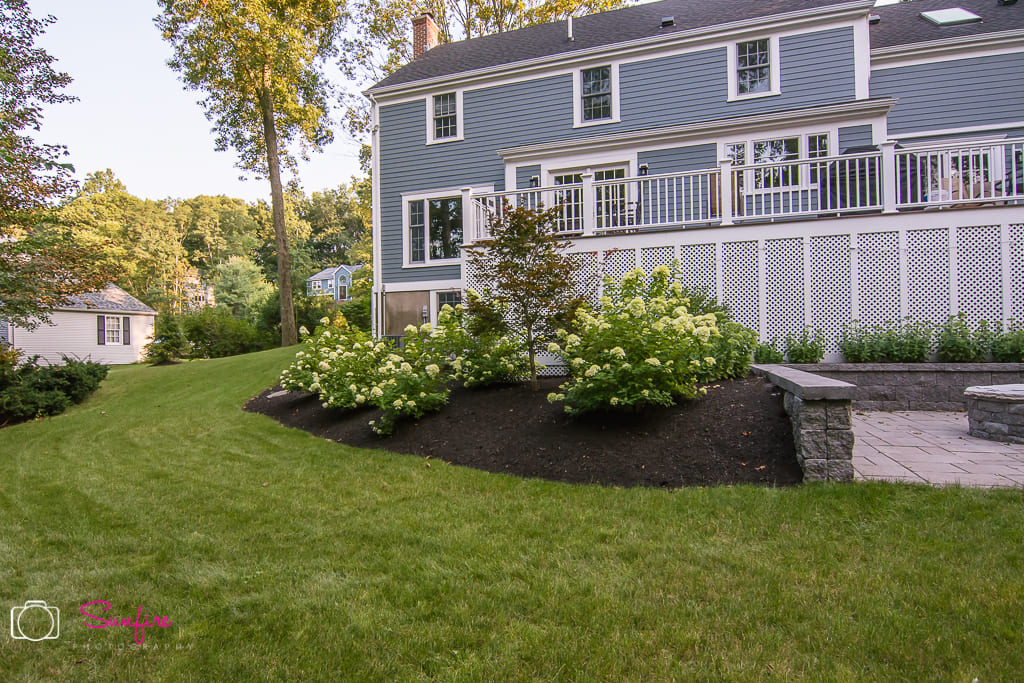
Clearing photos are mostly brush piles and bare dirt, so here are the yards, lawns and outdoor spaces that open ground turns into, all from projects we have built. See more in our gallery.
Clearing is rarely the goal by itself. It is the first step toward using a part of the property that is currently wasted or hard to manage.
// Areas We Serve
We work with homeowners across northeastern Massachusetts and southern New Hampshire. Pick your town to see local details, or ask us if yours is not listed.
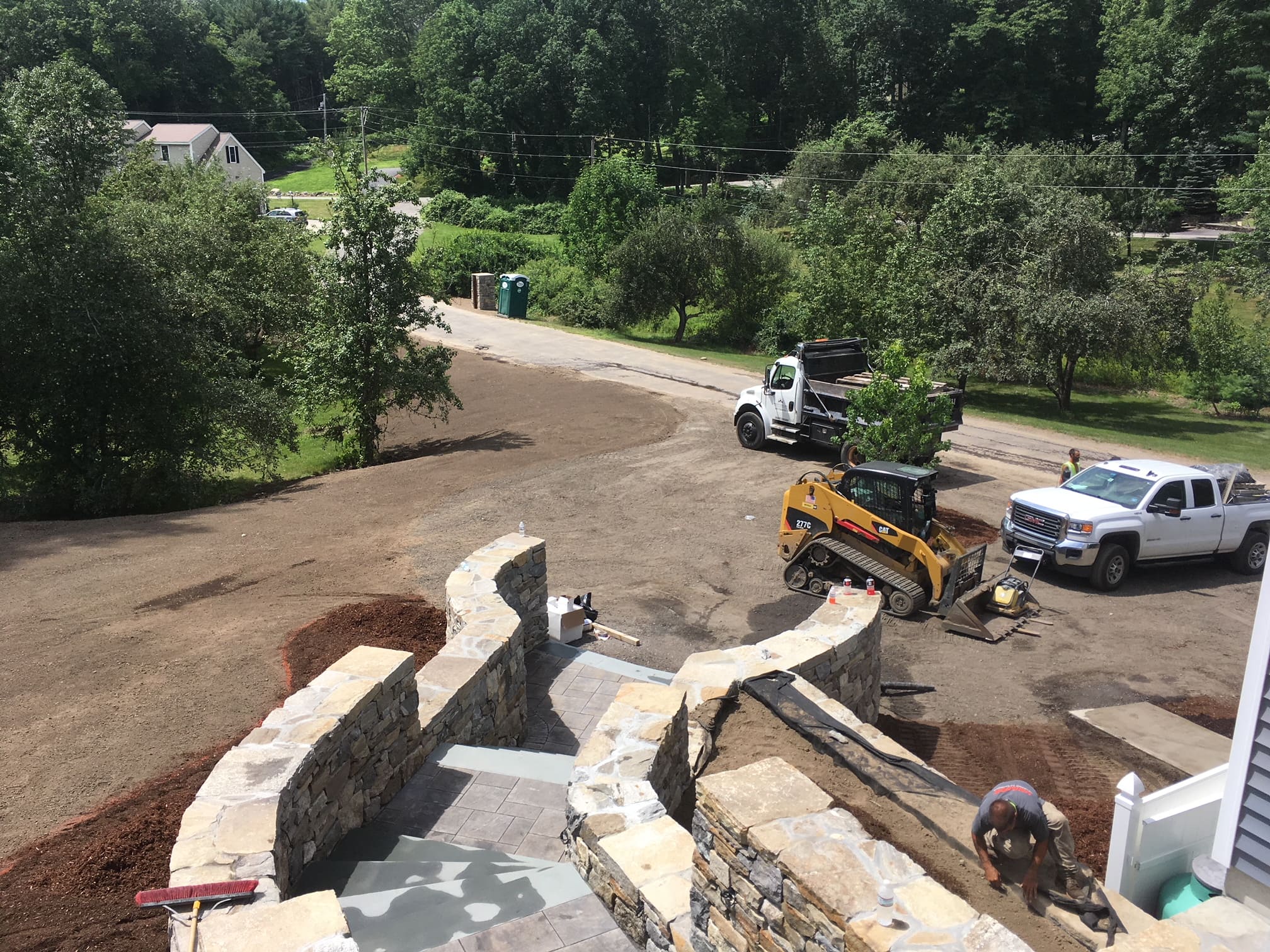
We walk the area with you and flag the trees you want to keep, then check for wetlands, slopes and buried utilities. Trees come down first and are cut into logs or chipped. Brush is cut and chipped, and stumps are either ground below the surface or pulled out with an excavator, depending on what will be built there. Rocks and roots are raked out and the ground is rough graded. Bare soil is then stabilized with seed, hydroseed or mulch so rain does not wash it away while the next phase is planned.
Why Mountainscapes
A crew that only clears tends to leave once the trees are gone. We plan the clearing around what will be built or planted, so stumps are handled the right way and the ground ends up at a usable grade.

Felling and cutting up unwanted trees, with logs left for firewood or hauled away, whichever you prefer.
Cutting and chipping saplings, vines and thick brush that have taken over the edges of the yard.

Grinding stumps below grade for lawns, or pulling the full root ball where something will be built.

Raking out roots, rocks and old debris so the cleared area can be graded and planted.

Removing weaker trees to open views and let in light while keeping the healthiest ones in place.

Silt fence where needed, then seed or hydroseed on bare soil so it holds together through the next storm.
How much do land clearing services cost?
Cost depends on the size of the area, how many trees there are and how large, the density of brush, the number of stumps and whether material is chipped on site or hauled away. Access for equipment matters too. After a walk-through, we give you a written price for the scope you choose.
Should stumps be ground or fully removed?
If the area will become lawn or planting beds, grinding the stump below the surface is usually enough. If a patio, pool, driveway or footing will sit there, the root ball should come out completely, because decaying roots leave soft spots that settle over time.
Do I need permission to clear trees on my property?
On most private lots, ordinary clearing does not need a permit. Near wetlands in Massachusetts, the conservation commission may need to review the work first. In New Hampshire, cutting near protected lakes and rivers is limited by the Shoreland Water Quality Protection Act. Some towns also have their own tree rules.
What happens to the trees and brush you remove?
Brush and branches are usually chipped, and the chips can be spread on paths or hauled away. Log-length wood can be left stacked for you to split as firewood, or removed with the rest of the debris. We agree on this with you before work starts.
Can you clear land for a pool?
Yes. Clearing is often the first stage of an inground pool installation, and planning both together means roots come out where the pool and deck will sit, while trees that give shade and privacy stay. Keeping trees back from the water also means fewer leaves in the pool.
Will the cleared area turn into mud?
Not if it is stabilized right away. After clearing and rough grading, we seed, hydroseed or mulch the bare soil so rain does not carry it off. On steeper ground, silt fence or erosion blankets help hold it until grass takes root.