
Your Trusted Project Partner


Our drainage installation services collect water where it gathers and carry it somewhere it can soak in or run off safely. That might be a French drain along a wet side yard, a dry well at the end of a downspout line or a catch basin in a low spot of the driveway. Water left alone keeps working: it softens lawns, heaves patios, washes out mulch beds and finds its way into basements. If you are not sure what is behind your wet spots, our article on signs your backyard needs a drainage system is a good place to start. And yes, we take on one-off drainage fixes, not just big projects.
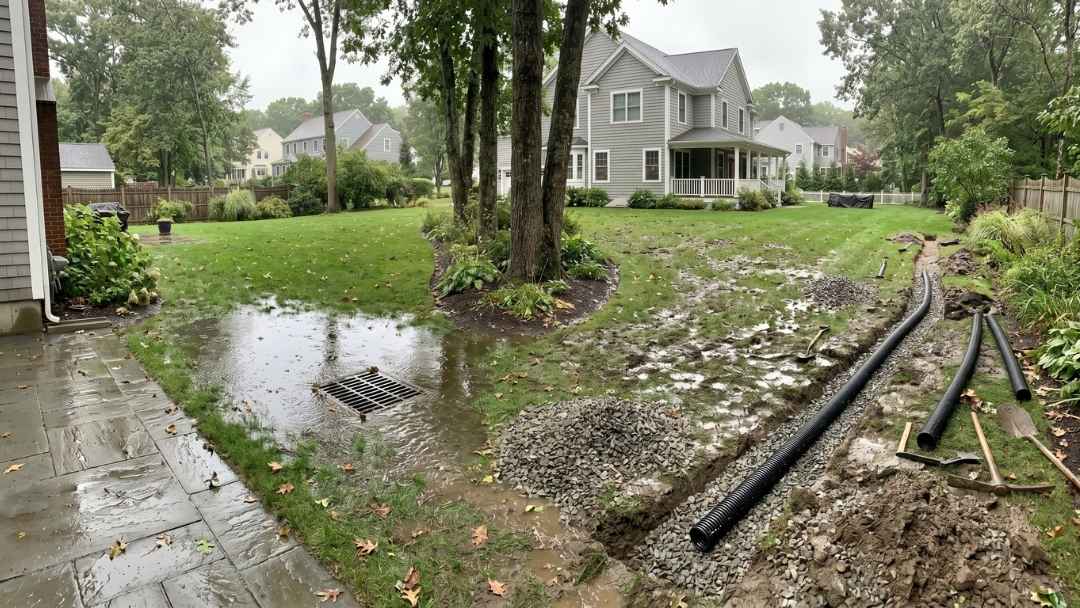
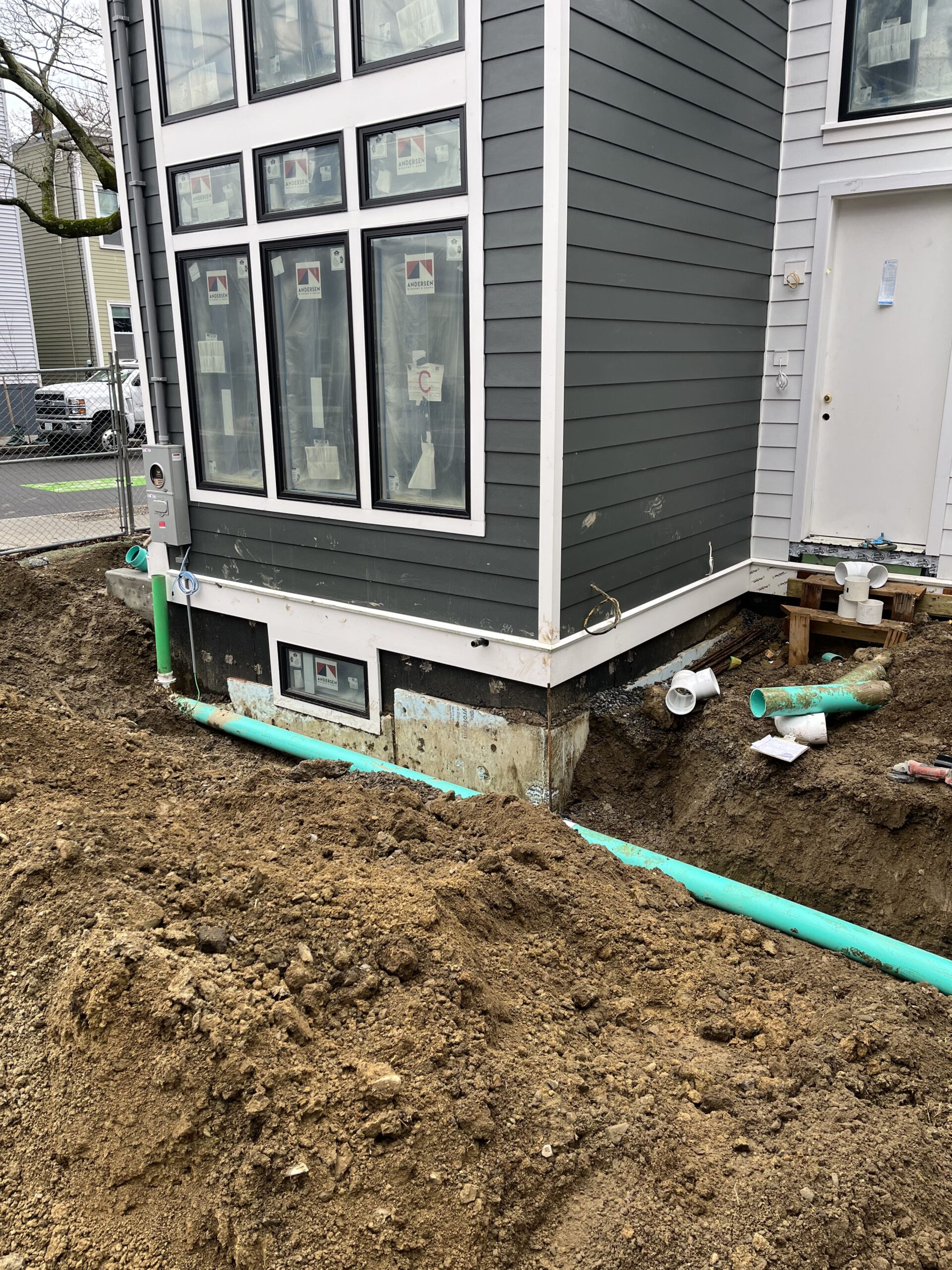
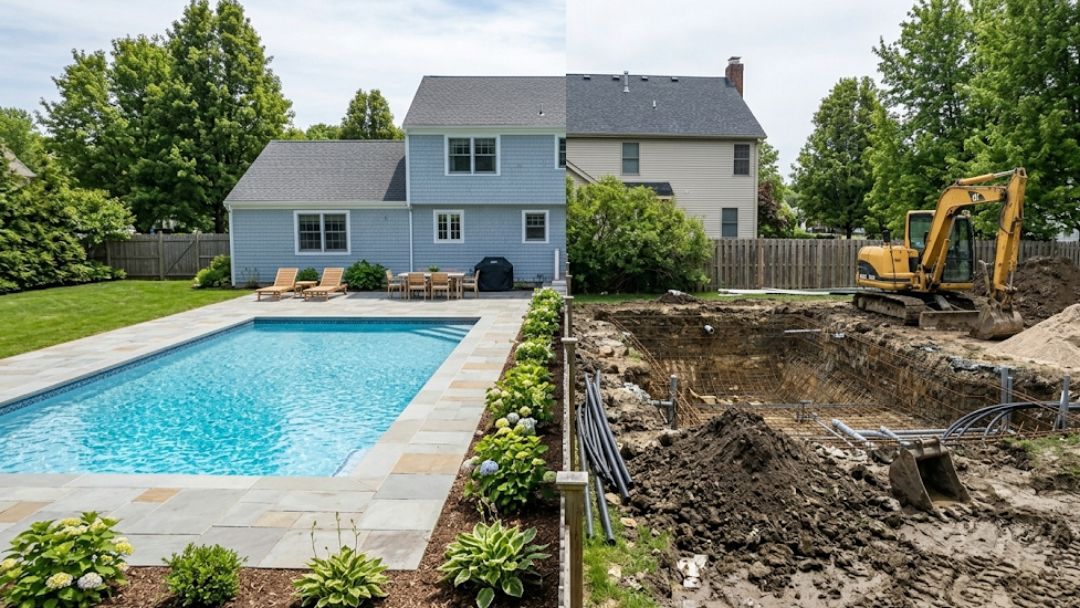
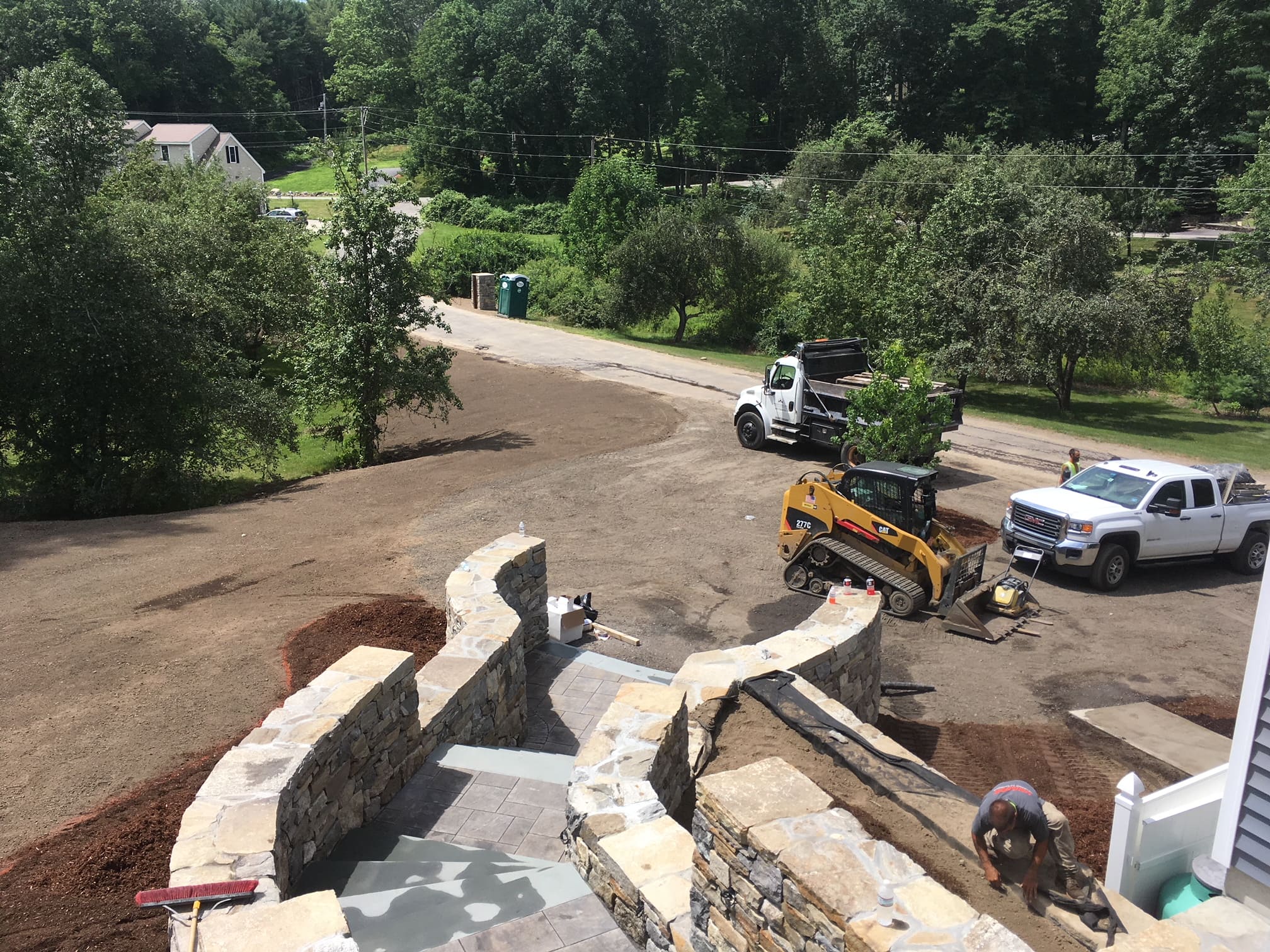
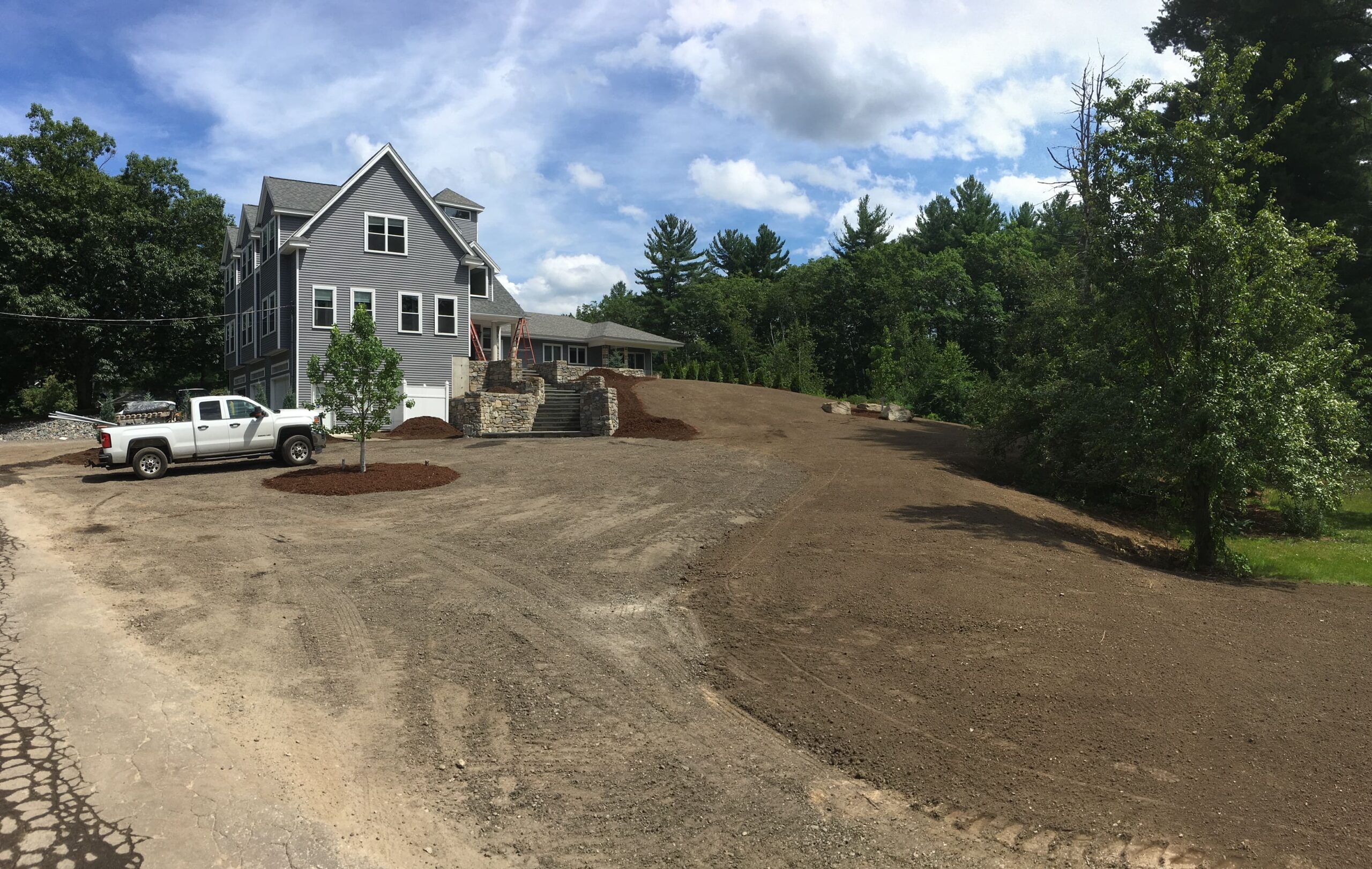
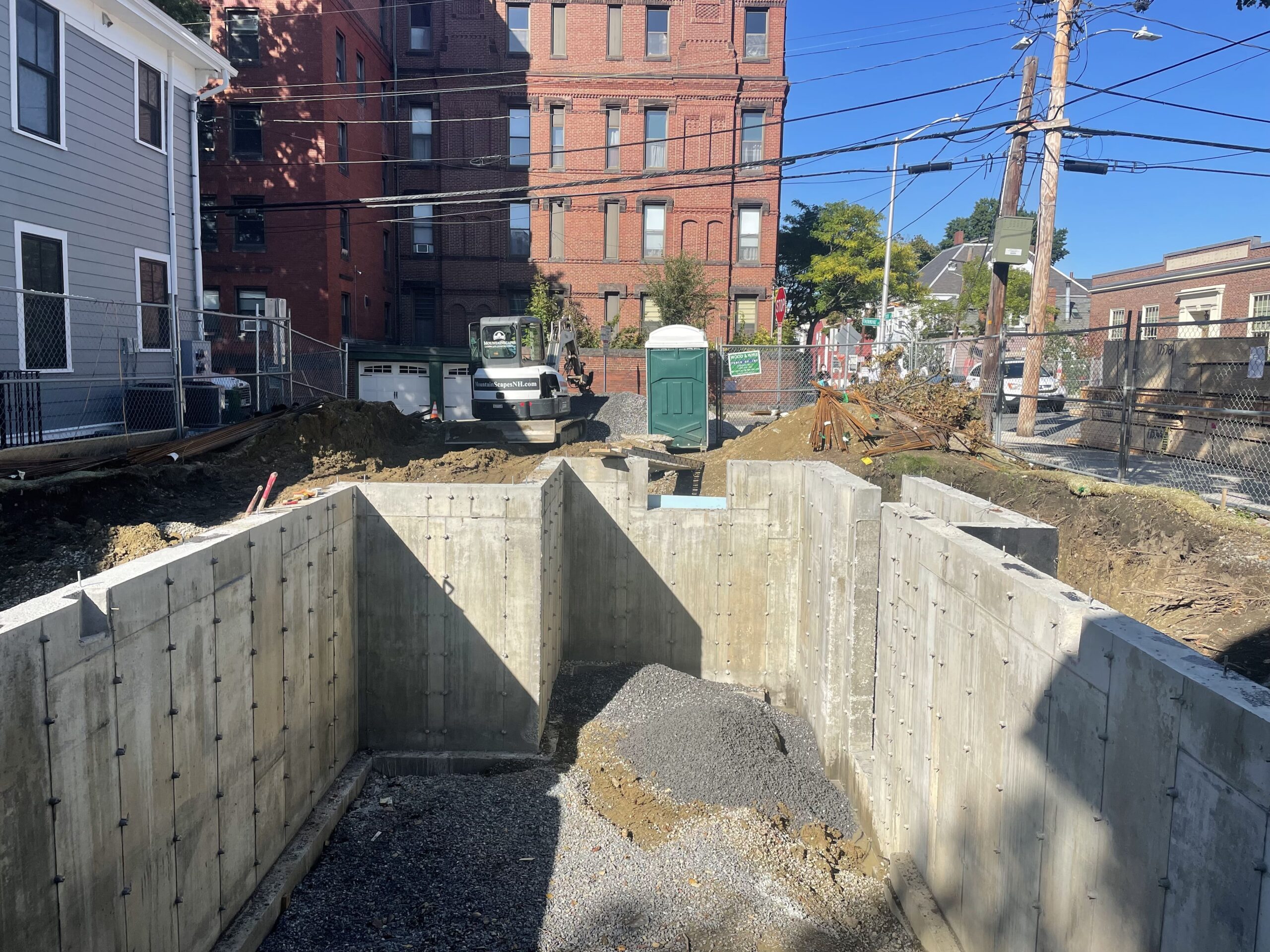
Most drainage ends up buried, so the useful photos are taken mid-job, with trenches open and stone going in. Here are some from projects we have built, along with the finished yards that sit above them. Browse more in our gallery.
Every wet spot has a cause, and the right fix depends on where the water comes from. These are the problems homeowners call us about most often.
We fix drainage problems for homeowners across the region, including Tewksbury, Billerica, Dracut, Chelmsford, Hudson, Pelham, Derry and Salem. Small drainage jobs are exactly the kind of work we want more of, so you do not need a pool or a landscape project to call us. One wet corner of the yard is reason enough. Ask about your address if your town is missing here.
// Areas We Serve
We work with homeowners across northeastern Massachusetts and southern New Hampshire. Pick your town to see local details, or ask us if yours is not listed.

We start by looking at where water goes, ideally during or right after a storm, and checking soil, slope and downspouts. Then we choose the fix and an outlet: a dry well, a lower part of the yard or another safe discharge point. We contact Dig Safe so buried utility lines get marked. Trenches are cut with a slight, steady fall so water keeps moving. Perforated pipe goes in on a bed of stone wrapped in filter fabric, which keeps soil from clogging it. Finally we backfill, put the topsoil back and reseed or lay sod over the line.
Why Mountainscapes
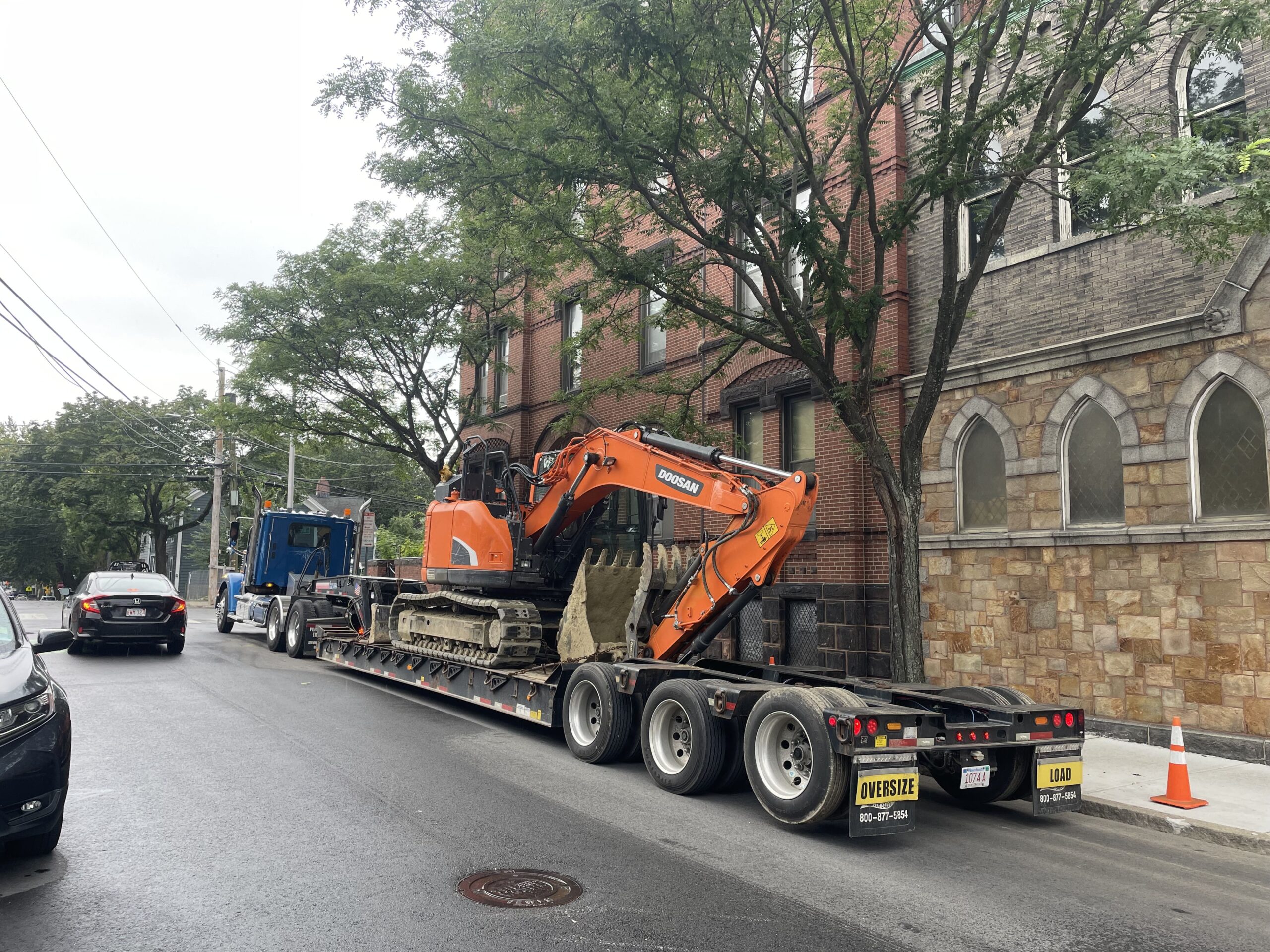
We grade sites and dig pools for a living, so moving water and soil is everyday work for our crew. That means drainage planned around how your whole lot sheds water, and a yard put back neatly afterward.

A gravel-filled trench with perforated pipe that collects groundwater and surface water along wet lawns, side yards and foundations.

An underground chamber surrounded by stone that holds runoff and lets it soak slowly into the surrounding soil.

A grated box set at a low point that catches surface water from driveways and patios and sends it into a pipe.

Solid pipe buried from each downspout to a dry well or outlet, so roof water stops pooling at the foundation.

Shallow grassed channels and reshaped slopes that steer surface water around the house instead of toward it.

Stone backfill and pipe behind retaining walls, which relieves the water pressure that can push a wall out of line.
How much do drainage installation services cost?
It depends on the type of system, the length of trench, the soil and how far the water has to travel to a safe outlet. A couple of downspout lines costs far less than a long French drain across a yard. We visit, look at the problem and give you a clear written price before any work starts.
Should I get a French drain or a catch basin?
A French drain collects water soaking through the ground over a long stretch, while a catch basin grabs surface water at one low point. Many yards need a bit of both. We explain the difference in detail in French drain vs catch basin.
Will you take on a small drainage job?
Yes, gladly. One wet corner, a single downspout line or a small dry well is work we want. Small drainage jobs get the same crew and care as large projects, and we will not try to turn your fix into something bigger than you need.
Can drainage fix a wet basement?
Often it helps a lot. Many wet basements come from roof water and soil sloping toward the house. Redirecting downspouts, regrading and adding an exterior drain line can keep much of that water away. Cracks in the foundation itself may still need a basement waterproofing specialist, and we will tell you if that is the case.
Where does the water go once it is collected?
To a dry well that lets it soak into the ground, to a lower part of your property or to another safe outlet. We avoid sending it onto a neighbor’s land. Near wetlands, drainage work in Massachusetts may need conservation commission review, and we help with that.