

Most homeowners start by picturing the pool: the water, the float, the summer afternoons. What catches people off guard is that a pool is really a whole-backyard decision, and the price can swing a lot depending on choices you haven’t made yet. Two families can put in the same size pool and pay very different amounts, because the cost lives in the details around it as much as in the pool itself.
This guide walks you through the three main pool types, what actually moves the price, and how to plan the space around the water so the finished yard works the way you want. If you’re in Massachusetts or New Hampshire, one thing worth knowing early: spring and fall are the busiest planning windows, so starting the conversation ahead of the rush usually means a better spot in the build schedule.
Start With the Space, Not the Pool
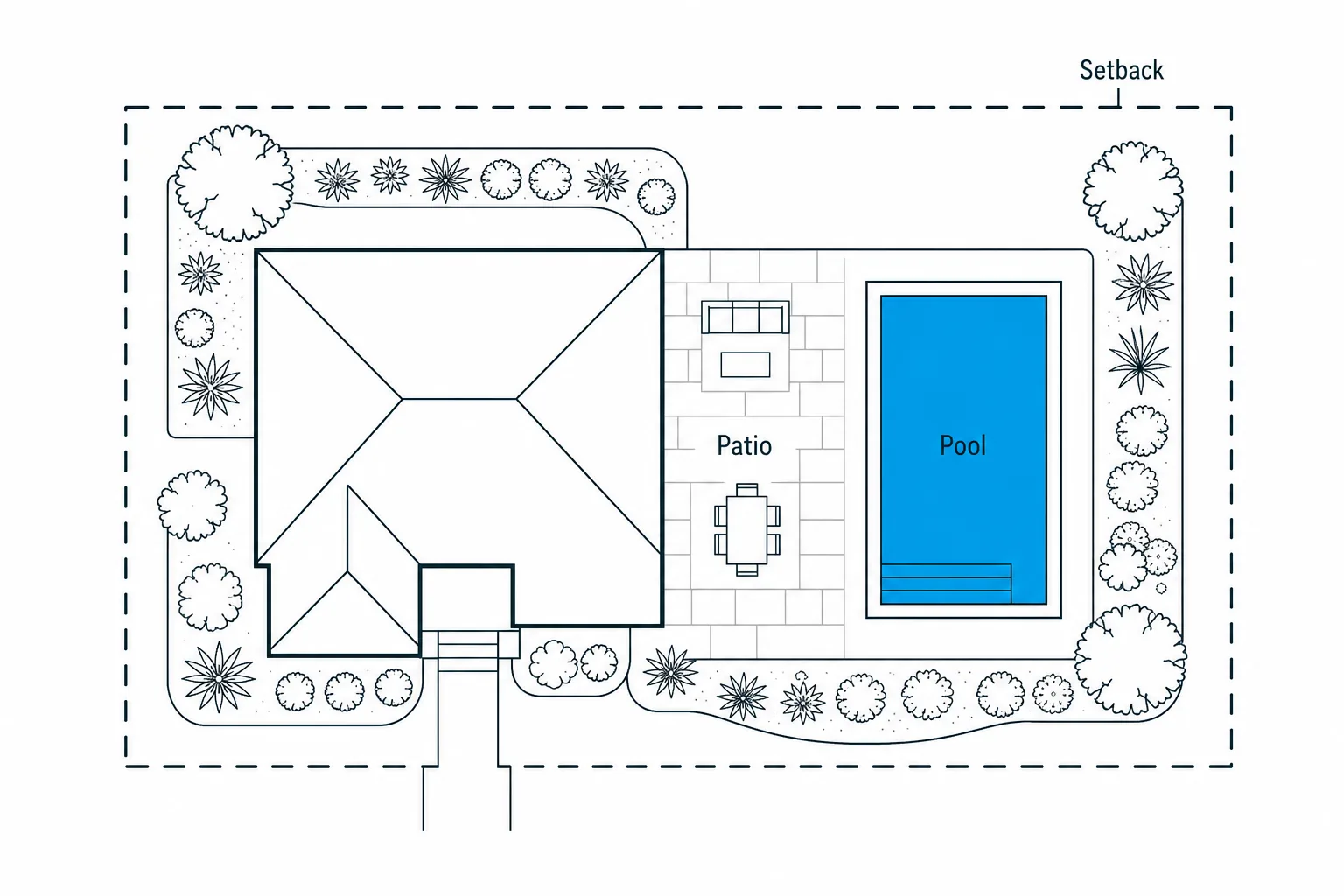
Here’s the shift that saves people the most regret: the pool is one piece, and the finished backyard is the actual goal. Before you fall in love with a shape, walk your yard and picture how your family will really use it. Where does the sun land in the afternoon? Where do people naturally gather? What do you want to see from the kitchen window, and what do you want to screen out? A pool dropped into a yard without that thinking often ends up with awkward leftover corners and no shade where you want to sit.
What to look at in your yard first
A few things shape what’s possible, and what it costs, more than almost anything else:
- Slope and grading. A flat yard is simpler. A sloped one may need retaining walls or regrading, which is doable but adds work.
- Drainage. You want water moving away from the pool and the house, not pooling around the deck.
- Access for equipment. Excavators and trucks need a way in. A tight side yard or a fence in the wrong spot can change the whole approach.
- Existing trees. Big roots near the dig, or a canopy that drops leaves all summer, both matter.
- Utilities, overhead and underground. Power lines above and gas, water, or electric lines below all affect where a pool can safely go. Before anyone digs, buried lines need to be marked, a free service you request through the national Call 811 program so you don’t hit something you can’t see.
- Setbacks. Towns require pools to sit a certain distance from property lines and structures.
This is exactly the kind of groundwork that happens in the design and planning phase, where zoning requirements, setbacks, and site conditions get reviewed before a shovel touches the ground.
Getting it right on paper first is a lot cheaper than fixing it later.
Your Inground Pool Options (and What Each Is Really Like)
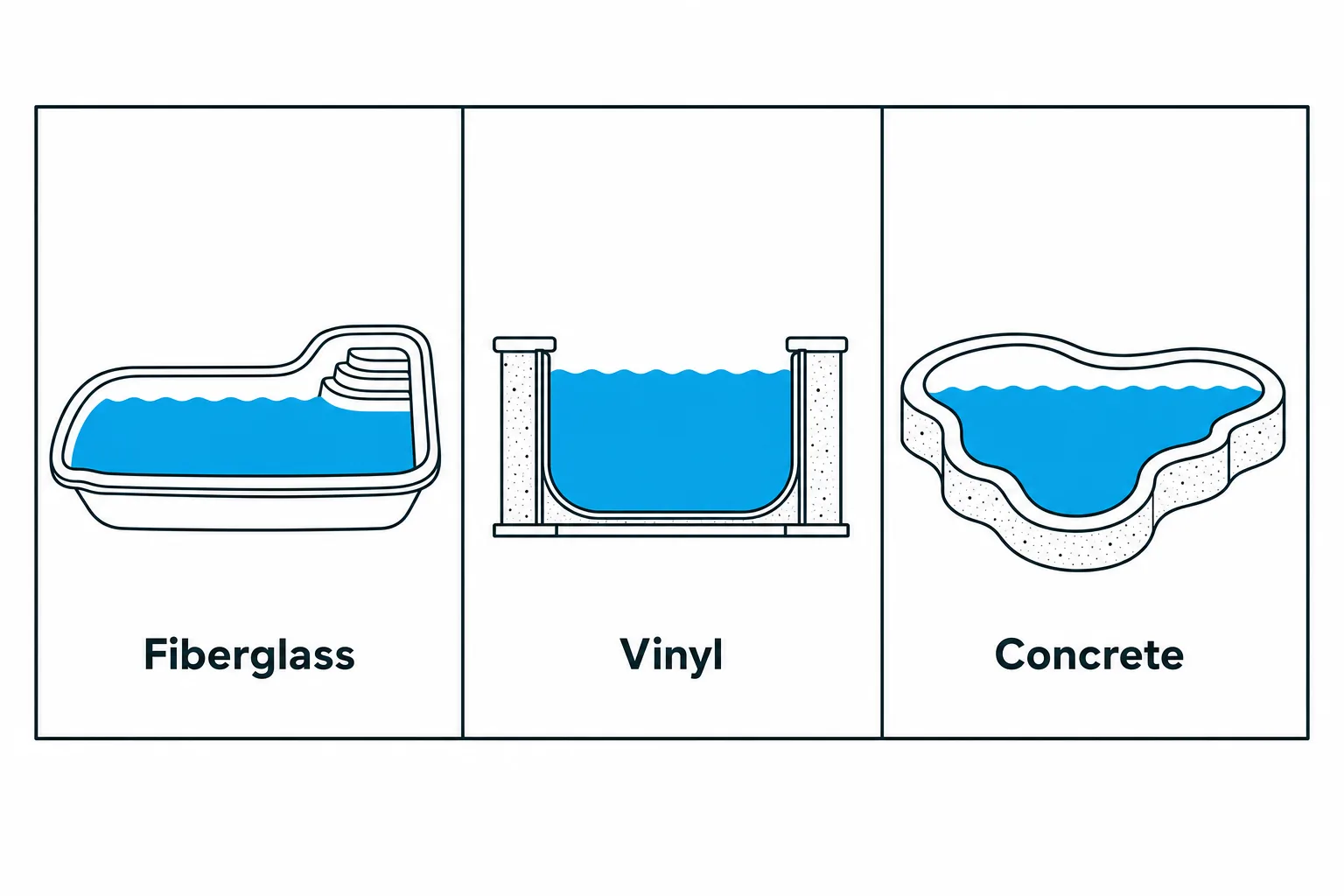
There are three main inground pool types. None is simply “best.” They fit different budgets, timelines, and tastes.
Fiberglass
A fiberglass pool arrives as one pre-made shell that gets set into the excavated hole. Because the shell is already built, installation tends to be the fastest of the three. The surface is smooth and gentle on feet, and it resists algae well, so ongoing upkeep is usually lighter. The trade-off: you’re choosing from set shapes and sizes, and there’s a width limit on what can be trucked in. If a low-maintenance pool that goes in relatively quickly appeals to you, this is often the one people ask about.
Vinyl-liner
A vinyl pool uses a supported frame with a liner stretched inside. The upfront cost is often the most approachable of the three, and you get flexibility in shape and size. The thing to plan for is the liner itself: it wears over the years and eventually needs replacing, a known, recurring cost rather than a surprise. Families who want more custom shaping without the top-tier price often land here.
Concrete (gunite)
Concrete, often called gunite, is sprayed and shaped on site, which means almost any shape, depth, or size you can dream up. It’s the most fully custom option and, built well, extremely durable. In exchange, it takes the longest to install and asks for the most ongoing care, since the surface and water chemistry need more attention. If you have a specific vision that stock shapes can’t match, concrete is usually the answer.
| Pool type | Leans toward |
|---|---|
| Fiberglass | low-maintenance and quicker |
| Vinyl-liner | budget-friendly and flexible |
| Concrete (gunite) | fully custom and longest-lasting |
The right pick depends on how you weigh cost, upkeep, and how particular you are about shape.
How Much Does an Inground Pool Cost? What Actually Drives the Price
Everyone wants a number, and any honest answer starts with “it depends,” because the variables are real. Rather than quote figures that won’t match your yard, it’s more useful to understand what moves the total.
Why two pools the same size cost different amounts
Say two neighbors both want a 16-by-32 pool. One yard is flat with an open driveway for equipment; the other slopes, has ledge or tricky soil underground, and a narrow gate that makes access hard. The second project takes more excavation, more site prep, and more labor before the pool even goes in. Material choice moves it too, along with add-ons like heating, automation, and water features. Same footprint, different job.
Don’t forget the costs around the pool
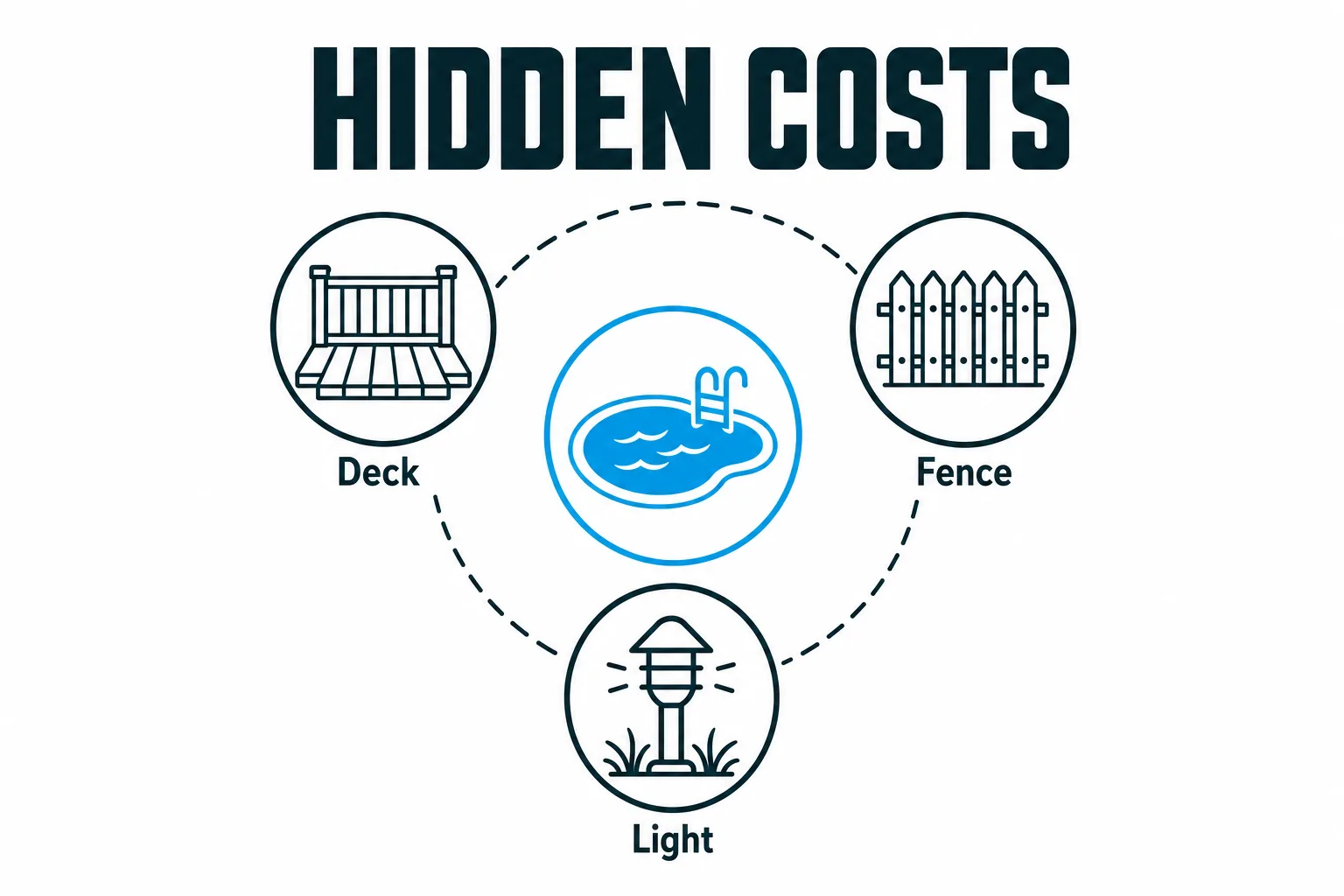
Here’s where budgets quietly grow: a pool in a bare dirt yard isn’t a finished backyard. To actually use and enjoy it, you’re usually looking at decking or a patio, hardscaping, fencing (which is often required, not optional), landscaping for privacy and shade, lighting for evening swims, and irrigation to keep new plantings alive. These aren’t extras tacked on. They’re part of turning a hole full of water into the space you pictured. This is a big part of what goes into the real cost of a swimming pool installation, and it’s the piece a lot of homeowners underestimate.
The upside of knowing this early is that you can budget the whole space instead of getting surprised by the second half of it in the middle of the project.
Design the Whole Backyard as One Project
This is the part most planning guides skim past, and it’s where the money and the enjoyment either come together or don’t. When the pool, patio, retaining walls, plantings, grading, lighting, and irrigation are all designed together from the start, they fit like they belong. When they’re bolted on one at a time, you get mismatched levels, a sprinkler line run through fresh hardscape, or a lounge area with no shade.
Elements to plan alongside the pool
- Patio or decking sized for how you actually entertain
- Retaining walls where slope needs managing (and they can double as seating)
- Plantings placed for privacy, screening, and shade
- Lawn shaped around the hardscape, not squeezed into leftovers
- Lighting so the space works after sunset
- Irrigation to keep everything you just planted healthy
Why coordination beats hiring piecemeal
When one team designs and builds all of it, you get a single point of contact and one schedule instead of chasing separate crews. Nobody is pointing fingers about whose work caused a problem, because the same people own the pool, the masonry, the grading, and the plantings. That coordination is exactly why having pool construction and landscaping handled by one team tends to mean fewer surprises and a yard where every piece was planned to work with the next. It’s less about convenience and more about the finished result actually holding together.
A resort-style backyard? you include a walkway connecting to the pool area. Installation that transforms perception and increases value. A pool …Read on LinkedIn ↗
Building Smart: Safety, Energy, and Long-Term Upkeep
A few planning decisions pay you back for years. They’re easy to fold in at the design stage and expensive to retrofit later.
Safety by design
Safety works best when it’s drawn into the plan, not added after the pool is full. That means proper barriers and fencing, self-closing and self-latching gates, and thinking through sightlines so an adult can keep an eye on the water. The Pool Safely campaign, run by the U.S. Consumer Product Safety Commission, lays out barrier and layered-protection guidance worth reading before you finalize a layout. It’s also smart to plan for healthy water from the start, and the CDC’s healthy swimming resources cover the basics of keeping pool water clean and safe.
Energy and water efficiency
The equipment you choose shapes your monthly costs for as long as you own the pool. A variable-speed pump, a good cover to cut evaporation and heat loss, and an efficient heater all add up over the seasons. The U.S. Department of Energy’s Energy Saver guidance on pool heating is a plain-language place to start, and if you want to compare pumps, ENERGY STAR certifies efficient pool pump models so you can see what actually saves energy. A little thought here at the planning stage keeps the pool cheaper to run every year after.
Permits, Timelines, and Working With a Design-Build Contractor
Inground pools are permitted construction, and the rules aren’t the same everywhere. Permitting requirements, codes, and timelines vary town to town across Massachusetts and New Hampshire, so it’s always worth confirming the specifics where you live. Nobody can promise a permit will be granted or hand you an exact timeline before the plans and site are known, and you should be a little wary of anyone who does.
What a design-build contractor typically does is guide you through that permitting process and act as the general contractor coordinating the trades, so you’re not the one deciphering town requirements or scheduling five different crews. We cover the full on-site sequence in our other MA and NH planning and build guides, so rather than repeat it here, the point to hold onto is simpler: one team that designs, permits, and builds means one accountable partner instead of a stack of separate handoffs.
Frequently asked questions
How much is a fiberglass inground pool installed?
What’s the difference in cost between pool types?
How long does an inground pool take to install?
Do I need a permit for an inground pool in MA or NH?
Ready to Plan Your Backyard?
You don’t have to have every decision made to take the first step. The easiest place to start is a design conversation, where we talk through your yard, how you want to use it, and what makes sense for your budget, before anyone commits to a build. From there you can explore our Services, browse the Gallery to see finished spaces, or dig into the Learning Corner for more guidance. One small step now is how the good backyards get started.