

The photo that sells a pool is calm blue water and a tidy patio. The reality that gets you there is a construction site in your backyard: a big machine, piles of soil, and a few weeks where things look worse before they look great. Know the real sequence ahead of time and none of it feels like a surprise. Here is the honest walkthrough, start to finish, including the New England details most guides skip, from one team that designs and builds the whole thing.
Before Anyone Digs: Design, Site Check, and Permits
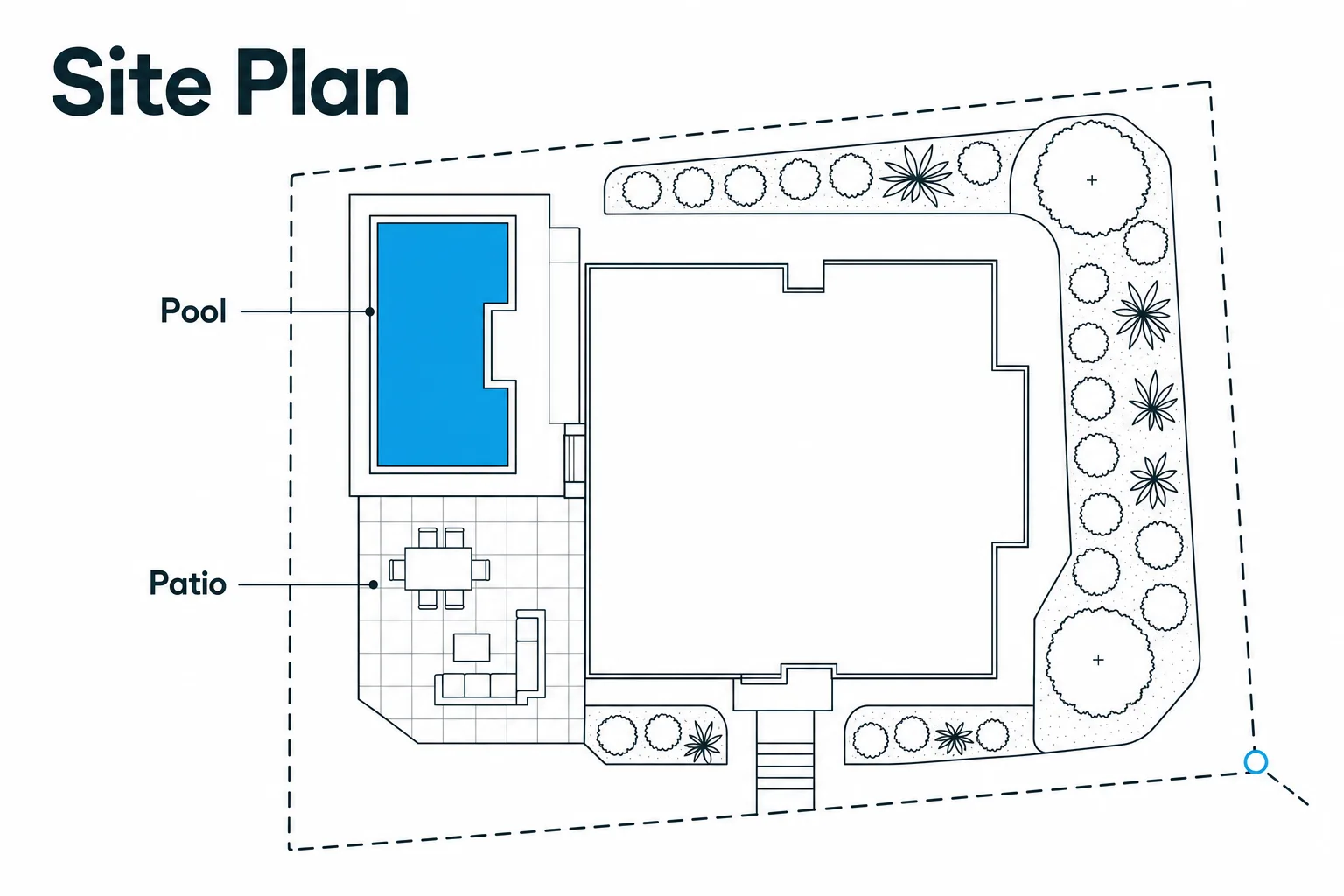
Your build really starts weeks before the excavator shows up. First comes the design and a site walk to see how the yard actually behaves: where water drains, where the utilities run, and how much room the setbacks leave you. Then come the permits.
This is where New England gets interesting. Codes, setbacks, and timelines vary town by town, and what flies in one municipality needs an extra step in the next. Massachusetts pools fall under the state building code administered by the Board of Building Regulations and Standards, and each town layers its own zoning on top. Rather than promise how any board will rule, the honest answer is that requirements differ locally, and you confirm them for your address.
Having one company handle the design, pull the permits, and act as your general contractor means you are not chasing three different people for answers. That single point of contact matters most in towns with their own quirks, which is part of why local familiarity with pool construction and landscaping in North Andover smooths out the paperwork phase.
Step-by-Step: What Each Phase of the Build Actually Looks Like
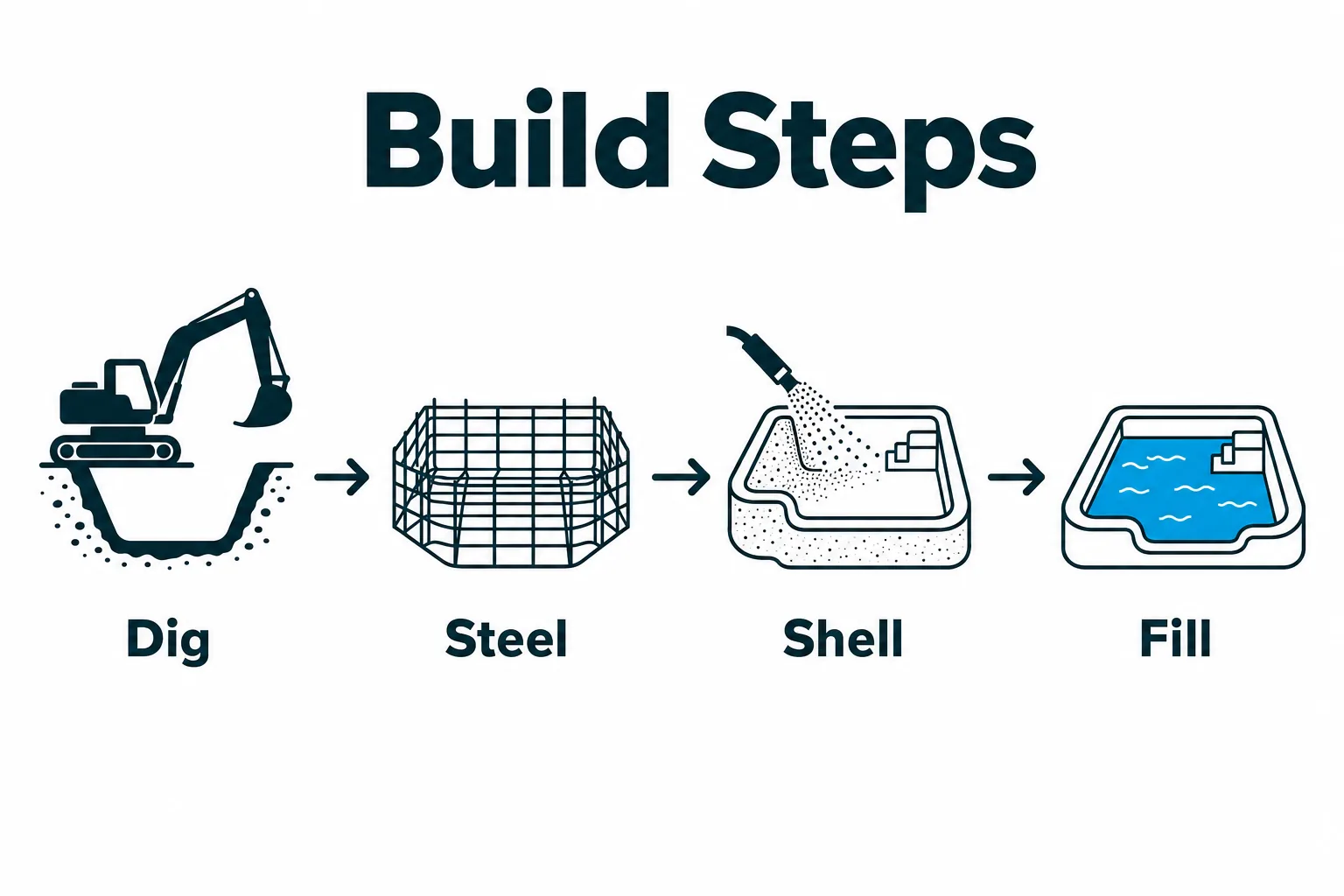
Layout & Excavation (The Dig)
The crew stakes out the exact shape in your yard, then the machine arrives and the hole gets dug. This is the “wow, it’s really happening” moment, and in New England it is also the least predictable one. Hit ledge (solid rock) or a high water table and the dig gets slower and pricier, because the ground fights back. A machine this size is controlled work, not just scooping dirt; the walls of a deep excavation are held to real safety rules, the kind OSHA lays out in its trenching and excavation standards, which is why experienced crews shore and slope instead of racing.
Structure & Steel
Once the hole is right, the crew builds the bones of the pool. For a gunite pool that means a grid of steel bars (rebar) that gives the shell its strength. Think of it as the skeleton that keeps the concrete from cracking under years of water pressure and New England freeze-thaw.
Plumbing & Electrical Rough-In
Next go the pipes and wiring you will never see again. Skimmers, returns, main drains, and the electrical for pumps and lights all get set now. Getting the slope and connections right at this stage is everything, because fixing a buried pipe later means breaking things open.
The Shell: Gunite, Fiberglass, or Vinyl
The shell is what makes it a pool, and the type you choose sets your timeline. A fiberglass shell is craned in and can be seated in days. A vinyl-liner pool uses paneled walls with a liner. A gunite or concrete pool is sprayed in place and cures over several weeks, which is the reality behind any guide on how to build a concrete swimming pool step by step: concrete is strong and fully custom in shape, but it needs time to gain strength before the next stages. Each option is a fair choice; they just move at different speeds.
| Shell type | How it goes in | Speed |
|---|---|---|
| Fiberglass | Craned in as one piece | Can be seated in days |
| Vinyl-liner | Paneled walls with a liner | Moves quickly |
| Gunite / concrete | Sprayed in place, then cures | Cures over several weeks, fully custom in shape |
Tile, Coping & Interior Finish
Now it starts looking like the photo. Waterline tile goes on, coping caps the edge, and the interior finish (plaster, aggregate, or the liner) gives the pool its color and feel. Small details, big visual payoff.
Decking, Backfill & the Space Around It
The pool is only half the project.
Backfilling, grading, the patio or deck, retaining walls, lighting, and plantings turn a hole in the ground into a place you actually want to spend the evening. When one crew handles both the pool and the landscape, patio height, drainage, and sightlines get planned together instead of stapled on afterward, which is the whole idea behind treating pool construction and landscaping in Nashua, NH as a single coordinated space.
Water, Startup & Handover
Finally the pool fills, the water gets balanced, and the equipment is started up. Choosing an efficient pump here pays off for years; ENERGY STAR-certified pool pumps use far less electricity than older single-speed models. Then you get the walkthrough on running it, and the first swim.
How Long Does It Take? (And Why New England Weather Sets the Clock)
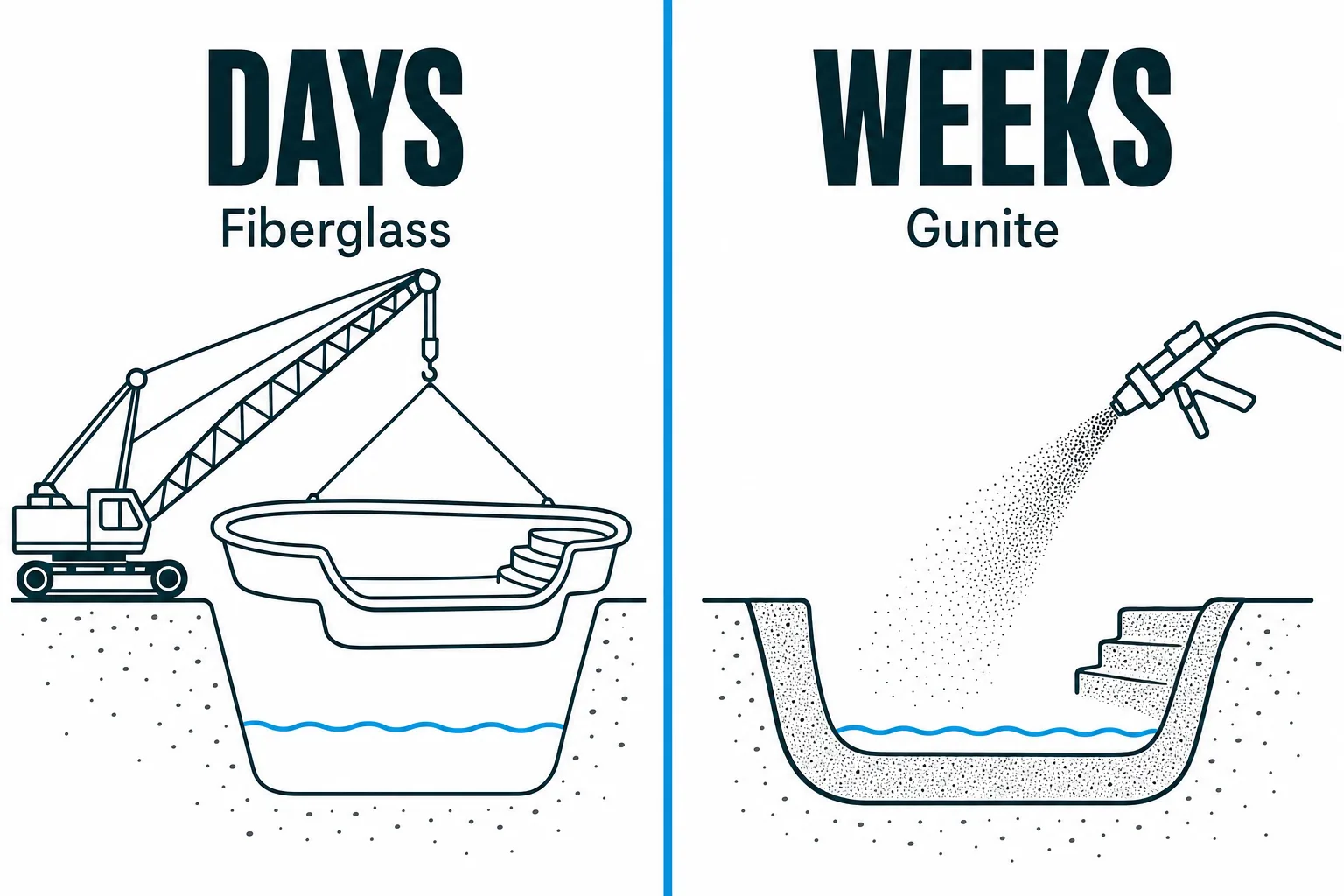
Most inground builds run several weeks from dig to swim, but the honest answer is “it depends.” The variables are permits, weather, whether you hit ledge, and which shell you picked. New England adds its own clock: spring and fall are the busy planning and build seasons, while deep winter frost can pause certain work entirely. That is the real reason to start the conversation early rather than in June, when everyone wants a pool at once.
What It Costs and Where the Money Goes
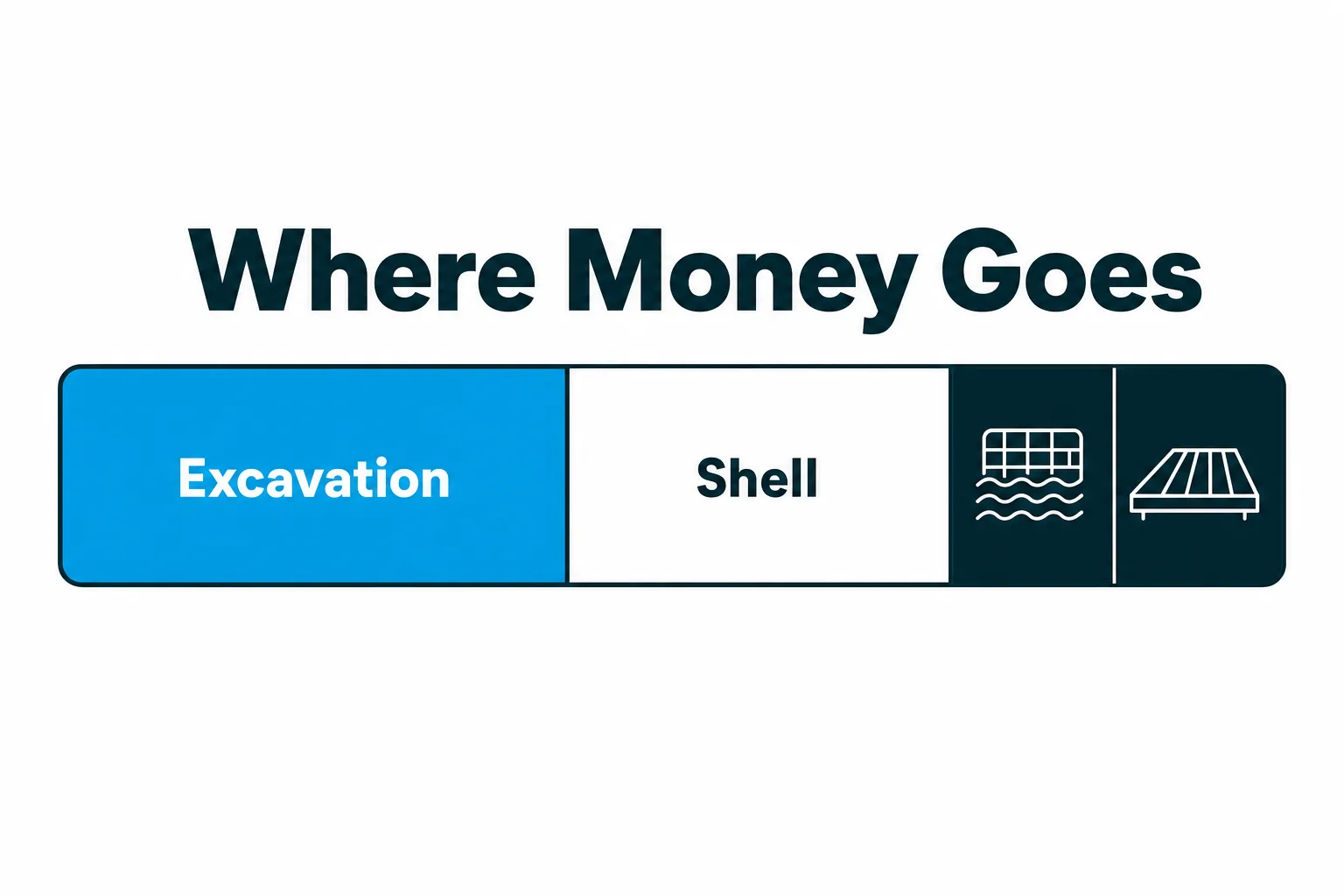
We are not going to invent a number, because the number depends on your yard. What is worth understanding is the structure of the cost. The heaviest line items are almost always the excavation and the shell, the structural work that has to be right and permanent. That is the plain answer to “what is the most expensive part of building a pool”: the parts you cannot see and cannot cheap out on. Site conditions swing the total more than anything, because ledge, tight access, and heavy grading all add labor. A yard in one town can cost noticeably more than an identical pool in the next, which is why real estimates for pool construction and landscaping in Salem, NH come after seeing the site, not before.
Common DIY Pool Mistakes (and Why “Building It With Bricks” Rarely Ends Well)
The most common DIY mistakes cluster in the parts homeowners cannot see: underestimating how hard the dig will be, skipping permits, getting the plumbing slope wrong, and ignoring drainage and frost. Any one of them can turn a fun project into an expensive redo.
Searches for how to build a swimming pool with bricks come up a lot, and the honest answer is that masonry pools are tough to pull off in our climate. A brick or block wall has to be structurally sound and fully waterproof, and New England’s freeze-thaw cycle punishes any weak point in either. Water finds the smallest gap, freezes, expands, and cracks it wider each winter. It is not impossible, but the margin for error is thin and the safety stakes are real. Pool safety guidance from the CDC’s Healthy Swimming program is a good reminder that barriers, drainage, and sound construction are not the corners to cut.
Frequently asked questions
What are the stages of building an inground pool?
How much does it cost to build an inground pool in MA?
Can I build a concrete pool myself, step by step?
How long before I can swim?
Ready to Talk Through Your Backyard?
You do not have to commit to anything to get clarity. The easiest first step is a design conversation about your yard, your budget, and what you actually want out back. From there you can browse our pool and outdoor living services, see finished projects in the Gallery, or dig into more guides in the Learning Corner. One team designs it and builds it, so there is a single number to call from the first sketch to the first swim.