

A pool can look fine from the patio and still be past its prime below the waterline. Small stains, rough steps, chalky plaster, or a water level that keeps dropping can all point to the same issue: the surface is wearing out. This guide explains the most common signs that your pool needs resurfacing, what each one means, when a repair might work, and when it’s time to call a professional.
Signs Your Pool Needs to Be Resurfaced
The clearest signs your pool needs resurfacing are a rough texture, peeling plaster, stubborn stains, visible cracks, water loss, pitting, exposed aggregate, faded color, and water chemistry that no longer stays balanced. One warning sign by itself may not mean the entire pool surface has failed. But when two or three appear together, a small patch may no longer be the smartest fix.
For homeowners in Massachusetts and New Hampshire, timing also plays a role. Outdoor pools face freeze-thaw cycles, spring openings, autumn leaf debris, winter closings, and changing water levels. A surface that looked acceptable in August can show its real age after the cover comes off in May.
Pool resurfacing is the process of renewing the worn interior finish of a pool. In many concrete or gunite pools, that means preparing or removing the old plaster, fixing problem areas, and applying a fresh finish such as plaster, quartz aggregate, pebble, or another suitable surface. For fiberglass pools, the work is different and may involve surface preparation, repair, and a compatible coating or gelcoat system.
If you are unsure whether you need pool surface repair, pool refinishing, or a full pool resurface, the warning signs below can help you make a clearer decision before costs rise.
Rough Pool Surface and Plaster Pool Resurfacing
A pool surface should feel comfortable under bare feet. If the steps feel like sandpaper, the shallow end scrapes skin, or children complain about scratched toes after swim time, that roughness is more than an annoyance. It is one of the most common signs your pool needs to be resurfaced.
Roughness often begins when the top layer of plaster wears away and leaves harder particles exposed. In older plaster, the cement portion can weaken while sand or aggregate remains. In aggregate finishes, the surface may feel sharp because the binder around the stone has worn down.
Either way, the pool becomes harder to brush, harder to clean, and less pleasant to use. A rough surface can also give algae more places to hold on, which means routine maintenance may take more work than it should.
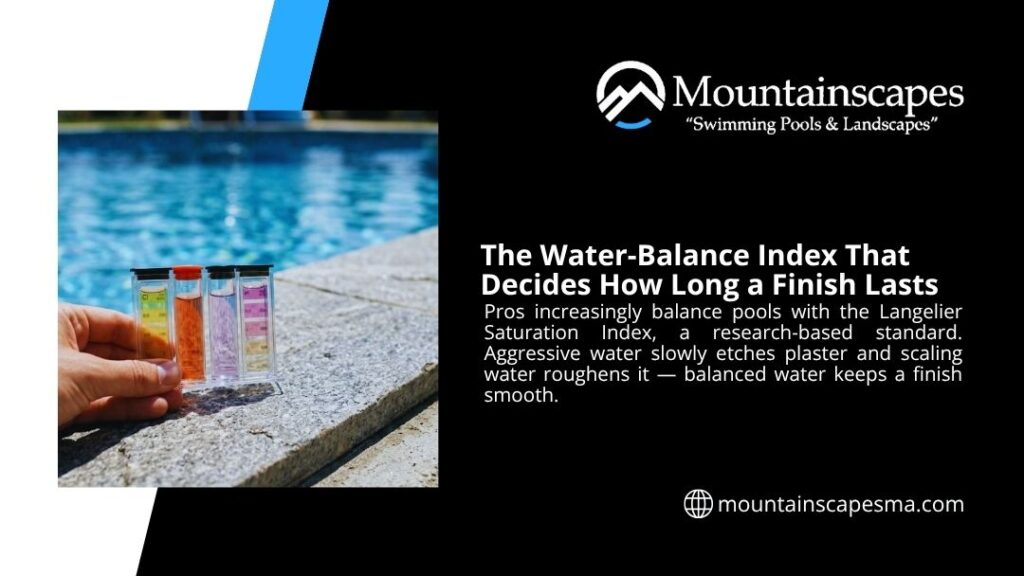
The CDC recommends that home pool owners keep pH in the 7.0 to 7.8 range and maintain proper sanitizer levels because water balance affects both swimmer comfort and pool care. Poor water balance over time can also be hard on pool surfaces.
If roughness is limited to one step or a small corner, a contractor may inspect it for targeted repair. If the rough texture covers the floor, walls, and stairs, plaster pool resurfacing is usually the more practical long-term fix.
Persistent Stains, Discoloration, and Pool Refinishing
Every pool gets stains from time to time. Leaves, metals, algae, fertilizer, hard water, and nearby trees can all leave marks. That alone does not mean it is time to resurface your pool. But stains that return after treatment, spread across large areas, or appear baked into the finish are different.
A worn pool surface becomes more porous. Once that happens, discoloration can settle deeper than normal cleaning can reach. You may see gray patches, brown streaks, green shadows, rust-colored spots, or an uneven faded look. The pool may still hold water, but it begins to look older than the patio, landscaping, and rest of the backyard.
This is where pool refinishing can make a visible difference. A new finish can restore color, improve comfort, and make the pool easier to maintain. It can also be a smart time to review the surrounding space. If the pool deck, planting beds, patio, or lighting also feel dated, a design-build team can look at the pool and landscape together.
For Mountainscapes’ ideal customer, this is often the real value: the pool does not have to be treated as a separate project. Homeowners can review resurfacing, hardscaping, drainage, planting, lighting, and outdoor living updates as one connected backyard plan. You can learn more about that broader project approach through Mountainscapes’ pool and outdoor living services.
Some stains can be treated. Some cannot. The difference usually comes down to whether the stain sits on top of the surface or has moved into a finish that is already breaking down.
Cracks, Leaks, and Resurfacing Concrete Pool Surfaces
Cracks can be cosmetic, urgent, or expensive. Fine surface cracks in plaster may be part of normal aging, especially on older concrete or gunite pools. Wider cracks, cracks that appear to grow, cracks with movement on either side, or cracks tied to water loss deserve faster attention.
One of the biggest signs your pool needs to be resurfaced is a crack pattern that keeps coming back after patchwork. A patch can buy time, but it does not solve a failing surface across the whole pool. When the plaster no longer protects the shell well, water can reach areas it should not reach.
For concrete and gunite pools, resurfacing concrete pool surfaces may include preparation, crack treatment, bonding, and a new finish. If the shell itself has shifted, the repair must go deeper than the surface. Resurface concrete pool work should never be treated like paint on a wall. The contractor needs to understand the structure, the drainage around the pool, and the condition of the nearby patio or coping.
That point matters in New England. Soil movement, poor drainage, runoff, and freeze-thaw stress can all affect pool areas. If water collects around the pool or patio, the surface problem may be only part of the story. Mountainscapes covers related yard water issues in its overview of backyard drainage warning signs.
Peeling, Chipping, and Chalking Pool Surfaces
Peeling plaster is one of the strongest signs your pool needs to be resurfaced. It may appear as flakes on the floor, chips around the steps, or thin layers that lift away from the pool wall. You may also see cloudy or chalky residue when you brush the surface.
This kind of failure often means the bond or finish has broken down. Once water gets behind weak plaster, the damage can spread. A small patch may look better for a short period, but it can stand out against the old finish and may not stop similar failure elsewhere.
The National Plasterers Council explains that low calcium hardness, low pH, and low carbonate alkalinity can create aggressive water that contributes to etching and surface deterioration in pool finishes. That matters because pool resurfacing should never be viewed as cosmetic only. The new surface needs proper water balance after the job, or the same problem may return. Peeling, chipping, and chalking are not just appearance issues. They show that the surface has started to lose its protective role.
Pitting, Erosion, and Aggregate Pool Resurfacing
Pitting looks like tiny holes, divots, or worn pockets in the pool finish. Erosion may look like thin, uneven areas where water, brushing, age, and chemical imbalance have worn the surface away. In an aggregate finish, you may notice pebbles or quartz aggregate that feel too exposed or begin to loosen.
This is one of the more overlooked signs your pool needs to be resurfaced because it usually develops slowly. The pool does not fail overnight. It becomes rougher, harder to clean, and less attractive year after year.
Aggregate pool resurfacing can be a good option when a homeowner wants more durability and a richer look than plain white plaster. Quartz aggregate and pebble finishes are common swimming pool resurfacing options because they can provide color depth, texture, and longer service life when installed and maintained well.
Still, the best pool resurfacing material depends on the pool, the budget, the desired feel, and how the family uses the space. A smooth plaster finish may suit one homeowner. A quartz aggregate finish may suit another. Pebble may work well for durability, but some people prefer a softer feel underfoot.
| Surface Option | Best Fit | General Notes |
| Standard plaster | Classic look, smoother feel, cost-conscious projects | Often more affordable, but may show stains and wear sooner |
| Quartz aggregate | Homeowners who want color, strength, and a refined look | Blends plaster with quartz aggregate for added durability |
| Pebble aggregate | Long-term durability and natural texture | Strong visual appeal, but texture may feel rougher to some swimmers |
| Fiberglass resurfacing | Fiberglass pools with fading, chalking, or gelcoat wear | Requires the right preparation and compatible material system |
| Tile or premium finishes | High-end design and long service life | Higher cost, often used for accents or luxury pool surfacing |
Water Loss, Refills, and What Happens If You Don’t Resurface Pool Surfaces?
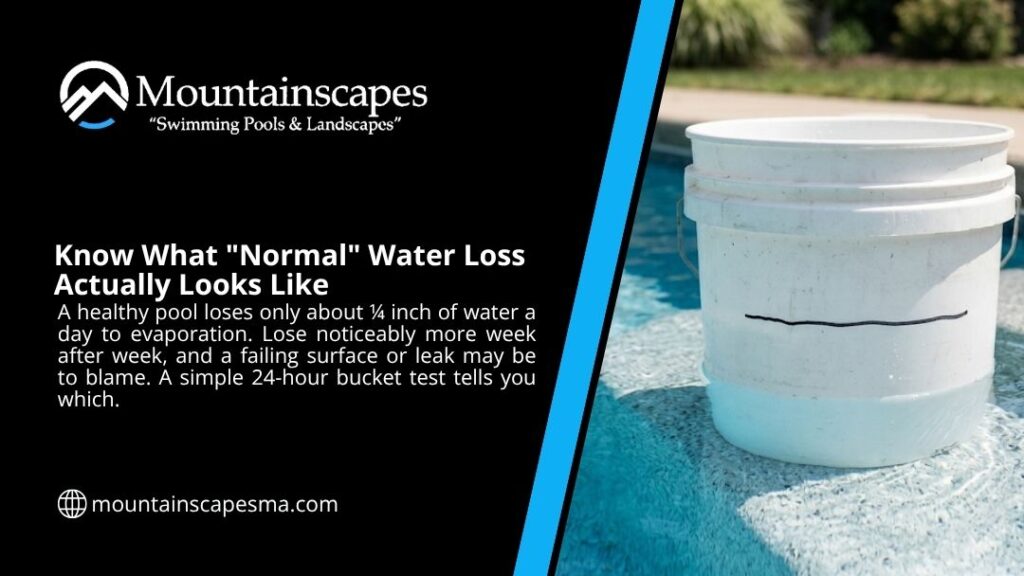
A pool loses some water to splash-out and evaporation. But if you keep adding water and cannot blame heat, heavy use, or a known plumbing issue, the surface may be part of the problem. Water loss is one of the signs your pool needs to be resurfaced when it appears alongside cracks, hollow spots, missing plaster, or worn fittings.
Before you assume the finish is the cause, a contractor should check for plumbing leaks, skimmer leaks, liner problems, and equipment issues. Still, if the pool surface is cracked or failing, water can move into areas where it should not go.
So, what happens if you do not resurface pool surfaces when the warning signs are clear? The short answer is that the repair can become larger. Small cracks can widen. Rough areas can spread. Stains can set deeper. Water loss can lead to higher bills and more chemical use. In more serious cases, shell or structural repairs may become part of the project.
A delayed resurface pool project can also affect the surrounding backyard. If the patio, coping, drainage, and landscape have to be opened later, the work can become more disruptive. That is why many homeowners pair resurfacing swimming pools with patio repair, drainage corrections, or outdoor living updates. Mountainscapes’ custom swimming pool services show how pool work can fit into a larger backyard plan.
Chemical Trouble, Algae, and Pool Surface Repair
If pool chemistry used to be simple and now requires constant correction, the surface may be part of the cause. A failing finish can trap algae, absorb stains, shed material, or make balance harder to maintain.
This does not mean every cloudy pool needs resurfacing. Filters, circulation, sanitizer levels, heavy use, phosphates, pollen, and opening conditions can all create water problems. But persistent algae in rough areas, stains that return, and rising chemical demand alongside visible surface wear can point toward pool surface repair or resurfacing a pool.
While more expensive up front, resurfacing can take less time to install, is more durable, and will last much longer,” says Coleman Cosby, Yardzen’s in-house construction expert. This matters for homeowners comparing quick cosmetic fixes with longer-term pool resurfacing, especially when the surface is already rough, stained, chipped, or cracked.
That is why surface condition matters. If the pool finish is the reason maintenance keeps getting harder, another round of chemicals may not solve the real problem.
Age, Wear and Tear, and When to Resurface Pool Finishes
Age is not the only factor, but it is a useful clue. Many plaster pool surfaces need attention after roughly 7 to 15 years, depending on installation quality, water chemistry, use, climate, and maintenance. Some pool surfaces last longer. Others fail sooner. If your pool is near 15 years old and has never had a pool resurface, an inspection is worth it even if the problems seem minor.
How often should a pool be resurfaced? For many residential pools, the answer falls somewhere around the 10-year range for plaster, with longer potential life for some aggregate finishes. But a pool with poor chemistry, heavy use, winter damage, or drainage problems may need work earlier.
| Question Homeowners Ask | Practical Answer |
| How often do pools need to be resurfaced? | Many pools need it every 7 to 15 years, but material and maintenance change the timeline. |
| How often do gunite pools need to be resurfaced? | Gunite pools often need plaster or finish renewal once the interior surface shows wear, roughness, cracks, or stains. |
| How often should a pool be resurfaced if it still looks okay? | If the surface feels smooth, holds water, and stays clean, you may not need immediate work, but older pools should still be inspected. |
| When to replaster a pool? | Replaster when the plaster layer is rough, cracked, stained, peeling, chalky, or no longer protects the shell well. |
| How long does it take to resurface a pool? | Many projects take several days to two weeks, depending on preparation, weather, surface type, repairs, and cure needs. |
In Massachusetts and New Hampshire, spring and fall are often busy periods for pool and landscape contractors. Winter is slower for many outdoor projects, but it can be a smart time to plan. If you want the pool ready for summer, do not wait until the first hot week to ask for an estimate.
How Much to Resurface a Pool?
The cost to resurface pool interiors varies widely. Size, surface material, access, damage, waterline tile, coping, drainage, patio work, and the chosen finish all affect the number. A small cosmetic refresh is not the same as resurfacing a concrete pool with crack repair, tile updates, and new pool decking.
Because resurfacing cost depends heavily on the surface type, access, damage, and whether patio or drainage work is included, homeowners should treat online averages as rough starting points, not final project pricing.
Searches such as how much to resurface a pool, resurfacing pool cost, cost to resurface gunite pool, plaster pool cost, and how much to remarcite a pool all point to the same concern: homeowners want a real budget before they commit.
| Cost Factor | Why It Changes the Price |
| Pool size and shape | Larger or more complex pools require more labor and material |
| Existing finish | Plaster, pebble, fiberglass, vinyl, and tile need different preparation |
| Damage level | Cracks, hollow spots, leaks, and delamination add repair steps |
| Material choice | Plaster, quartz aggregate, pebble, and tile vary in cost and life span |
| Access and site conditions | Tight access, slopes, drainage, and nearby structures can affect labor |
| Add-on work | Pool patio resurfacing, coping, lighting, drainage, and landscape renovation can change the total scope |
For Mountainscapes’ ideal customer, the bigger question is not only “What is the resurface pool cost?” It is also, “What should we fix while the pool is already under construction?” If the patio is cracked, the yard drains poorly, or the outdoor lighting feels dated, it may be more cost-effective to plan the work together.
Homeowners thinking beyond the pool shell can review Mountainscapes’ landscape design and installation services or browse completed outdoor spaces in the project gallery.
Resurface Pool or Repair It?
Not every worn spot means you need a full resurfacing pool project. A small isolated chip, a minor stain, or one hairline crack may only need monitoring or repair. But a pool resurfaced at the right time can prevent years of patchwork and frustration.
A good contractor will look at the whole system, not just the mark that bothers you most. That inspection should include the surface, shell, coping, tile, fittings, drainage, patio condition, and equipment. This wider review matters because pool problems are often connected. A crack near the coping may involve deck movement. Water loss may involve plumbing. Stains may involve metals or chemistry. Roughness may involve age and etching.
This is where Mountainscapes’ design-build model gives homeowners a practical advantage. Instead of forcing you to coordinate separate pool, drainage, masonry, landscape, and patio contractors, the team can review the project as one outdoor space and help decide what needs repair now, what can wait, and what should be planned together.
How to Resurface a Pool: What the Process Usually Looks Like
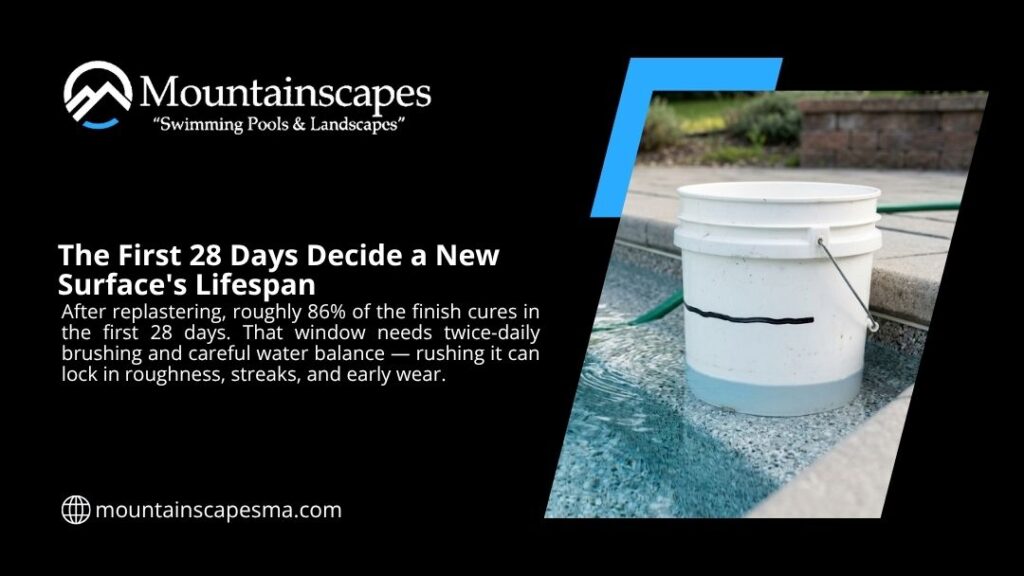
Most homeowners do not need to know every trade detail, but they should understand the order of work. The pool resurfacing process often starts with an inspection and estimate. After that, the pool is drained, the old surface is prepared or removed, damaged areas are repaired, fittings or tile may be addressed, and the new finish is applied. Then the pool is refilled, and water chemistry is managed carefully during the start-up period.
How do you resurface a pool correctly? You start with the right diagnosis. Resurfacing a fiberglass pool is not the same as plaster pool resurfacing. Resurfacing concrete pool interiors is not the same as replacing a vinyl liner. The product, preparation, weather, and cure all matter.
Homeowners should ask how the contractor handles cracks, hollow plaster, hydrostatic pressure, drainage, start-up chemistry, warranty terms, and project timing. If the answer feels rushed or vague, that is a red flag.
For homeowners still comparing options, Mountainscapes’ Learning Corner can support early research before a consultation.
MA and NH Timing: The Best Season to Resurface the Pool
In New England, timing can shape the whole project. Spring is popular because homeowners want the pool ready for summer. Fall is also strong because the swim season is over and contractors can often plan work before winter. Summer can work for urgent repairs, but it may interrupt prime swim time. Winter is often better for planning, design, estimates, financing, and permitting, even when the actual surface work waits for better weather.
If the project includes pool patio resurfacing, drainage, lighting, planting, or a full backyard update, the schedule matters even more. A pool resurface can become one phase of a larger outdoor plan.
Mountainscapes serves homeowners across Massachusetts and New Hampshire, including communities such as Pepperell, Andover, Concord, Lexington, Nashua, Salem, Windham, and Bedford. In these areas, pool projects often require attention to access, setbacks, grading, drainage, trees, patios, and permits. That is why working with one design-build team can make the process easier from the first inspection to the finished backyard.
Homeowners who want to plan the project early can also review available pool financing options before the busy season begins.
FAQs About Pool Resurfacing
How often should a pool be resurfaced?
Most plaster pools need resurfacing every 7 to 15 years, depending on water chemistry, maintenance, surface material, climate, and use. Aggregate finishes may last longer, while poorly balanced water or heavy wear can shorten the life of any pool surface.
What are the first signs your pool needs to be resurfaced?
The first signs your pool needs to be resurfaced are usually rough texture, stains that will not lift, small chips, pitting, chalky plaster, or faded color. If those signs appear with cracks or water loss, the pool should be inspected sooner rather than later.
How much does it cost to resurface a pool?
The cost to resurface a pool depends on the size, surface type, damage level, access, material choice, and whether other work is included. A simple plaster project costs less than a pool resurface that includes crack repair, coping, tile, patio work, drainage, or landscape renovation.
Can you repair a pool surface instead of resurfacing it?
Yes, small isolated chips, minor stains, or limited cracks may be repairable. Full resurfacing usually makes more sense when the surface is rough across large areas, stained throughout, peeling, pitted, or showing several warning signs at once.
How long does pool resurfacing take?
Many residential pool resurfacing projects take several days to two weeks. The exact timeline depends on draining, preparation, repairs, weather, chosen material, curing requirements, and start-up water chemistry.
What happens if you do not resurface your pool?
If you do not resurface a failing pool, the roughness, stains, cracks, and water loss can become worse. Maintenance may become harder, chemical demand may rise, and small surface repairs may turn into a more expensive renovation.
What is the best pool resurfacing material?
The best pool resurfacing material depends on your budget, comfort preference, design goals, and long-term plans. Standard plaster offers a classic smooth look. Quartz aggregate adds strength and color depth. Pebble finishes can last longer but may feel more textured underfoot. Fiberglass pools require a different resurfacing approach.
Know the Warning Signs Before Small Pool Problems Cost More
The main signs your pool needs to be resurfaced are easy to miss at first. A little roughness. A few stains. A small flake near the steps. A crack that looks harmless. A pool that needs more water than it used to. On their own, these issues may not feel urgent. Together, they tell a bigger story.
If your pool is older, rough to the touch, hard to keep clean, stained beyond normal treatment, or showing cracks and water loss, it may be time to resurface your pool. A professional inspection can tell you whether a repair, pool refinishing, resurfacing a fiberglass pool, or resurfacing a concrete pool makes the most sense.
For homeowners in Massachusetts and New Hampshire, Mountainscapes can inspect the pool surface, review related patio or drainage concerns, and help plan the right next step. Whether the project calls for pool resurfacing, landscape renovation, hardscaping, or a larger outdoor living update, the team can manage the work through one point of contact.
If your pool is starting to show its age, schedule a consultation with Mountainscapes before the next swim season. A timely inspection can help you avoid guesswork, protect your investment, and decide whether repair or resurfacing is the better move.