

You’ve probably watched a few videos by now. A stock tank in the corner of the yard, a brick-walled plunge pool, someone troweling their own concrete shell over a weekend. It looks doable on screen. Then you start adding up the digging, the permits, the plumbing, the deck, and the yard around it, and the project grows well past a weekend.
Here’s the other path, explained plainly: design-build, where the same crew that sketches your backyard is the one that digs it, builds the pool, and plants what grows around it. One team, one point of contact, pool and landscape handled together.
DIY vs. design-build: which pool path fits you?
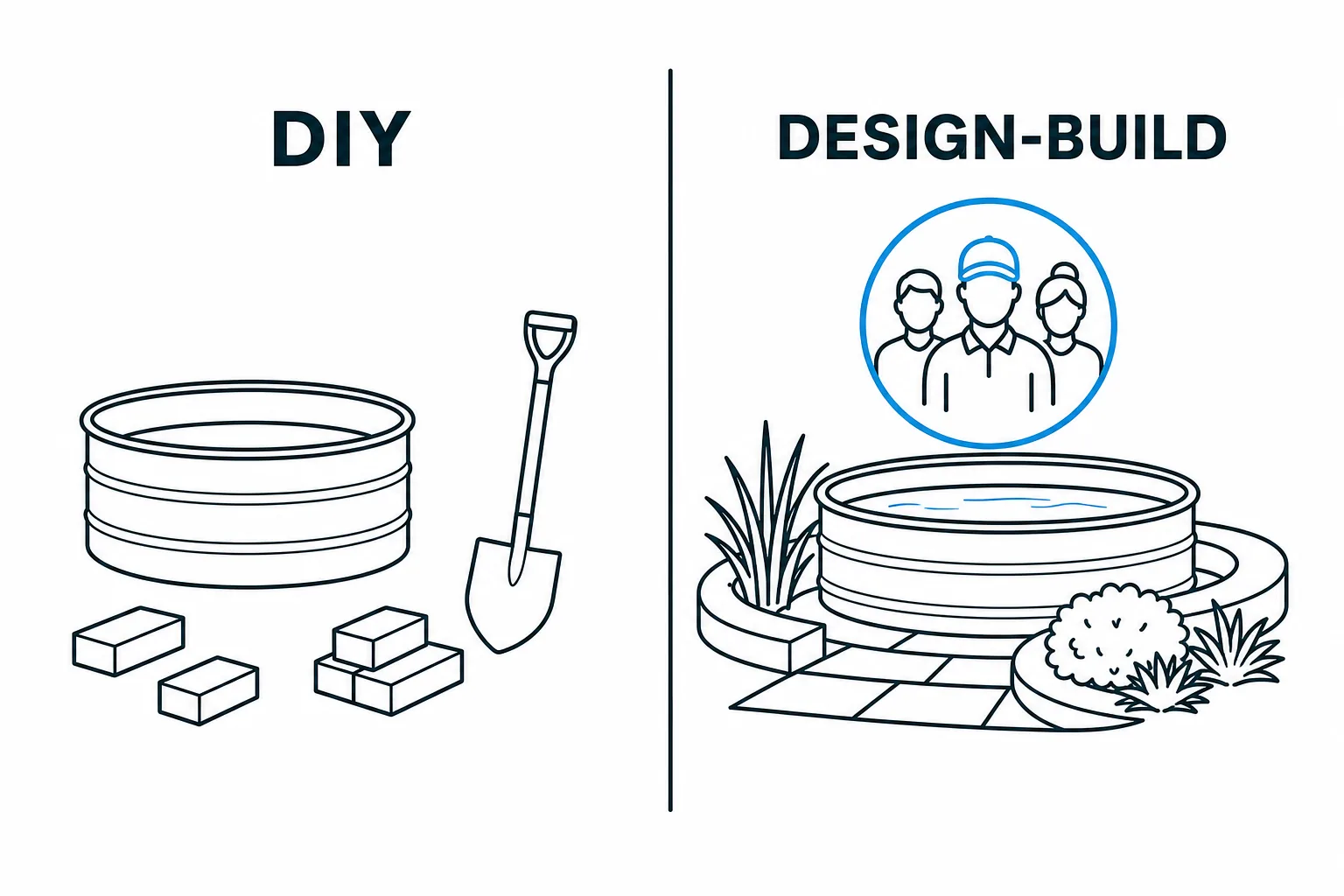
The DIY options are real, they just have ceilings. A stock tank pool is cheap, small, and seasonal: fine for cooling off, not a permanent backyard feature. A brick or block pool and a DIY poured-concrete build ask a lot more of you, from waterproofing to structural work to code compliance you can’t skip. One thing stays non-negotiable no matter who builds it: proper barriers and fencing keep kids safe, and the U.S. Consumer Product Safety Commission treats them as a baseline, not an upgrade.
Can you get an inground pool for $30,000? Sometimes, for a small package pool or a bare shell with little around it. A full custom inground with decking and landscaping usually runs higher, and the number shifts with your site and your town. For a pool meant to last decades and feel like part of your home, design-build takes the coordination off your plate.
Step 1: Design and planning
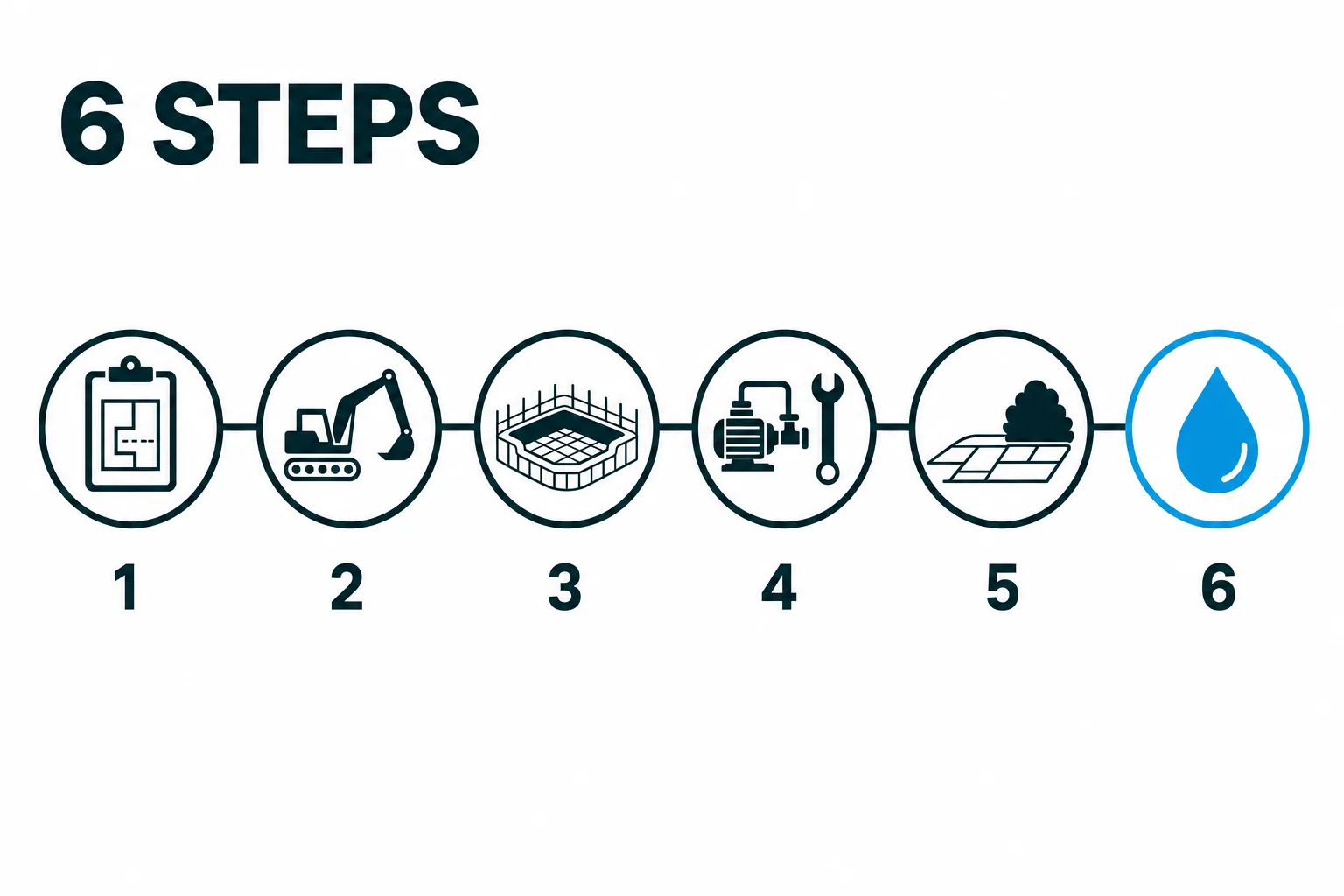
This is where a project is won or lost. It starts with a conversation about how your family will actually use the space, a budget range, and a walk of the site. Zoning, setbacks, grading, drainage, and access all get checked before a shovel moves. Permitting rules vary by town across Massachusetts and New Hampshire, so it pays to confirm local specifics early. The Massachusetts state building code sets the framework, and a design-build contractor typically guides you through permitting and acts as your general contractor. You can see how that first stage works on our design and planning phase for swimming pools.
Step 2: Excavation and site prep
Now the hole gets dug, the spoil hauled off, and the ground rough-graded. This is where DIY budgets tend to blow up: bad soil, a high water table, or a tight-access lot can change everything. When the same crew handles excavation and site grading, nothing gets handed off to a stranger halfway through.
Step 3: Structure and the shell
Next comes the reinforcing steel, the plumbing runs, then the shell itself. Many custom pools use gunite, a sprayed concrete that forms a strong, seamless basin. This is the real answer to “how do you build a pool step by step,” and also the point where doing it yourself stops being realistic for most homeowners.
Step 4: Electrical, safety systems, and inspections
This stage covers the electrical work, the pump, and filtration, with code inspections at set checkpoints along the way. Good circulation isn’t only mechanical, it’s about health: the CDC ties clean, well-filtered water directly to safer swimming.
Step 5: The part DIY guides skip
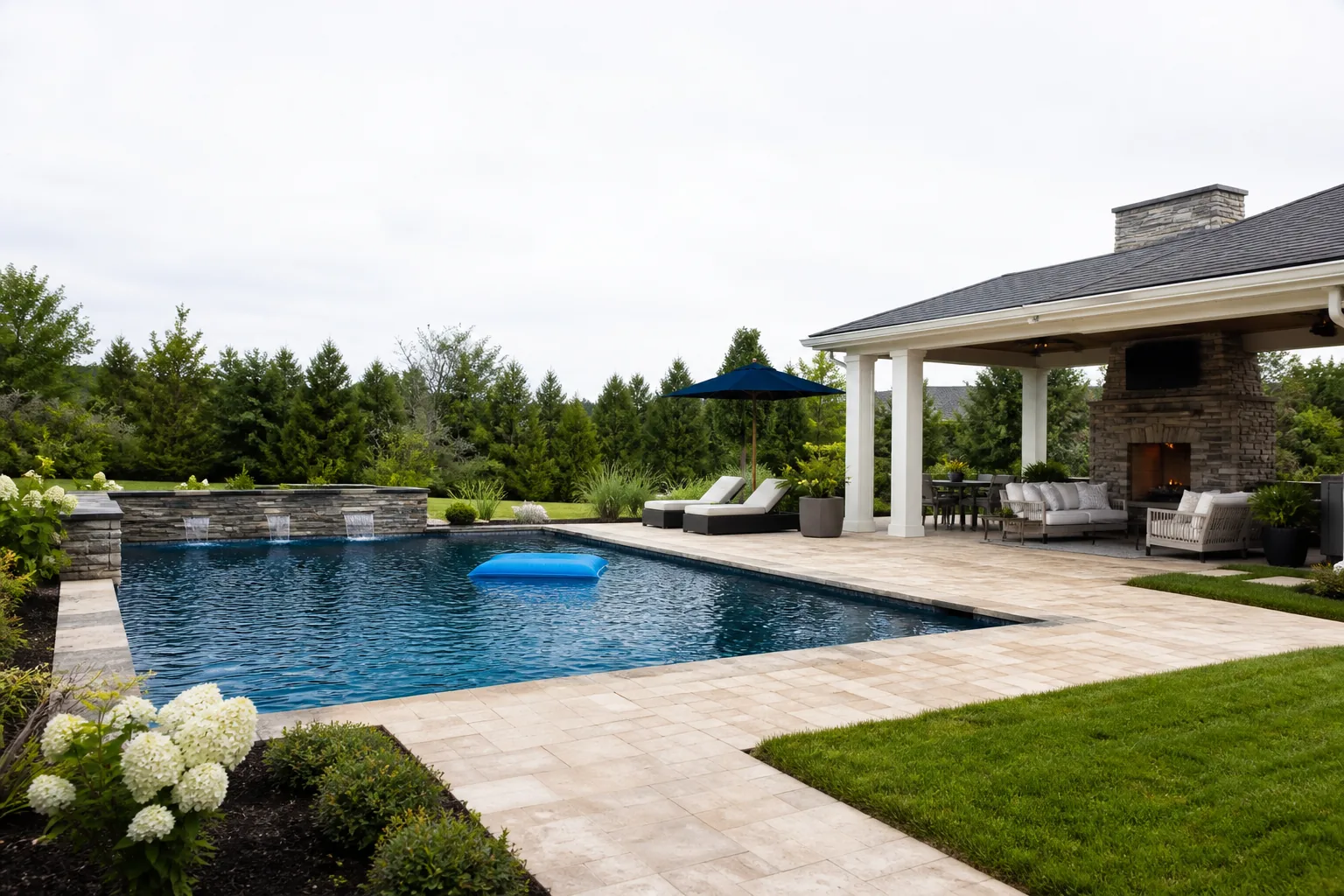
Most guides stop at “fill the pool.” But a pool sitting in a dirt lot isn’t a finished backyard. This is where masonry, hardscaping, a patio or deck, tree and shrub planting, lawn installation, lighting, and irrigation come together as one design. That’s the whole point of working with a single team: pool and outdoor living space built as one project. It’s exactly what our pool construction and landscaping in North Andover, MA looks like in practice.
Step 6: Water, startup, and walkthrough
Finally the pool fills, the water gets balanced, the equipment starts up, and you get a walkthrough of how to run it. A typical inground project spans several weeks and depends on weather, permitting, and scope. Demand tends to peak in spring and fall, so starting the design conversation in the off-season means you’re ready when the water warms up.
Common DIY pool mistakes (and the priciest part)
The usual missteps: skipping permits, poor drainage and grading, undersized equipment, ignoring setbacks, and no plan for the yard around the pool. And the most expensive part of building a pool? Usually the excavation and structure, because site conditions drive so much of the work.
One accountable team tends to catch these before they turn into change orders.
Frequently asked questions
Can I build a pool myself, like a stock tank or brick pool?
Can you really get an inground pool for $30,000?
How long does the design-build process take in MA or NH?
Do I need permits for a backyard pool?
Ready to talk it through?
You don’t have to commit to a build to get started. The first step is a design conversation about what you want your backyard to become. Browse our Services, see finished pools and landscapes in the Gallery, or dig into more guidance in the Learning Corner. One team can take your project from idea to finished space, and that’s the easiest way to avoid the headaches DIY guides never warn you about.