

A vinyl pool liner in New England usually lasts 7 to 12 years, though a well-kept inground pool liner can sometimes last closer to 15 years. Above-ground pool liners often fall closer to the 6 to 10 year range. The real answer depends on winter care, water chemistry, liner quality, water level, sun exposure, drainage, and whether the pool area was built to handle New England weather.
In this article, we explore how long vinyl pool liners last in New England, what shortens their lifespan, when replacement makes sense, and why liner problems often connect to the whole backyard, not just the pool.
How Long Does a Vinyl Pool Liner Last in New England?
For most homeowners in Massachusetts and New Hampshire, 7 to 12 years is a realistic window. Some get less. Some push further. A careful owner who balances the water, uses a solid winter cover, keeps up with drainage, and invests in a quality liner upfront can sometimes see 12 to 15 years before replacement becomes urgent.
That window is slightly different from what you’d see in warmer parts of the country. New England pools aren’t baking under harsh summer sun year-round, which does reduce fading and brittleness. The trade-off is freeze-thaw cycles, heavy rainfall, deep winter closures, and snowmelt that can quietly stress a liner even when no one’s swimming.
One thing worth separating early: when people ask “how long do liner pools last,” they’re usually asking two different questions. The pool shell, the structure, can last for decades. The vinyl liner is just the waterproof interior surface. It takes all the daily wear. Those are very different timelines.
| Pool type in New England | Common liner lifespan | What usually affects it most |
| Inground vinyl liner pool | 7 to 12 years | Water chemistry, winter cover care, groundwater, sun at the waterline |
| Above ground pool liner | 6 to 10 years | Wall condition, winter ice, liner thickness, leaks, installation quality |
| Saltwater vinyl liner pool | 7 to 12 years | Chlorine level, salt system balance, pH level, metal corrosion control |
| Well-maintained premium liner | 12 to 15 years or more | Consistent care, stable water level, low stress, proper winter closing |
If you want a more exact answer for your property, the liner should be checked along with the coping, walls, floor, drainage, patio pitch, and water level. Mountainscapes works with homeowners across MA and NH on custom swimming pool design and renovation, including projects where the pool, landscape, hardscape, grading, and outdoor living space all need to work together.
What Is a Liner Pool, and Why Does the Liner Wear Out?
A liner pool uses a flexible vinyl surface as the waterproof interior. In an inground pool, that liner fits over the walls and floor of the pool structure. In an above-ground pool, it attaches to the pool wall and holds the water inside.
Vinyl is comfortable underfoot, smooth, and gives homeowners a lot of design options. Patterns like ocean pearl, opal bay, and similar printed finishes can shift the look of the water dramatically. That’s a big reason vinyl pools remain popular.
But vinyl doesn’t last forever. Over time, it loses some of its stretch. The printed pattern fades. The area at and above the waterline dries out faster than the submerged section. Small leaks start around fittings, steps, corners, or seams. At that point the liner may still hold water, but it’s entered the watch-it-closely stage.
How Long Do Inground Pool Liners Last in MA and NH?
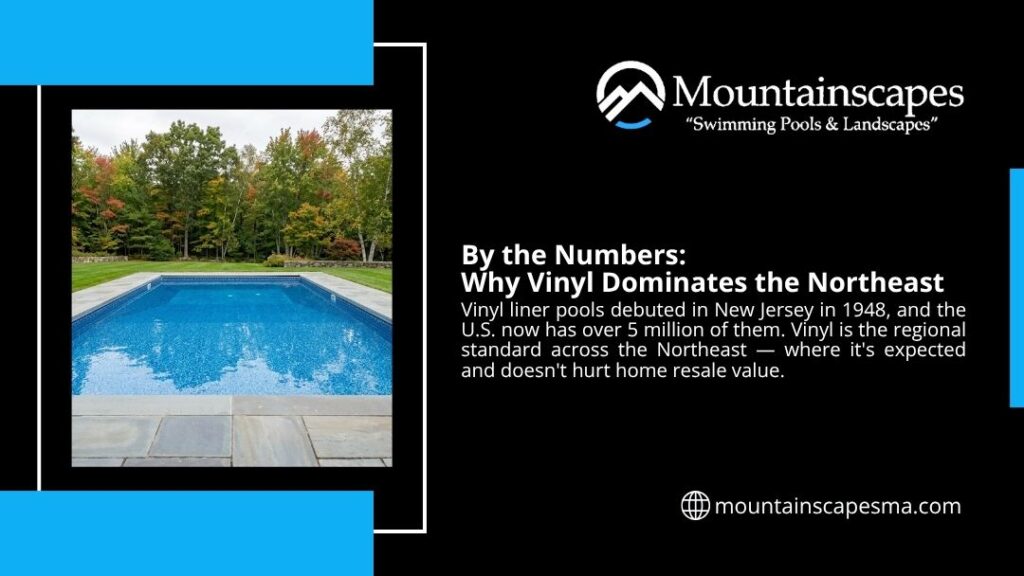
In New England, most inground vinyl pool liners fall in the 7 to 12 year window. The better the installation and the steadier the care, the better your odds of reaching the upper end.
If you search nationally, you’ll find answers ranging from 5 to 9 years to 6 to 12 or 8 to 12. Those aren’t wrong; they’re broad averages. New England adds a few local complications that shift things. A pool covered for six months avoids some UV exposure, but a poor winter closing can still cause wrinkles, wall stress, ice damage, or water level issues that shorten liner life considerably.
The best-case scenario is a liner that was measured accurately, installed without strain, protected from sharp edges, kept full of water through the season, closed before hard cold sets in, and maintained with steady water chemistry. The worst case is the opposite: harsh chemical swings, a dropping water level, poor drainage behind the walls, and repeated freeze-thaw stress.
How Long Do Above Ground Pool Liners Last?
Above ground pool liners typically have a shorter service life than inground liners. In New England, 6 to 10 years is a fair expectation, though early replacement is common if the pool wall has corroded, the floor has settled, the liner wasn’t installed flat, or winter ice pulled at the liner bead.
The honest answer to “how long does an above ground pool liner last” depends less on the calendar and more on treatment. If the water level stays steady, the pool stays clean, and the cover doesn’t drag through winter, it can outlast the average expectation. If the pool sits through winters without care, that range drops.
That said, homeowners planning a full backyard renovation or long-term outdoor living space should look beyond the liner alone. An inground pool, patio, lighting, drainage plan, and landscape design may create a better fit for the property and the way the family wants to use the yard.
How Long Does a Saltwater Pool Liner Last?
A saltwater pool liner usually lasts about as long as a traditional chlorine pool liner when the water stays balanced. Saltwater pools still create chlorine. They are not chemical-free pools. That matters because too much chlorine, low pH, or poor balance can still fade or weaken a vinyl liner.
The better question is not only “how long does a saltwater pool liner last?” It is also, “Is the salt system well managed?” If the answer is yes, a saltwater vinyl liner can last in the same 7 to 12 year range in New England. If chlorine runs high for long stretches or pH drifts too far, the liner can age faster.
Water chemistry still has to be watched. The CDC notes that when pH is too high or too low, chlorine or bromine can become less effective. That matters for swimmer health, but it also matters for the pool environment around the liner. Poor water balance can create a steady drip of problems that do not show up right away.
Why New England Weather Changes Pool Liner Lifespan
New England has a short swim season, but the off-season is where liner problems usually start. A pool liner in Massachusetts or New Hampshire may spend more months under a cover than it does in use. That’s not automatically a problem; a proper winter closing can protect a liner well. But when closings are rushed, covers don’t fit, or drainage issues go ignored, those idle months are quietly doing damage.
Freeze-thaw cycles move soil. Heavy rain raises groundwater. Snow and ice press on covers. Spring melt pushes water toward pool areas with poor grading. If water works its way behind the liner, wrinkles appear fast, and they don’t smooth themselves out.
When a Liner Problem Is Actually a Drainage Problem
This comes up more than most homeowners expect. A liner gets replaced, and then the same issue shows up again two years later. Wrinkles reappear. Water levels drop mysteriously. The new liner looks tired before its time.
In many of those cases, the liner wasn’t the root problem. The yard was. Groundwater pressure behind the pool walls, low spots that collect near the pool, a patio that slopes toward the water, or a lack of drainage infrastructure can all stress a liner from the outside in. The vinyl takes the hit, but the fix needs to happen in the ground and the grading, not just on the surface.
That’s exactly why Mountainscapes approaches liner projects alongside the surrounding outdoor space. If your pool area has soft spots, standing water after rain, a settling patio, or soil that stays wet well into spring, those things need to be part of the conversation before the next liner goes in.
| New England factor | How it can affect the liner | What helps |
| Freeze-thaw cycles | Soil movement can stress walls and liner fit | Proper grading, stable base, good winter prep |
| Snow and ice | Cover weight can pull at edges or disturb water level | Correct cover fit and winter water level |
| Spring groundwater | Water behind the liner can cause floating or wrinkles | Drainage plan, sump strategy, site review |
| Short swim season | Less UV exposure than in hot climates | Use a cover, avoid chemical splash near waterline |
| Leaf-heavy fall | Stains and organic buildup can mark the liner | Clean closing, cover care, balanced water |
When a Liner Problem Is Really a Site Problem
Many homeowners need before they spend money. A wrinkled or leaking pool liner is not always just a liner problem. In New England, it can be a drainage problem, a grading problem, a patio pitch problem, or a groundwater problem showing up through the liner.
If the pool deck pitches toward the water, runoff may carry debris and pressure toward the pool. If the yard holds water after storms, the soil around the pool may stay too wet. If planting beds, patios, or walls were added after the pool, they may have changed how water moves through the space. Even a beautiful patio can create trouble if it sends water the wrong way.
This is where a one-stop outdoor contractor has an advantage. A liner installer may focus only on the liner. A full design-build team can look at the pool, drainage, hardscape, landscape, lawn, lighting, and future outdoor use in one visit.
Mountainscapes provides landscape design and site planning for homeowners who want the pool area to work as a complete outdoor space. That may include drainage fixes, grading, patio updates, lawn installation, planting, hardscape repairs, or a larger pool renovation plan.
What Shortens the Average Life of a Pool Liner?
Water chemistry is the single biggest controllable factor. Low pH makes water acidic, which attacks vinyl over time. High chlorine bleaches color and weakens the material. Alkalinity that swings around makes pH harder to hold steady. None of this looks dramatic in week one. Then a season arrives, and the liner looks suddenly dull, brittle, and old.
Sun exposure hits hardest at the waterline. The vinyl below the water surface stays in a more stable environment. The area above the water line gets hit by air, UV, reflected heat, and chemical contact. That’s usually where fading and dry rot start first.
Low water level is another common culprit. Vinyl needs water pressure to stay in place and hold its shape. If the level drops too far, through a slow leak, a closing error, or simple neglect, the liner can shrink, shift, or pull away from the walls. This is why leaving a vinyl liner pool empty, even briefly, needs professional planning. It’s not a safe situation to wing.
Signs Your Pool Liner Needs Replaced
A faded liner does not always need instant replacement. A faded, brittle, cracked liner is another story. Pool liner fading is often cosmetic at first, but it can also signal that the vinyl has lost flexibility.
The most common signs your pool liner needs replaced are cracks, tears, stubborn wrinkles, water loss, loose fittings, fading above the water line, rough texture, and patches that no longer hold. If the pool liner has wrinkles after years of smooth use, water may have moved behind it, the liner may have stretched, or the floor may have shifted.
| Symptom | What it may mean | Patch or replace? |
| Small clean tear | Local damage from toy, tool, or sharp edge | Patch may work |
| Repeated leaks | Vinyl is weak, or seams/fittings have failed | Replacement likely |
| Wrinkles on floor | Water behind liner, age, poor fit, or shifting base | Inspection needed |
| Severe fading | UV and chemical wear | Watch closely |
| Cracks above waterline | Vinyl has dried and lost flexibility | Replacement likely |
| Water level drops often | Leak in liner, fittings, plumbing, or equipment | Leak test first |
A small tear may still be patched. If you are unsure whether to patch or replace, Mountainscapes outlines whether a pool liner can be repaired or needs full replacement. As a rule, one clean puncture is a repair candidate, while multiple leaks, brittle vinyl, fading, and loose corners point toward replacement.
Why Is My Pool Liner Wrinkling?
Wrinkles come from age, a poor install, low pH, groundwater intrusion, drainage problems, or a water level that dropped too low. In New England, groundwater after spring rain or snowmelt is a frequent cause.
If the liner is new and wrinkled, the fit or installation may be the issue. If an older liner develops wrinkles after a heavy winter or wet spring, water behind the liner is the likely suspect. If pH has run low for a stretch, the vinyl can lose its dimensional stability and become wrinkle-prone.
Don’t drain the pool to try to smooth things out. That usually makes things worse. Vinyl holds its shape because of water pressure, and an empty liner shrinks fast.
A good time to call a pool contractor is when wrinkles appear with water loss, soft spots, patio settling, or standing water near the pool. That combination can point to a larger site issue, not just old vinyl.
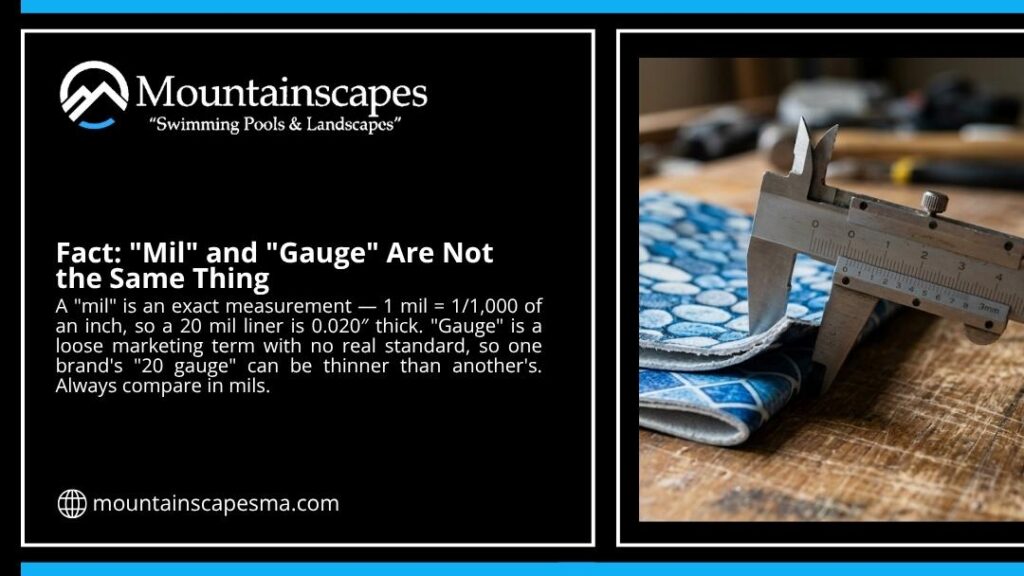
20 Mil vs. 27 Mil Liner: Does Thickness Actually Matter?
A 20 mil liner can last well into the 7 to 12 year range when it fits correctly and the water stays balanced. A 27 mil liner sounds like a clear upgrade, but thickness is only one variable. Fit, seam strength, pattern quality, install skill, and water chemistry all matter as much or more.
A thicker liner resists some punctures better. It won’t automatically last dramatically longer. If the water chemistry is rough or drainage is poor, a 27 mil liner can still fail early. The smarter buy is usually the liner that fits the pool correctly, comes from a reputable manufacturer, and gets installed by someone who knows how to measure and set it properly, not just the heaviest option on the list.
Pool Liner Warranty: What Homeowners Should Know
A 20- or 25-year warranty sounds reassuring. But pool liner warranties are almost always prorated, and most don’t cover labor, water refill, or every category of damage.
By year seven or eight, the warranty coverage may be a fraction of the original product cost, and the labor to replace it still comes out of your pocket. Before you select a liner, ask specifically: what does the warranty cover, when does proration begin, are seams covered, is fading covered, and who pays for labor and water? Those are the questions that separate a real warranty from a marketing line.
How Often Should You Replace Pool Liner Material?
Most New England homeowners should expect to replace pool liner material every 7 to 12 years. Some above-ground pool owners may replace sooner. Some inground pool owners may wait longer if the liner still holds water and looks good.
The best time to replace a pool liner in MA or NH is usually spring or fall. Spring gets the pool ready before peak use. Fall may offer better scheduling and lets the pool start fresh the next season. Winter is usually slow for pool use, but it is not always ideal for liner work because cold vinyl is less flexible.
If timing matters, guidance on the best time of year to replace a pool liner can help you plan before the busy season hits.
How to Make a Vinyl Pool Liner Last Longer
The best approach is also the least dramatic one: keep things stable. Stable water chemistry. Stable water level. Clean floor. No sharp objects left in the pool. No harsh chemical solutions applied directly to the vinyl surface. No cover dragging across the liner through the winter.
Check pH and chlorine regularly, not just when the water looks off. Keep the water level at the correct height through the season. Use a properly fitted cover during the off-season. Brush the liner gently and clean the waterline without abrasive tools. If the pool is near a slope, patio, or low-lying area in the yard, take drainage seriously; it’s not a separate issue from liner life.
Should You Replace the Liner or Renovate the Pool?
Sometimes a liner replacement is exactly the right call. Other times, the pool is telling you something bigger.
If the liner is worn but the walls, floor, coping, plumbing, and deck are all solid, a new liner can genuinely bring the pool back. But if the coping is loose, the deck is cracked, drainage is poor, the patio feels dated, or the layout no longer works for how your family uses the space, a larger renovation probably makes more sense than putting a new liner into a tired system.
This is also where the project scope matters practically. In Massachusetts and New Hampshire, pool renovations often involve permitting, especially if you’re changing the pool structure, expanding the deck area, adding drainage infrastructure, or working near wetlands or property setbacks. Mountainscapes handles permitting as part of the project, acting as the general contractor so homeowners don’t have to manage that process themselves.
A liner replacement can also reveal conditions that weren’t visible before: floor damage, wall corrosion, failing fittings, coping that’s no longer secure. If that happens mid-project, it’s better to have a contractor who can address everything at once rather than stop, sub out, and restart.
For homeowners who want a complete plan, Mountainscapes connects the pool, patio, drainage, landscape, lighting, and construction into one project with one point of contact.
What New England Homeowners Should Ask Before Liner Replacement
Before you commit, ask your installer: How do you measure the pool? What liner brands and pattern options are available? Are floor repairs included in the quote, or billed separately? How are fittings and gaskets handled? What happens if wall damage appears when the old liner comes out? How will the pool be refilled?
Ask warranty questions in plain terms, not just “what’s the warranty” but specifically what it covers, when proration kicks in, and who absorbs the labor cost.
Also verify that the liner is actually the source of the problem. Liners get blamed regularly for leaks that originate at fittings, light niches, stair gaskets, plumbing lines, or the equipment pad. A proper leak test before replacement can save significant money. For a fuller checklist, Mountainscapes outlines key questions to ask before hiring a pool liner installer.
Local Planning for MA and NH Pool Owners
Homeowners here deal with yard grades, ledge rock, tree coverage, septic setbacks, wetlands regulations, and short construction seasons. That combination means a pool liner conversation often leads naturally into a broader site conversation, which it should.
If your pool area has puddles after rain, soft spots in the surrounding ground, a settling patio, or a yard that directs water toward the pool instead of away from it, those things need to be resolved before the next liner goes in. A new liner in a poorly managed site is expensive short-term thinking.
Mountainscapes serves homeowners across both states, including communities like Andover, Concord, Burlington, and Chelmsford in MA and Windham, Nashua, and Bedford in NH. For most homeowners, the strongest outcome comes from one team that can look at the pool, the drainage, the hardscape, and the landscape together.
FAQs About Vinyl Pool Liners in New England
How long does a vinyl pool liner last in Massachusetts?
Most inground vinyl pool liners in Massachusetts last between 7 and 12 years. Above-ground liners typically fall closer to 6 to 10 years. Proper winter closing, balanced water chemistry, and good yard drainage are the biggest factors that determine where in that range your liner ends up.
How do I know if my pool liner needs to be replaced?
The most reliable signs are cracks or tears that won’t hold a patch, persistent wrinkles, repeated water loss, fading combined with brittleness, and rough texture above the waterline. A single small puncture can usually be patched. Multiple leaks or brittle vinyl typically mean it’s time for a full replacement.
What shortens pool liner life the most?
Poor water chemistry, especially pH that runs low or chlorine that runs high, is the most common culprit. Low water level is second. After that, poor drainage behind the pool walls, rushed winter closings, and UV exposure at the waterline all take years off a liner’s life.
Is it worth replacing a pool liner or should I get a new pool?
If the pool structure, plumbing, and equipment are in good condition, a liner replacement usually makes strong financial sense. If there are larger issues, failing walls, outdated systems, drainage problems, or a layout that no longer fits your needs, a renovation or full replacement may deliver better long-term value. A contractor who works on both liner pools and full builds can give you an honest comparison.
When is the best time to replace a pool liner in New England?
Spring and early fall are generally the best windows in MA and NH. Spring gets the pool ready before the season. Fall often means better contractor scheduling and lets the pool enter the next year fresh. Winter liner replacements are possible but less ideal; cold vinyl is less flexible and harder to work with.
What happens if I don’t fix a leaking pool liner?
A leaking liner that goes unaddressed loses water volume, which forces the chemistry system to work harder to maintain balance. A dropping water level also removes the pressure that holds the liner against the pool walls. The liner can shift, shrink, or pull away from the coping. Prolonged leaks can also saturate the surrounding soil and create drainage and structural problems in the pool walls over time.
The Smart Move Before the Next Swim Season
So, how long does a vinyl pool liner last in New England? Plan on 7 to 12 years for many vinyl pool liners, with above-ground liners often closer to 6 to 10 years and well-maintained inground liners sometimes reaching 15 years.
If your liner is faded but smooth, still flexible, and holding water, you may have time. If it has wrinkles, cracks, leaks, brittle spots, or repeated patch failures, it is time for a professional look. And if your pool area has drainage or grading problems, fix those before the next liner goes in.
Mountainscapes helps MA and NH homeowners look at the full picture: pool liner, drainage, grading, hardscape, landscape, lighting, irrigation, and outdoor living design. That one-stop approach can help you avoid short-term fixes and plan a backyard that works better for years. To review your pool, talk through liner replacement, or plan a larger outdoor renovation.