

A pool liner doesn’t fail all at once. It wears down quietly, first a little fading, then a few wrinkles, then something feels off. Many homeowners don’t realize there’s a problem until water levels drop or the liner starts pulling away.
That’s why understanding how to know when to replace your pool liner matters early, not late. The difference between replacing at the right time and waiting too long can mean thousands of dollars in repairs or avoiding them entirely.
If you’ve been wondering whether your liner still has life left or if it’s time to replace your pool liner, here’s what actually matters. This guide breaks down what actually happens to vinyl pool liners over time, how long they realistically last, and the subtle warning signs many people miss.
How to Know When to Replace Your Pool Liner?
Knowing when to replace your pool liner isn’t about spotting one dramatic issue. It’s about recognizing patterns. A vinyl pool liner is the only waterproofing layer between your pool water and the structural walls beneath it. Unlike a gunite or fiberglass shell, a vinyl-lined pool relies entirely on that single membrane to hold water in and keep groundwater out.
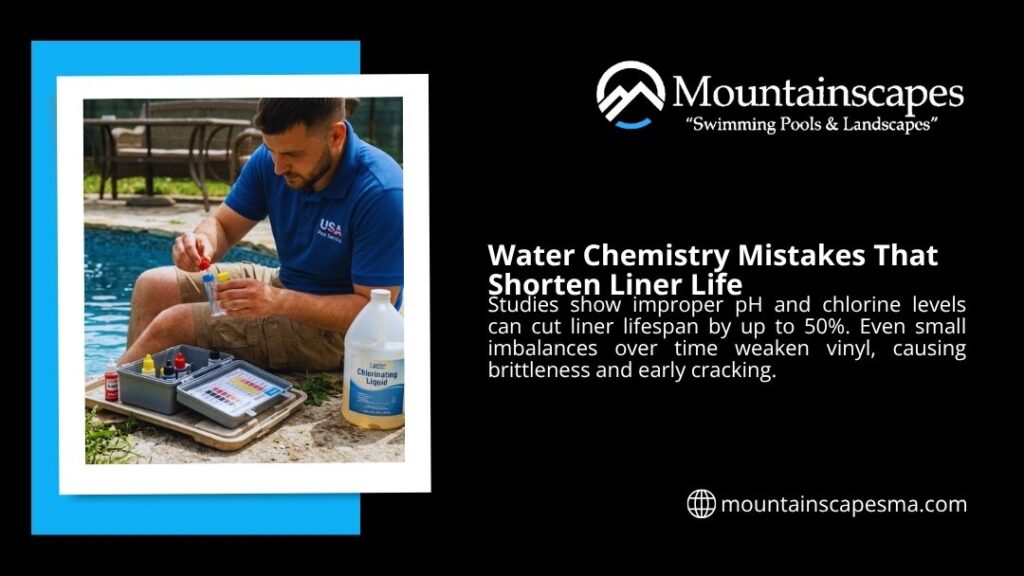
Vinyl pool liners go through a slow breakdown process. Sunlight strips protective layers. Chemicals weaken flexibility. Temperature changes cause expansion and contraction. Over time, the liner loses its ability to stretch and hold shape.
At first, nothing seems urgent. But here’s the thing: once a liner becomes brittle, small issues don’t stay small. A wrinkle turns into a stress point. A tiny tear spreads. A loose section begins to slip.
In most cases, replacement becomes necessary when the liner shows clear aging, structural movement, or repeated repairs that don’t last. And that’s usually the point where waiting costs more than acting.
How Long Do Pool Liners Last (Real Lifespan Breakdown)
Homeowners often ask how long pool liners last, but the answer depends on several factors. Material thickness, maintenance habits, and even regional climate all play a role.
Industry data suggests that most vinyl pool liners last between 8 and 12 years, though some exceed that range under ideal conditions. According to research, proper care can extend lifespan, but chemical imbalance and UV exposure often shorten it.
Pool Liner Lifespan Comparison
| Pool Type | Typical Lifespan | Maximum Potential |
| Above-Ground Pool Liner | 6–10 years | 12 years |
| Inground Pool Liner | 8–15 years | 18–20 years (Varies with care) |
| Saltwater Pool Liner | Slightly shorter (6-8 years) | Varies with care |
Thickness matters too. Homeowners often ask how long a 27 mil pool liner lasts compared to a thinner one. The thicker liner usually holds up longer, but installation quality and maintenance still carry more weight than material alone.
What Really Determines How Long Your Pool Liner Will Last
The lifespan of a pool liner isn’t just about time; it’s shaped by how the pool is maintained, how it was installed, and how much stress the material endures day after day. Two pools installed in the same year can age very differently depending on these underlying factors. Here’s a closer look at what actually makes the difference.
Key Factors That Impact Pool Liner Lifespan
| Factor | What Happens | Long-Term Impact |
| Water Chemistry | Imbalanced pH or high chlorine levels weaken the vinyl structure | Leads to brittleness, fading, and early cracking |
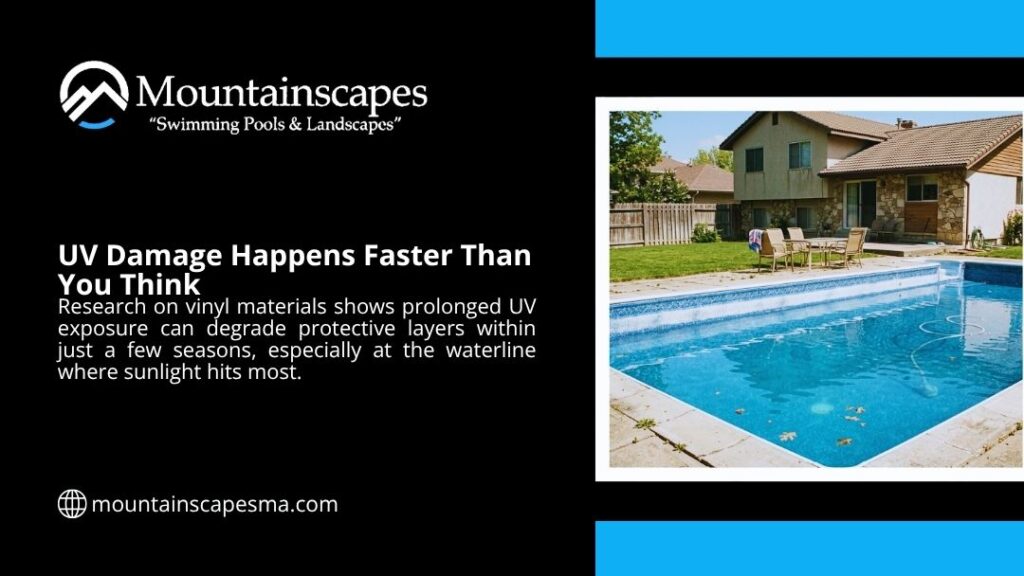
| UV Exposure | Sunlight breaks down vinyl through photodegradation, especially at the waterline | Causes fading, weakening, and surface breakdown |
| Installation Quality | Poor fitting or uneven placement creates stress points | Results in premature tears, wrinkles, and failure |
Keeping water chemistry within the proper range recommended in CDC pool water testing guidance, pH between 7.2 and 7.6, and alkalinity between 80 and 120 ppm, helps prevent both shrinking and overstretching. At the same time, minimizing prolonged sun exposure and ensuring proper installation can significantly extend the life of vinyl pool liners.
In many cases, liners don’t fail because they’re old; they fail because one of these factors has been working against them for years.
7 Signs Your Pool Liner Needs Replacing
Not every problem looks serious at first glance. Some of the most important warning signs show up quietly.
Fading Isn’t Just Cosmetic: That lightening color might seem harmless, but it usually means UV exposure has already started breaking down the liner’s surface. Once that protective layer weakens, the material becomes more fragile.
Wrinkles, Stretching, and Slipping: A liner that no longer fits tightly is a liner that’s losing structural integrity. Stretching often leads to uneven pressure, which increases the risk of tearing.
Cracks, Tears, and Brittleness: At this stage, the liner has lost flexibility. Repairs may patch the issue briefly, but the material itself has reached its limit.
Water Loss That Isn’t Evaporation: Losing water faster than expected often points to hidden leaks. A drop of even an inch per day can signal a compromised liner.
Liner Pulling Out of Track: When the liner starts slipping from its track, the bead system has likely failed. This rarely corrects itself without replacement.
Stains That Won’t Go Away: Persistent staining often comes from chemical damage embedded in the material. Once it’s there, cleaning won’t restore the liner.
These patterns reflect what most pool professionals see in the field. Many of the same signs appear across industry sources, but they often show up earlier than homeowners expect.
When to Replace a Pool Liner vs Repair It
Not every issue means immediate replacement. Some minor problems can still be addressed without starting over.
| Issue | Repair Possible | Replacement Needed |
| Small puncture | Yes | |
| Minor wrinkle | Yes | |
| Severe fading | Yes | |
| Repeated leaks | Yes | |
| Cracking liner | Yes |
If repairs become frequent or short-lived, that’s usually a clear signal that it’s time to replace the pool liner rather than continue patchwork fixes.
Above-Ground vs. In-Ground Liner Replacement: Key Differences
Above-ground and in-ground pools don’t age the same way. The structure, exposure, and installation all affect how liners wear over time.
| Feature | Above-Ground Pools | Inground Pools |
| Lifespan | Shorter overall | Longer lifespan |
| Replacement Complexity | Simpler process | More labor-intensive |
| Cost Range | Lower | Higher |
| Structural Impact | Minimal risk | Higher structural concern |
Above-ground pool liner replacement tends to be more straightforward, while in-ground replacements require more precision. That difference often affects both timing and cost.
What Happens If You Delay Pool Liner Replacement
Most people don’t realize it at first. Waiting too long can cause problems that extend beyond the liner itself. Water doesn’t just disappear; it goes somewhere. Often, beneath the pool, the base can weaken. Over time, that can lead to shifting, uneven surfaces, or damage to surrounding structures. In colder climates, trapped moisture can freeze and expand, worsening the problem.
Risks of Delaying Replacement
| Delay Outcome | Impact Level |
| Water loss | Moderate |
| Base erosion | High |
| Structural instability | High |
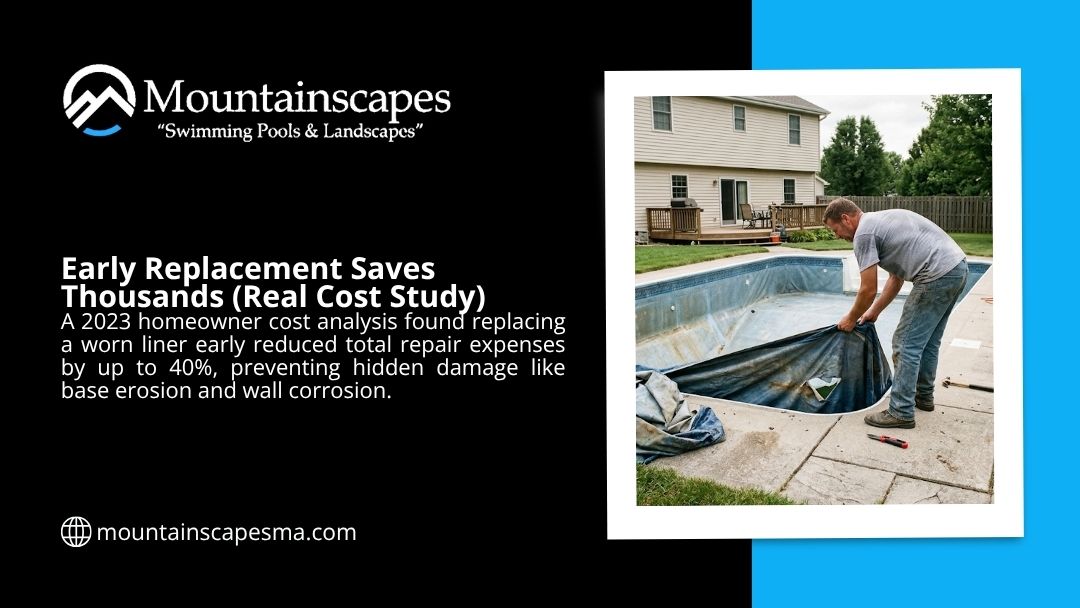
| Increased repair cost | Very High |
Once damage spreads beyond the liner, the repair scope changes completely.
How Often to Replace Pool Liner (Realistic Timeline)
There isn’t a fixed calendar for replacement. Instead, most homeowners find that liners need attention somewhere between 10 and 15 years.
Usage patterns matter. A pool used daily during peak summer months will age faster than one used occasionally. Sun exposure, water chemistry, and seasonal maintenance also influence how long a pool liner lasts in real-world conditions. If you’re asking how often replace pool liner, the answer usually depends on performance rather than age alone.
Cost vs Value: Why Timing Matters More Than Most Homeowners Expect
Replacing a pool liner rarely feels urgent, until it suddenly is. Many homeowners hesitate because of the upfront cost, but timing isn’t just about expense. It’s about preventing a chain reaction that turns a manageable project into a much larger repair.
At a glance, replacing early may seem like an unnecessary expense. In reality, it often protects the most expensive parts of your pool.
| Scenario | Immediate Cost | Long-Term Outcome |
| Replace the liner early | Moderate | Predictable, controlled cost |
| Delay replacement | Lower upfront | Increased risk of structural damage and higher repairs |
An inground pool liner replacement typically falls somewhere between $3,000 and $7,500+, depending on size, material, and installation complexity. Above-ground pool liner replacement is usually more affordable, often ranging from $500 to $3,000.
Those numbers can feel significant at first. But here’s what often goes unnoticed: once a liner starts failing, the damage rarely stays isolated.
Hidden Costs of Delaying Pool Liner Replacement
| Delayed Issue | Potential Repair Cost |
| Pool wall corrosion from leaks | $1,500–$5,000+ |
| Base erosion or sinking | $2,000–$8,000 |
| Deck damage from water intrusion | $3,000–$10,000+ |
| Structural repairs (severe cases) | $10,000–$25,000 |
Water escaping through a compromised liner doesn’t just disappear. It seeps into the base, weakens surrounding materials, and in colder climates, expands during freeze cycles. Over time, that leads to shifting, cracking, and in some cases, full structural instability.
Timing also plays a role in how smooth the replacement process feels. In regions like Massachusetts and New Hampshire, spring and early fall tend to offer the best conditions. Planning, often in late winter, helps avoid peak-season delays and allows enough time for installation before heavy pool use begins.
For homeowners thinking beyond just the liner, replacement can also be the right moment to reassess the entire space. Coordinating improvements with a team that handles design, construction, and outdoor features together, like the specialists at Mountainscapes, removes the need to manage multiple contractors and keeps the project streamlined from start to finish.
When you look at it that way, replacing a liner isn’t just a repair decision. It’s a timing decision that directly affects cost, convenience, and the long-term condition of your pool.
5 Things You Can Do Right Now to Extend Your Current Liner’s Life
A few simple actions can make a noticeable difference in how long your liner lasts.
| Action | Benefit |
| Maintain balanced water chemistry | Prevents material breakdown |
| Monitor water levels | Reduces stress on the liner |
| Clean surfaces gently | Avoids surface damage |
| Limit sharp objects | Prevents punctures |
| Cover the pool when not in use | Reduces UV exposure |
Small adjustments in routine maintenance often extend liner lifespan more than expected.
Choosing the Right Replacement Pool Liner
Not all liners are created equal. Thickness, pattern, and warranty all factor into long-term performance. A thicker liner may last longer, but installation quality matters just as much. A poorly installed liner, even if high quality, won’t reach its full lifespan.
That’s why many homeowners turn to professionals who handle both design and installation. Working with experienced teams through custom pool design experts ensures the liner fits not just the pool, but the overall outdoor layout.
Planning Your Pool Upgrade the Right Way
Replacing a liner often leads to bigger decisions. Many homeowners take this opportunity to improve the surrounding space. Updating hardscaping, adjusting layout, or enhancing outdoor living areas can transform the entire backyard. Those planning ahead often choose to explore outdoor living projects at the same time.
Looking at completed backyard transformations can help clarify what changes make the most sense for your space.
Related Backyard Considerations
Liner problems don’t always start in the pool itself. Poor drainage, shifting soil, or grading issues can all contribute to premature wear. If your pool has recurring issues, it’s worth checking for signs your backyard needs a drainage system. Addressing the root cause often prevents the same problem from returning.
FAQs about Pool Liner Replacement
How to know when to replace your pool liner inground?
Look for fading, slipping, cracks, or repeated leaks. In-ground liners often show structural issues before complete failure.
How long does a saltwater pool liner last?
Typically, slightly less than traditional systems, especially without careful chemical balance.
What destroys a pool liner?
UV exposure, chemical imbalance, sharp objects, and improper installation are the main causes.
What time of year is best to replace a pool liner?
Spring and early fall are ideal, when temperatures allow proper installation without extreme heat or cold.
Why is my pool losing 2 inches of water a day?
That usually indicates a leak rather than evaporation, often linked to liner damage.
What is the cheapest time of year to install a pool?
Late fall or winter planning stages often offer better pricing before peak season demand.
How much to install a 16×32 pool liner?
Costs vary widely but typically range between $4,000 and $8,000, depending on material and labor.
Who makes the best inground pool liner?
Top manufacturers vary, but quality installation matters as much as brand selection.
When It’s Time to Take Action
If you’re still asking yourself how to know when to replace your pool liner, there’s a good chance your pool is already showing signs. Waiting rarely makes the situation better.
If you want a clear answer without guesswork, it’s worth speaking with a team that handles both design and construction. You can connect with a local expert and get a straightforward assessment before small issues turn into larger ones.